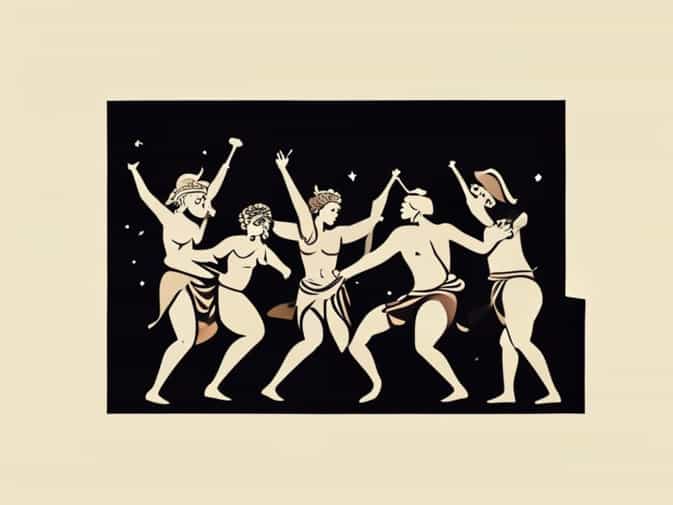
The Bacchanalia and Dionysian revels represent some of the most fascinating and historically rich forms of religious and social festivities in ancient civilizations. Rooted in the worship of Dionysus, the Greek god of wine, fertility, and ecstasy, these events celebrated the breaking of societal norms through music, dance, and intoxication. Similarly, the Bacchanalia of ancient Rome adapted Greek practices into a uniquely Roman context, often emphasizing secrecy, communal bonding, and ecstatic liberation. Both traditions illustrate humanity’s enduring desire to explore altered states of consciousness, communal participation, and the spiritual dimensions of celebration, leaving a complex legacy that has influenced literature, art, and cultural studies for centuries.
Origins of Dionysian Revels
The Dionysian revels, originating in ancient Greece, were festivals dedicated to Dionysus, also known as Bacchus in Roman mythology. These celebrations often took place in rural settings or hillside groves, combining ritual, theater, and communal festivities. They were characterized by ecstatic dance, frenzied music played on instruments like the aulos and tympanum, and the consumption of wine as a ritualistic medium to achieve a sense of divine possession or liberation.
The Greek concept of the Dionysian is tied closely to the duality of human nature, emphasizing both rational order and primal instinct. Friedrich Nietzsche famously explored this duality in his work The Birth of Tragedy, portraying Dionysian experience as a confrontation with chaos, ecstasy, and the dissolution of individuality. The Dionysian revels were a social space where participants could temporarily escape the rigid hierarchies and norms of city life, allowing a form of collective catharsis through music, dance, and intoxication.
Structure and Practices
Dionysian festivals were multifaceted. While wine and feasting were central, the rituals also incorporated theatrical performances, including tragedies and satirical plays. The participants often formed choruses, singing hymns in praise of Dionysus and enacting dramatic narratives that blurred the line between performer and audience. Masked dances and the use of symbolic objects, such as thyrsi (fennel-staffs wrapped in ivy), facilitated an immersive religious and cultural experience.
- Communal singing and choral performances.
- Ecstatic dancing and rhythmic movement to induce trance states.
- Ritual consumption of wine and other fermented substances.
- Use of masks and ritual objects to signify divine presence.
- Theatrical enactments of mythological stories involving Dionysus.
The Bacchanalia in Roman Society
As Greek culture influenced Roman practices, the Bacchanalia emerged as Roman counterparts to Dionysian festivals. Initially celebrated sporadically and in private, these gatherings became known for their secrecy and, at times, excessive indulgence. The Roman Bacchanalia, typically held at night, included drinking, dancing, and ritualistic rites designed to honor Bacchus. Unlike Greek Dionysian festivals, which were often public and state-sanctioned, the Roman Bacchanalia were closely associated with mystery cults and secretive communal bonds.
Roman authorities occasionally viewed these celebrations with suspicion. The Senate famously issued the Senatus Consultum de Bacchanalibus in 186 BCE, regulating and even restricting Bacchanalia due to fears of subversive behavior, excessive revelry, and potential criminal activity. Nevertheless, the Bacchanalia persisted, illustrating the enduring appeal of ecstatic and liberatory religious practices within urban and rural contexts alike.
Ritual Elements of Bacchanalia
The Bacchanalia shared similarities with Dionysian revels but also reflected Roman social norms and anxieties. Ritual elements included secret initiation ceremonies, invocations of Bacchus, and the participation of both men and women, sometimes in mixed-gender groups which was uncommon in other Roman religious contexts. Music and dance were integral, often accompanied by feasting and wine, creating an environment of social cohesion and ecstatic liberation.
- Secretive rites and initiatory practices.
- Use of wine as a sacred and communal medium.
- Ecstatic dance, often performed in darkened halls or secluded groves.
- Participation by both men and women, challenging conventional social boundaries.
- Integration of mythological narrative into ritualistic enactments.
Symbolism and Cultural Significance
Both Dionysian revels and the Bacchanalia embodied symbolic elements representing freedom, fertility, and transcendence. Wine functioned as a transformative agent, enabling participants to step beyond ordinary consciousness and social constraints. Dance and music were not mere entertainment; they were mechanisms for entering altered states, experiencing collective ecstasy, and connecting with the divine.
The festivals also symbolized societal tension between order and chaos. Dionysian revels highlighted the necessary release of primal instincts, while Roman Bacchanalia embodied the duality of desire and fear communities simultaneously celebrated and sought to regulate these intense experiences. These practices influenced literature, philosophy, and art, inspiring poets like Ovid, playwrights like Euripides, and philosophers who contemplated the balance between civilization and instinct.
Influence on Art and Literature
The themes of Bacchic and Dionysian revelry permeate Western culture. Artistic representations often depict frenzied processions, thyrsus-wielding followers, and ecstatic dance. Literary works, from classical tragedy to modern novels, explore motifs of liberation, excess, and transformation inspired by these festivals. The Bacchic archetype remains a powerful symbol of the tension between societal restraint and human passion.
- Classical artwork depicting Bacchic processions and ecstatic figures.
- Tragic and satirical plays exploring Dionysian themes.
- Philosophical reflections on chaos, order, and human instinct.
- Modern literature and theater drawing upon the concept of ecstatic revelry.
- Symbolism of wine, masks, and dance as transformative elements.
Modern Interpretations and Legacy
In contemporary culture, the Bacchanalia and Dionysian revels continue to inspire festivals, performance art, and psychological theory. Events such as Mardi Gras or modern masquerade balls echo the themes of revelry, communal indulgence, and temporary liberation from social norms. Psychologists and scholars often reference the Dionysian as an archetype for understanding human behavior, creativity, and emotional catharsis.
Music festivals and theatrical productions sometimes draw explicitly on Dionysian motifs, emphasizing immersive experience, collective engagement, and ecstatic expression. These modern iterations reflect the ancient human desire to explore freedom, ecstasy, and transformation through ritualized communal activities.
Key Takeaways
- Dionysian and Bacchic revels served as both religious rites and social liberation.
- Wine, music, and dance were central tools for entering altered states.
- The festivals navigated the balance between chaos and order, individual and community.
- Historical accounts reveal both societal embrace and regulation of these practices.
- Their influence persists in modern art, literature, and celebratory traditions.
The Bacchanalia and Dionysian revels illuminate the human fascination with ecstasy, communal bonding, and transcendence. Rooted in ancient Greece and Rome, these celebrations combined ritual, music, dance, and intoxication to explore the boundaries of consciousness and social convention. Beyond their historical context, they continue to resonate as symbols of liberation, creativity, and the interplay between order and chaos. The enduring legacy of these festivals underscores the universality of human desires for joy, ritual, and shared experience, demonstrating how ancient practices continue to inform cultural understanding, artistic expression, and social celebration in modern society.