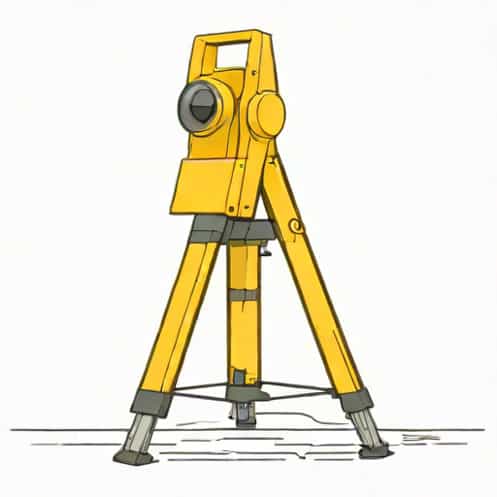
In surveying and construction, precision is key, and the total station is one of the most essential tools for achieving accurate measurements. Among the many components of a total station, the optical plummet plays a crucial role in ensuring that the instrument is precisely positioned over a survey point. Understanding the function, applications, and proper use of the optical plummet is vital for surveyors and engineers who aim to maintain accuracy in their fieldwork and construction projects.
Understanding the Optical Plummet
An optical plummet is a small optical device integrated into a total station, theodolite, or other surveying instruments. Its primary purpose is to allow the operator to align the instrument directly above a ground reference point, such as a survey marker or benchmark. This alignment ensures that vertical measurements and angles taken by the total station are accurate and reliable, which is crucial for mapping, construction layout, and geodetic measurements.
Components of an Optical Plummet
The optical plummet typically consists of several components that work together to provide precise alignment
- EyepieceThe eyepiece allows the surveyor to view the target point directly beneath the instrument.
- Lens SystemA series of lenses magnify the survey point, making it easier to achieve precise alignment.
- Crosshairs or ReticleThe crosshairs in the optical plummet provide a visual guide to center the instrument over the point accurately.
- Adjustment ScrewsThese allow fine-tuning of the instrument’s position to ensure the optical plummet is perfectly aligned with the target point.
Function of the Optical Plummet
The main function of the optical plummet is to assist in centering the total station over a reference point. Accurate centering is critical because even a small offset can lead to errors in measurements, which may accumulate over large distances. By providing a magnified and precise view of the ground point, the optical plummet ensures that the total station is correctly positioned, reducing errors in both horizontal and vertical measurements.
Applications in Surveying
The optical plummet is used in a variety of surveying applications, including
- Construction LayoutEnsuring that building foundations, roads, and other structures are accurately positioned according to design plans.
- Topographic SurveyingMapping terrain and creating accurate models of the land surface.
- Geodetic SurveysConducting high-precision surveys for mapping, boundary determination, and infrastructure projects.
- Monitoring and AlignmentChecking the alignment of structures, such as towers or pipelines, over long distances.
Using an Optical Plummet Correctly
Proper use of the optical plummet is essential to maximize the accuracy of a total station. The process typically involves several key steps
- Setting Up the TripodPlace the tripod over the reference point and level it roughly using the built-in bubble levels.
- Centering the Total StationLook through the optical plummet and adjust the instrument until the target point is centered in the crosshairs.
- Fine AdjustmentUse the tripod adjustment screws or foot screws to make precise movements and ensure the instrument is perfectly aligned over the point.
- LevelingAfter centering, use the total station’s leveling system to ensure the instrument is horizontal, which is crucial for accurate angular measurements.
Advantages of Using an Optical Plummet
There are several benefits to using an optical plummet in total station operations
- PrecisionProvides highly accurate alignment over a reference point, reducing measurement errors.
- EfficiencySpeeds up the setup process compared to traditional plumb bobs or manual leveling techniques.
- ReliabilityOffers consistent and repeatable alignment, which is important for long-term surveys and construction projects.
- Ease of UseAllows surveyors to make precise adjustments while viewing the reference point through a magnified optical system.
Challenges and Considerations
Despite its advantages, using an optical plummet also comes with some challenges. Surveyors must ensure that the optical plummet itself is calibrated and that environmental factors such as lighting, wind, or uneven ground do not affect the alignment. Additionally, the magnification of the optical plummet can make it difficult to see targets in bright sunlight or low-light conditions. Careful handling and regular maintenance are essential to keep the optical plummet functioning accurately.
Maintenance and Calibration
Maintaining an optical plummet involves routine checks and adjustments to ensure it continues to provide accurate readings
- Clean the lenses regularly to remove dust or smudges that could obscure the view.
- Check the alignment of the optical plummet with the total station to prevent systematic errors.
- Store the total station in a protective case when not in use to prevent damage to the optical system.
- Perform periodic professional calibration to maintain precision over time.
The optical plummet is a fundamental component of a total station, playing a crucial role in achieving accurate positioning and measurements in surveying and construction. By providing precise visual alignment over a reference point, it ensures the reliability and accuracy of data collected. Understanding its function, proper use, applications, and maintenance is essential for surveyors, engineers, and construction professionals. With correct usage, the optical plummet enhances efficiency, accuracy, and confidence in all surveying operations, making it an indispensable tool in modern geospatial practices.