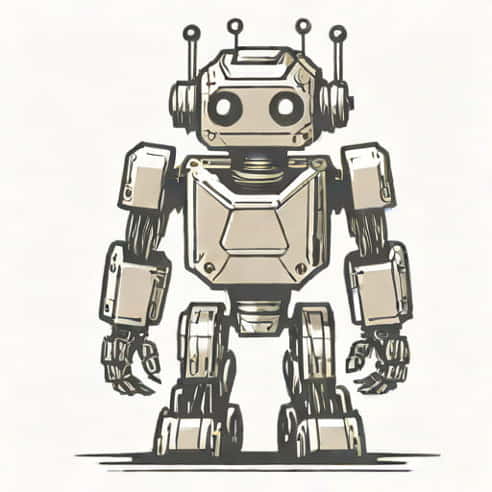
In the novel The Wild Robot by Peter Brown, the robot protagonist, Roz, serves as a fascinating exploration of artificial intelligence interacting with the natural world. Unlike traditional robots confined to factories or laboratories, Roz finds herself stranded on a remote, wild island, navigating survival, social dynamics, and the intricacies of life in the wilderness. Her journey combines elements of adventure, self-discovery, and environmental awareness, making her a unique character in modern children’s literature. Through Roz, readers are introduced to themes of empathy, adaptation, and the delicate balance between technology and nature. The portrayal of Roz challenges traditional notions of robots as purely mechanical beings, instead presenting her as capable of learning, growth, and even forming emotional connections with living creatures around her.
Who is Roz, the Robot?
Roz, the robot from The Wild Robot, is initially designed as a machine for performing structured tasks in controlled environments. However, an unexpected shipwreck leaves her alone on a remote island, forcing her to navigate a world far removed from human civilization. Roz is characterized by her curiosity, resilience, and analytical mind, which she uses to adapt to the unfamiliar and often hostile environment. Unlike humans, she does not rely on instinct or emotion initially, yet her experiences gradually teach her empathy, compassion, and social awareness. Through her interactions with the island’s wildlife, Roz develops not only survival skills but also meaningful relationships, highlighting her evolution from a programmed entity into a sentient being capable of learning and growth.
Adaptation to the Wild
One of the most compelling aspects of Roz’s story is her adaptation to life on the island. She observes the behaviors of animals, learns which plants are edible, and discovers ways to build shelter. Her mechanical mind allows her to analyze situations with precision, but it is her willingness to learn from living creatures that enables her survival. This blending of technology and nature serves as a core theme, demonstrating that intelligence-whether artificial or organic-thrives on observation, experimentation, and adaptation. Roz’s adaptation also symbolizes the broader concept of resilience in the face of unforeseen challenges.
Relationships and Emotional Growth
Roz’s encounters with the island’s animals are central to her emotional growth. Initially viewed with suspicion by the wildlife, she gradually earns their trust by demonstrating helpfulness, patience, and respect for their way of life. Among the most significant relationships is her bond with a gosling named Brightbill, whom Roz adopts and cares for. Through this relationship, Roz learns about parental love, responsibility, and emotional attachment, illustrating how connections can transform behavior and foster personal development. The novel portrays Roz not as a cold, mechanical entity but as a being capable of moral reasoning, empathy, and ethical choices, bridging the gap between artificial intelligence and humanity.
Challenges Faced by Roz
Roz’s life on the island is filled with challenges that test her physical and mental capabilities. She faces natural disasters, predators, and the skepticism of the island’s inhabitants. Each obstacle requires problem-solving, strategic thinking, and often courage beyond her programmed capabilities. These challenges not only provide narrative tension but also reinforce the themes of growth, resilience, and learning. Roz’s ability to overcome adversity mirrors the human experience, demonstrating that intelligence and morality are developed through interactions with the environment and others.
Technological and Environmental Themes
The character of Roz also allows the novel to explore the intersection of technology and ecology. While she is an artificial being, Roz learns to live harmoniously within a natural ecosystem, respecting food chains, animal behaviors, and environmental limits. This juxtaposition encourages readers to consider how technology can coexist with nature rather than dominate it. The story subtly promotes environmental consciousness, showing that understanding and empathy toward the natural world are essential, even for those designed for efficiency and utility.
Teaching Empathy Through a Robot
Roz’s journey is particularly effective in teaching empathy, as readers observe a mechanical being gradually understanding emotions, relationships, and moral responsibility. Her growth from a machine with no emotional awareness to a caregiver and community member illustrates that empathy is learned through observation, experience, and interaction. This approach makes Roz an educational and inspirational figure, demonstrating that intelligence alone is not enough for meaningful life-connection and understanding are equally vital.
Roz as a Role Model for Readers
Roz’s experiences and character development make her a role model for young readers. She exemplifies perseverance, creativity, and moral integrity in the face of adversity. By observing Roz’s interactions with the island, children can learn valuable lessons about problem-solving, cooperation, and environmental stewardship. Her story also encourages curiosity and the pursuit of knowledge, emphasizing that challenges are opportunities for growth rather than obstacles. The robot’s journey is a compelling metaphor for personal development and the importance of balancing intellect with empathy.
Impact on Children’s Literature
The Wild Robot and its protagonist have made significant contributions to children’s literature. Roz is part of a growing trend in storytelling that combines technology with emotional intelligence, adventure with ethical reflection, and entertainment with education. The novel’s success lies in its ability to engage young readers while prompting them to think critically about technology, nature, and human values. Roz’s story offers a nuanced perspective on what it means to be alive and to care for others, broadening the scope of character development in modern literature for children.
Roz, the robot from The Wild Robot, is more than just a mechanical creation; she is a symbol of adaptation, empathy, and the capacity for growth. Her journey on the island introduces readers to the challenges of survival, the importance of relationships, and the possibility of bridging artificial intelligence with natural life. Through her story, the novel explores complex themes such as environmental stewardship, moral responsibility, and emotional intelligence, making it both entertaining and educational. Roz’s character inspires readers to consider how learning, empathy, and connection can transform not only machines but also individuals navigating the complexities of life. As a protagonist, Roz demonstrates that even in the most unexpected circumstances, growth, understanding, and compassion are possible, leaving a lasting impression on children and adults alike.