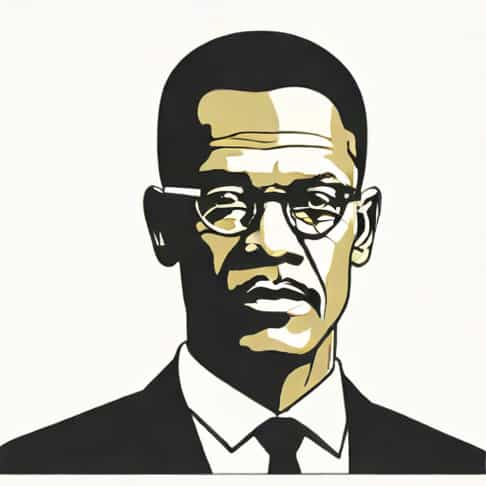
Many readers who study African American history eventually encounter the debate over whether Malcolm X should be considered a Black nationalist. His speeches, writings, and evolving political philosophy sparked strong discussions during the civil rights era and continue to shape conversations today. Understanding his role requires more than a quick label. It involves examining his beliefs, how they changed over time, and what his ideas meant for Black empowerment, self-determination, and identity in America. Malcolm X remains one of the most influential and complex figures in American history, and exploring his connection to Black nationalism helps reveal why his legacy endures.
Understanding the Roots of Black Nationalism
Before examining Malcolm X’s role, it is essential to understand what Black nationalism represents. In simple terms, Black nationalism emphasizes unity among Black people, self-reliance, cultural pride, and control over political and economic resources. While different groups have used the term differently, the idea generally centers on creating or reclaiming autonomy for Black communities in the face of oppression and systemic racism.
Historical Background
Black nationalism rose long before Malcolm X. Leaders such as Marcus Garvey and organizations like the Universal Negro Improvement Association promoted ideas of Black sovereignty, global unity, and resistance to white supremacy. By the time Malcolm X emerged as a prominent public figure, the concept already had deep historical roots in the United States.
Core Principles
Although interpretations vary, Black nationalism often includes
- Encouraging Black political control within Black communities
- Supporting economic independence and Black-owned businesses
- Celebrating African heritage and culture
- Challenging systemic racism and white domination
These foundational ideas became central to many of Malcolm X’s speeches, especially during his years in the Nation of Islam.
Malcolm X and the Nation of Islam
Malcolm X began his public career as a minister and spokesperson for the Nation of Islam (NOI). His work with the organization shaped many of the beliefs for which he became widely known.
Emphasis on Separation Rather Than Integration
Unlike groups that supported peaceful integration, Malcolm X and the NOI advocated for separation from white society. They argued that the United States was too deeply rooted in racism to allow true equality. This position aligned closely with Black nationalist ideals of self-determination, community control, and independence.
Promotion of Black Identity and Pride
One of Malcolm X’s most powerful messages was the importance of embracing a positive Black identity. He encouraged African Americans to reject feelings of inferiority and reclaim their cultural heritage. This focus on pride, dignity, and historical awareness made him one of the era’s strongest voices for cultural nationalism.
Critique of White Supremacy
Malcolm X openly confronted systemic racism in the United States. His critiques were sharper and more direct than many civil rights leaders. He argued that Black Americans must protect themselves, support their own institutions, and build strength through unity. This position often made him controversial, yet it also made him a key figure in the Black nationalist movement.
Was Malcolm X Strictly a Black Nationalist?
Though Malcolm X often gets labeled as a Black nationalist, his philosophy was more nuanced and continuously evolving. His beliefs during the Nation of Islam years strongly aligned with Black nationalism, but his thinking changed significantly after leaving the organization.
Break from the Nation of Islam
After leaving the NOI in 1964, Malcolm X began developing a new vision that blended nationalism with broader global ideas. His political and religious beliefs expanded as he traveled internationally and studied different liberation movements. This shift marked one of the most important transitions in his life.
A Broader Human Rights Perspective
Following his pilgrimage to Mecca, Malcolm X expressed a more inclusive view of human rights. He acknowledged the possibility of alliances across racial and national boundaries. While he still believed strongly in Black self-defense and self-determination, he no longer saw race as the only defining factor in social justice movements.
Evolution Toward Pan-Africanism
In the final phase of his life, Malcolm X focused more on global liberation. He connected the struggles of African Americans with those of oppressed people worldwide. This approach expanded beyond traditional Black nationalism into a form of internationalism rooted in African unity and shared resistance to colonialism and inequality.
Why Many Still Consider Malcolm X a Black Nationalist
Even though Malcolm X’s philosophy became more complex over time, many scholars and activists still identify him as one of the most influential Black nationalists of the twentieth century. Several reasons support this classification.
Commitment to Black Autonomy
Throughout his life, Malcolm X consistently emphasized the importance of Black control over political, social, and economic institutions. Whether speaking for the NOI or later founding the Organization of Afro-American Unity, he encouraged African Americans to build independent systems rather than rely on white political structures.
Focus on Community Defense
Another key element of Malcolm X’s message was the right of Black communities to defend themselves. He challenged the idea that nonviolence was the only legitimate strategy. While he did not promote reckless violence, he believed strongly in self-protection, aligning his approach with nationalist ideas of strength and empowerment.
Celebration of Black Heritage
Malcolm X worked to restore pride in African history and culture. He encouraged African Americans to study their roots, honor their traditions, and reject narratives imposed by racist systems. This cultural emphasis placed him at the center of the Black nationalist movement.
Distinguishing Malcolm X from Other Black Nationalists
Although Malcolm X represented many Black nationalist themes, his perspective remained unique. He did not fully endorse the creation of a separate Black nation-state, a goal held by some earlier nationalists. Instead, he focused on the empowerment of Black people wherever they lived.
Practical, Not Always Ideological
Malcolm X approached nationalism in a practical way. He believed in building community strength and unity, but he also adapted his views based on new experiences. His evolving worldview distinguished him from leaders who followed a more rigid nationalist doctrine.
Human Rights Over Narrow Nationalism
By the end of his life, Malcolm X emphasized human rights, international alliances, and global justice. His approach still supported Black self-determination but expanded into a broader philosophy that embraced global solidarity.
So, was Malcolm X a Black nationalist? The answer is yes-though with important qualifications. Much of his early work and many of his most influential ideas fit strongly within the Black nationalist tradition. He championed Black pride, self-reliance, community control, and resistance to oppression. Yet his philosophy evolved, incorporating global perspectives and broader human rights principles. Malcolm X remains a central figure in the history of Black nationalism, but his legacy reaches beyond any single label. His life’s journey shows how a leader can grow, adapt, and inspire generations while remaining committed to the empowerment and liberation of his people.