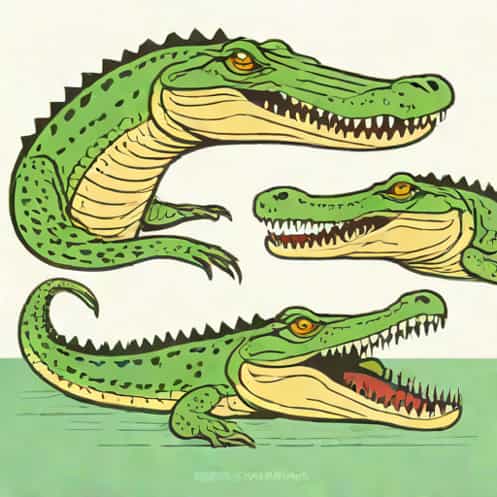
The gharial, mugger crocodile, and saltwater crocodile are three of the most fascinating reptilian predators found across South and Southeast Asia. Although they all belong to the crocodilian family, each species has unique adaptations, habitats, and behaviors that distinguish it from the others. These ancient reptiles play vital ecological roles as apex predators and indicators of healthy riverine and coastal ecosystems. Understanding the differences between the gharial, mugger, and saltwater crocodile helps highlight the diversity and conservation importance of these remarkable creatures.
The Gharial A Specialist of the River Ecosystem
The gharial (Gavialis gangeticus) is one of the most distinctive crocodilians in the world, easily recognizable by its long, narrow snout adapted for catching fish. Found primarily in the river systems of northern India and Nepal, the gharial is a species that has evolved specifically for aquatic life. Its streamlined body and webbed feet make it an excellent swimmer, though it is clumsy on land. Unlike other crocodilians, it rarely ventures far from the water’s edge.
Physical Characteristics
The gharial can grow up to 6 meters in length, making it one of the longest living crocodilians. The males have a bulbous growth called a ghara at the end of their snout, which they use to amplify hissing sounds and attract females. Its slender jaws are filled with over a hundred sharp, interlocking teeth designed for gripping slippery fish rather than tearing flesh, a sign of its piscivorous diet.
Habitat and Behavior
Gharials prefer deep, fast-flowing rivers with sandy banks for nesting. They are highly aquatic and spend most of their time in the water. During the breeding season, females lay their eggs in sandy nests, and the temperature of the nest determines the sex of the hatchlings. However, unlike other crocodiles, gharial mothers do not carry their young in their mouths due to their long, fragile snouts.
Conservation Status
The gharial is critically endangered due to habitat destruction, sand mining, and the depletion of fish populations. Dams and irrigation projects have fragmented river systems, reducing the available breeding and feeding grounds. Conservation programs in India, such as captive breeding and river release initiatives, have been launched to restore populations, but challenges remain significant.
The Mugger Crocodile The Versatile Predator
The mugger crocodile (Crocodylus palustris), also known as the marsh crocodile, is a more adaptable species found across India, Sri Lanka, Pakistan, and parts of Iran and Nepal. It thrives in a variety of habitats including rivers, lakes, marshes, and even man-made reservoirs. This adaptability has allowed the mugger to coexist more successfully with human-altered landscapes compared to the gharial.
Physical Characteristics
The mugger crocodile has a broad snout and a relatively short, sturdy body. Adults typically reach 3 to 4.5 meters in length, though larger individuals have been recorded. The mugger’s coloration ranges from olive to dark brown, helping it blend into muddy waters and riverbanks. Its powerful jaws allow it to feed on a wide variety of prey, from fish and amphibians to birds and mammals.
Habitat and Behavior
Muggers are ambush predators that rely on stealth and patience. They can remain submerged for long periods, waiting for unsuspecting prey to approach the water’s edge. Unlike the gharial, the mugger crocodile spends considerable time basking on riverbanks to regulate body temperature. During the dry season, they may dig burrows or retreat to water holes that retain moisture, exhibiting a behavior known as aestivation.
Conservation and Human Interaction
The mugger crocodile is listed as vulnerable, though its populations are relatively stable in protected areas. Habitat loss and human conflict remain concerns, as muggers sometimes attack livestock or people near water bodies. However, conservation programs and community education have helped reduce conflicts and protect key habitats, particularly in Indian sanctuaries like the National Chambal Sanctuary and Ranganathittu Bird Sanctuary.
The Saltwater Crocodile The Ocean-Going Giant
The saltwater crocodile (Crocodylus porosus) is the largest living reptile on Earth, capable of reaching lengths over 6 meters and weighing more than a ton. Unlike the gharial and mugger, it inhabits both freshwater and marine environments, making it the most widely distributed crocodilian species. Found from eastern India and Southeast Asia to northern Australia, the saltwater crocodile is a true apex predator of tropical waters.
Physical Characteristics
Saltwater crocodiles have a robust, muscular body covered in tough, scaly armor. Their powerful jaws exert one of the strongest bite forces in the animal kingdom, allowing them to capture and kill large prey such as deer, buffalo, and even sharks. Their coloration is usually dark gray or brown, with lighter undersides that provide camouflage in estuarine environments.
Habitat and Range
This species is highly versatile and can live in rivers, mangrove swamps, estuaries, and open seas. Saltwater crocodiles are strong swimmers and have been known to travel hundreds of kilometers across oceans, aided by ocean currents. They often patrol the mouths of rivers, where freshwater meets the sea, to hunt a wide variety of prey.
Behavior and Diet
Saltwater crocodiles are solitary and territorial, especially males who defend their territories aggressively. They are opportunistic feeders with a diet that includes fish, birds, reptiles, and mammals. Unlike gharials, they can take down large terrestrial animals by ambushing them near water and using the infamous death roll to tear apart flesh.
Conservation and Threats
Although once heavily hunted for their valuable hides, saltwater crocodile populations have rebounded in many regions thanks to legal protection and conservation efforts. However, human-crocodile conflict remains an issue, particularly in coastal areas where human settlements overlap with crocodile habitats. Proper management and awareness campaigns are essential to maintain this balance.
Comparing the Gharial, Mugger, and Saltwater Crocodile
While these three species share a common ancestry, their adaptations and ecological niches vary greatly. Here are some key differences
- Snout ShapeGharials have long, narrow snouts; muggers have broad ones; saltwater crocodiles have medium, V-shaped jaws.
- HabitatGharials prefer rivers; muggers inhabit freshwater marshes and lakes; saltwater crocodiles live in both freshwater and marine environments.
- DietGharials eat mainly fish; muggers eat fish, birds, and mammals; saltwater crocodiles consume large terrestrial and aquatic animals.
- SizeGharials can reach 6 meters, muggers around 4.5 meters, and saltwater crocodiles up to 7 meters.
- Conservation StatusGharial – Critically Endangered, Mugger – Vulnerable, Saltwater Crocodile – Least Concern.
The gharial, mugger crocodile, and saltwater crocodile each represent a unique evolutionary path within the crocodilian lineage. The gharial is a specialized fish-eater of the rivers, the mugger a versatile inhabitant of inland waters, and the saltwater crocodile a fearsome marine traveler. Together, they showcase the adaptability and diversity of crocodiles across Asia. Protecting these species not only preserves ancient predators but also maintains the ecological balance of the habitats they dominate. With continued conservation efforts and public awareness, there is hope that these remarkable reptiles will continue to thrive for generations to come.