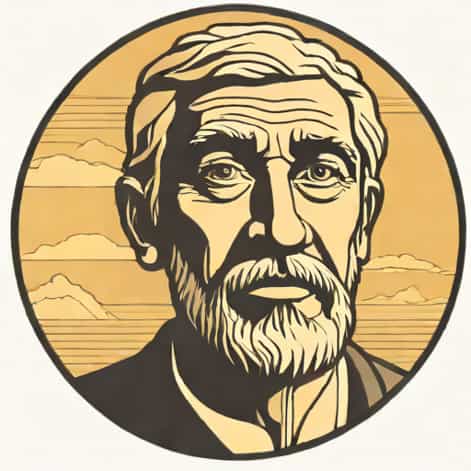
Zorba the Greek is often remembered for its lively spirit, vivid characters, and celebration of life, yet beneath its joyful surface lies a deep philosophical exploration of human existence. Written by Nikos Kazantzakis, the novel presents a powerful contrast between thought and action, restraint and freedom, fear and vitality. When read through an existential lens, Zorba the Greek reveals itself as a meditation on how individuals confront meaning, suffering, and choice in a world that offers no clear answers. The novel speaks not only to intellectual debates but also to everyday struggles about how one should live.
The Existential Context of the Novel
Existentialism is a philosophical approach that focuses on individual freedom, responsibility, and the search for meaning in an uncertain world. Although Zorba the Greek is not a formal philosophical treatise, it clearly reflects existential concerns. The novel explores how human beings respond to life’s absurdity, suffering, and unpredictability.
Kazantzakis was deeply influenced by thinkers such as Nietzsche and Bergson, and these influences shape the novel’s themes. Rather than presenting abstract arguments, Zorba the Greek dramatizes existential questions through character, dialogue, and lived experience.
The Narrator as the Existential Seeker
The unnamed narrator of Zorba the Greek represents the intellectual side of human existence. He is reflective, bookish, and often hesitant to act. His life is shaped by ideas, moral systems, and careful planning. In existential terms, he embodies the individual who seeks meaning through thought rather than direct experience.
Throughout the novel, the narrator struggles with fear, self-doubt, and indecision. He wants to understand life before fully engaging with it. This hesitation reflects a common existential dilemma the desire for certainty in a world that offers none.
The Limits of Intellectualism
The narrator’s reliance on reason and books often leaves him disconnected from the raw energy of life. He observes more than he participates. As events unfold, especially moments of joy and tragedy, his intellectual distance becomes both a shield and a prison.
Existential literature frequently questions whether pure rationality can provide authentic meaning. Zorba the Greek suggests that thought alone is insufficient.
Zorba as the Embodiment of Existential Freedom
Alexis Zorba, the novel’s central figure, represents the opposite approach to life. He is impulsive, passionate, and deeply connected to physical experience. Zorba dances, works, loves, and suffers without hesitation. He embraces life in all its contradictions.
From an existential perspective, Zorba embodies radical freedom. He does not wait for permission, certainty, or justification. He acts, and through action, he creates meaning.
Action as a Response to Absurdity
Life in Zorba the Greek is often harsh and unpredictable. Projects fail, people suffer, and death arrives suddenly. Rather than despairing, Zorba responds with laughter, music, and movement. His famous dances are not escapes from reality but affirmations of existence.
This response aligns with existential ideas about confronting absurdity not with resignation, but with defiance and vitality.
The Relationship Between Zorba and the Narrator
The dynamic between Zorba and the narrator is central to the novel’s existential meaning. Zorba challenges the narrator’s passivity, while the narrator observes Zorba with a mixture of admiration and confusion.
Their conversations explore fundamental questions about God, morality, freedom, and death. Zorba often dismisses abstract explanations, insisting that life must be lived rather than explained.
Suffering, Death, and Human Response
Zorba the Greek does not shy away from suffering. The novel includes moments of loss, injustice, and cruelty. These events emphasize the existential idea that suffering is an unavoidable part of human existence.
The question is not whether suffering exists, but how individuals respond to it. The narrator tends toward reflection and silence, while Zorba confronts pain with intensity and expression.
Acceptance Without Resignation
Existentialism does not offer comfort through false hope. Similarly, Zorba the Greek presents acceptance without surrender. Zorba acknowledges pain but refuses to let it diminish his passion for life.
This attitude suggests an existential ethic rooted in courage and honesty rather than illusion.
Freedom and Responsibility in the Novel
Existential thought emphasizes that freedom comes with responsibility. Zorba is free, but his actions have consequences. His relationships, choices, and failures shape both his own life and the lives of others.
The novel does not idealize Zorba completely. His freedom can be reckless, and his intensity can cause harm. This complexity adds depth to the existential reading, showing that freedom is both empowering and dangerous.
The Role of Nature and the Body
Zorba the Greek places great emphasis on physical labor, the natural world, and bodily experience. Mining, farming, eating, dancing, and sexuality are all portrayed as essential aspects of life.
In existential terms, this focus grounds meaning in lived reality rather than abstract ideals. The body becomes a source of knowledge and truth, reminding readers that existence is concrete and immediate.
Language, Music, and Dance as Meaning
Zorba often struggles to express himself through words alone. Instead, he turns to music and dance. These forms of expression transcend rational explanation and communicate emotion directly.
This suggests that meaning is not always verbal or logical. Sometimes, it is felt, embodied, and shared through movement and sound.
- Dance as affirmation of life
- Music as emotional truth
- Silence as acceptance
Zorba the Greek and Existential Literature
When compared to other existential novels, Zorba the Greek stands out for its warmth and vitality. While many existential works emphasize alienation and despair, Kazantzakis offers an alternative vision.
The novel suggests that confronting life’s uncertainty does not require withdrawal or cynicism. Instead, it can lead to deeper engagement, joy, and creativity.
The Transformative Effect on the Narrator
By the end of the novel, the narrator has not become Zorba, but he has changed. He learns to let go of excessive control and embrace experience more fully. This transformation reflects an existential awakening.
The narrator realizes that meaning is not discovered in isolation but created through participation in life.
Zorba the Greek can be read as a powerful existential novel that explores how individuals respond to freedom, suffering, and the absence of absolute meaning. Through the contrast between Zorba and the narrator, Kazantzakis presents two ways of being in the world.
The novel ultimately suggests that while thought and reflection have value, life demands courage, action, and presence. Zorba the Greek invites readers to dance with existence itself, embracing both joy and pain as essential parts of being human. In doing so, it offers an existential vision that is not bleak, but profoundly alive.