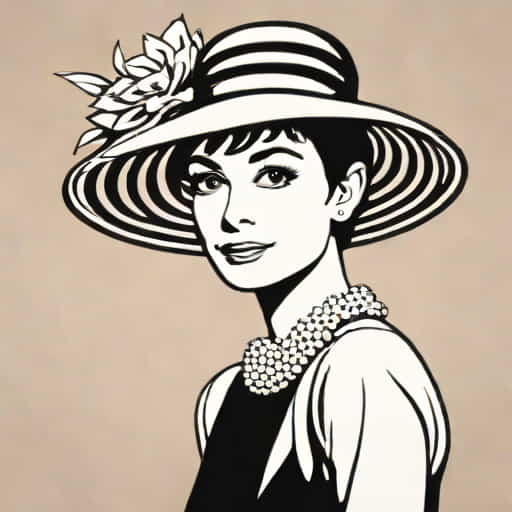
Audrey Hepburn’s performance in My Fair Lady remains one of the most iconic moments in cinematic history, showcasing her elegance, charm, and incredible talent. The 1964 musical film, based on the stage production of the same name, allowed Hepburn to demonstrate her ability to blend grace with comedic timing, creating a character that has endured in popular culture for decades. Her portrayal of Eliza Doolittle, a Cockney flower girl transformed into a sophisticated lady under the tutelage of Professor Henry Higgins, captivated audiences and solidified Hepburn’s status as one of Hollywood’s most beloved actresses. The combination of her natural poise, expressive acting, and unforgettable musical performances contributed to the lasting appeal of My Fair Lady and continues to inspire generations of film lovers and performers.
The Story of My Fair Lady
My Fair Lady tells the story of Eliza Doolittle, a poor flower girl with a thick Cockney accent, who becomes the subject of a social experiment conducted by the linguistics professor Henry Higgins. Higgins wagers that he can transform Eliza into a refined lady capable of speaking and behaving like a member of high society. The story explores themes of class distinction, identity, and personal transformation, with humor, romance, and memorable musical numbers woven throughout. Audrey Hepburn’s portrayal of Eliza captures the vulnerability, determination, and charm of a woman navigating a world of societal expectations while discovering her own potential.
Audrey Hepburn’s Casting and Preparation
Audrey Hepburn was cast as Eliza Doolittle despite some controversy over the decision, as many critics and fans of the original stage production expected Julie Andrews, who had originated the role on Broadway, to star in the film. Hepburn faced challenges in preparing for the role, including mastering the Cockney accent and adapting her singing style to suit the musical’s demands. She worked with vocal coaches to deliver the songs, although her singing was later dubbed in parts by Marni Nixon. Despite these challenges, Hepburn’s performance brought a delicate balance of elegance, humor, and emotional depth that has become inseparable from the character of Eliza Doolittle.
Memorable Musical Performances
The musical numbers in My Fair Lady are central to the film’s success, and Audrey Hepburn’s performances are unforgettable. Songs like Wouldn’t It Be Loverly, I Could Have Danced All Night, and The Rain in Spain highlight Eliza’s transformation and Hepburn’s ability to convey both innocence and sophistication. Her expressive movements, timing, and emotional delivery bring these songs to life, creating moments that remain etched in the minds of audiences. Even with dubbing in certain songs, Hepburn’s presence and interpretation give each number a unique charm that complements the film’s narrative and visual elegance.
Iconic Scenes and Character Development
Audrey Hepburn’s portrayal of Eliza Doolittle is marked by several iconic scenes that showcase her acting prowess and character development. From the opening sequence where Eliza sells flowers on the streets of London, to the transformation scenes under Professor Higgins’ guidance, Hepburn captures the emotional journey of a woman discovering her own identity and agency. The famous I Could Have Danced All Night scene exemplifies her ability to blend joy, excitement, and vulnerability, highlighting the character’s emotional growth and the broader themes of social mobility and personal empowerment.
- The transformation of Eliza from a streetwise flower girl to a refined lady.
- The humorous and sometimes tense interactions between Eliza and Professor Higgins.
- The subtle displays of emotion that reveal Eliza’s internal struggles and triumphs.
- Memorable dialogue and moments that reflect class differences and societal expectations.
Critical Reception and Awards
Upon its release, My Fair Lady received widespread acclaim for its performances, production design, and musical score. Audrey Hepburn’s portrayal of Eliza Doolittle was praised for its grace, charm, and emotional resonance, though some critics debated the decision to dub portions of her singing. The film won multiple Academy Awards, including Best Picture, and continues to be regarded as one of the greatest musical films of all time. Hepburn’s performance contributed significantly to the film’s success, and her interpretation of Eliza remains a benchmark for actresses taking on challenging musical roles.
Legacy of Audrey Hepburn in My Fair Lady
The impact of Audrey Hepburn’s performance extends beyond the immediate success of the film. Her portrayal of Eliza Doolittle has influenced generations of performers and has become a cultural touchstone. Hepburn’s combination of elegance, comedic timing, and emotional depth set a standard for musical performances in cinema. Fashion and style elements from the film, particularly her costumes, also left a lasting mark, reflecting Hepburn’s influence as a style icon. The role of Eliza Doolittle is inseparable from Hepburn’s persona, and her interpretation continues to be celebrated in retrospectives, stage adaptations, and popular media.
- Established Audrey Hepburn as a musical film icon.
- Influenced subsequent performances of Eliza Doolittle on stage and screen.
- Demonstrated the combination of acting, singing, and expressive physicality.
- Contributed to the enduring popularity of classic Hollywood musicals.
Why My Fair Lady Remains Relevant Today
Even decades after its release, My Fair Lady remains relevant due to its timeless story, memorable music, and Audrey Hepburn’s captivating performance. The film continues to be screened, studied, and appreciated by new audiences who admire its artistry and the depth of Hepburn’s portrayal. Themes of social mobility, self-discovery, and the challenges of societal expectations resonate with viewers, making the story of Eliza Doolittle both entertaining and meaningful. Hepburn’s elegance and talent ensure that the film’s charm endures, reminding audiences of the golden era of Hollywood musicals and the artistry that defined it.
Audrey Hepburn’s performance in My Fair Lady remains a defining moment in her illustrious career. Her portrayal of Eliza Doolittle captures the essence of transformation, resilience, and grace, bringing to life a character that continues to inspire audiences worldwide. Through memorable musical performances, expressive acting, and timeless charm, Hepburn ensured that My Fair Lady would remain a beloved classic in the history of cinema. The film and her performance continue to influence actors, musicians, and fashion enthusiasts, proving that Audrey Hepburn’s legacy in My Fair Lady is as enduring as it is iconic.