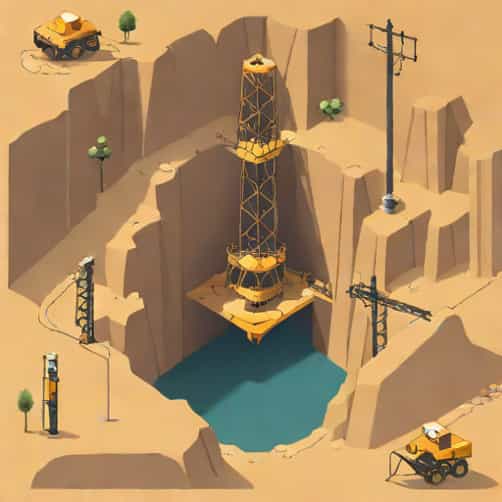
When people think about mining, they often imagine open pits or shallow tunnels cutting through the earth. However, the world’s deepest mines go far beyond that picture-descending several kilometers below the surface where temperatures rise, air becomes thin, and the work becomes extremely challenging. The quest for valuable minerals, especially gold, has driven engineers to push the limits of human capability and technology. The deepest mine in the world is not just an engineering marvel but also a symbol of human determination to explore the planet’s hidden depths.
Overview of the Deepest Mine in the World
The title of the deepest mine in the world belongs to theMponeng Gold Mine, located in South Africa near the town of Carletonville, southwest of Johannesburg. Operated by Harmony Gold, Mponeng reaches a depth of around 4 kilometers (approximately 2.5 miles) beneath the Earth’s surface. In some parts, it extends even deeper-making it the most extreme example of underground mining on the planet.
Mponeng’s depth creates a unique set of conditions. Temperatures in the mine can soar to over 60°C (140°F), though powerful cooling systems reduce it to around 30°C (86°F) for workers. The intense heat, high pressure, and risk of seismic activity make mining here one of the toughest industrial jobs in the world.
History and Development of Mponeng Mine
The Mponeng Mine was originally part of the West Wits mining region, which has been a hub for gold mining since the early 20th century. The name Mponeng comes from a local Setswana word meaning look at me, a fitting name for a mine that stands out for its depth and complexity.
Mining operations began decades ago under AngloGold Ashanti, one of the largest gold mining companies in the world. Over time, as easier-to-access deposits were exhausted, mining engineers drilled deeper into the earth to reach new ore bodies. In 2020, Harmony Gold acquired Mponeng, continuing its operation with modern safety and cooling technologies. Today, it remains one of South Africa’s most productive gold mines, yielding significant amounts of gold each year despite the extreme working conditions.
The Challenge of Working at Extreme Depths
Working in the world’s deepest mine is no ordinary task. The deeper miners go, the greater the heat, pressure, and risk. At depths beyond 3.5 kilometers, the rock pressure is immense-thousands of tons per square meter. Even a small rock fracture can trigger micro-seismic tremors that endanger workers and equipment.
- HeatNatural geothermal gradients cause the temperature to rise dramatically. Without industrial refrigeration systems, it would be impossible for humans to survive at such depths.
- Air QualityVentilation systems must constantly pump oxygen and remove carbon dioxide and dust.
- SafetyConstant monitoring is required to detect seismic activity, gas leaks, or potential cave-ins.
- TransportationMiners spend up to an hour descending to their work areas via elevators and tunnels that go down several kilometers.
These conditions demand specialized technology and rigorous safety protocols. Despite these challenges, thousands of workers continue to extract gold from Mponeng every day, contributing significantly to South Africa’s mining economy.
Technology Behind the Deepest Mine
The operation of such a deep mine relies on some of the most advanced mining technologies in the world. The infrastructure must sustain not only human workers but also heavy machinery and continuous power supply in an environment that tests the limits of endurance.
Cooling Systems
Cooling is one of the most crucial aspects of deep mining. Mponeng uses massive ice-cooling plants that produce slurry ice, which is then circulated through underground tunnels to absorb heat. This system keeps temperatures at manageable levels and ensures that workers can perform their duties without overheating.
Ventilation and Air Circulation
Ventilation shafts pump fresh air into the tunnels and remove hot, humid air. The deeper the mine, the more complex the ventilation design becomes, as air pressure and temperature differences increase with depth.
Seismic Monitoring
Because deep mining disturbs geological formations, Mponeng is equipped with seismic sensors that detect even the smallest tremors. Engineers use this data to assess risks and adjust operations in real-time, reducing the chance of accidents.
Life of a Miner at Mponeng
Daily life for miners in the world’s deepest mine is a demanding routine. Workers start their shifts early, taking lifts that descend nearly 4 kilometers below the surface. The journey down can take up to 45 minutes, passing through multiple levels. Once underground, they face heat, humidity, and total darkness except for the lights on their helmets.
Despite the harsh conditions, safety standards are strict. Miners wear protective clothing, carry oxygen monitors, and follow detailed procedures designed to minimize risks. Teamwork and communication are vital, as every operation must be coordinated to ensure safety and efficiency.
Economic Importance of Deep Mining
South Africa’s economy has long relied on gold mining, and Mponeng continues to play a significant role. While global gold reserves are declining, deep mines like Mponeng make it possible to access new deposits that lie far below the earth’s surface. The mine’s output supports not only local workers but also the broader economy through exports and investments in mining technology.
However, deep mining is expensive and resource-intensive. The cost of maintaining ventilation, cooling, and safety systems is enormous. As a result, mining companies are constantly balancing profitability with safety and sustainability.
Environmental and Safety Concerns
Mining at extreme depths has raised questions about environmental impact and worker safety. Extracting gold requires energy-intensive processes that contribute to greenhouse gas emissions. Additionally, seismic activity caused by mining can alter local geology. Harmony Gold has implemented various sustainability measures to reduce energy use and recycle water used in the cooling systems.
Safety remains a top priority. Although modern technology has reduced accidents, the risks of rock bursts and equipment failure persist. Continuous monitoring, training, and emergency preparedness are essential to protect the thousands of workers who enter the mine every day.
Other Deep Mines Around the World
While Mponeng is the deepest, several other mines come close in depth and scale. These include
- TauTona Mine(South Africa) – Once reaching about 3.9 kilometers deep before merging operations with Mponeng.
- Driefontein Mine(South Africa) – Another major gold mine in the same region, extending beyond 3 kilometers.
- Kidd Creek Mine(Canada) – The deepest base metal mine in the world, extracting copper and zinc at depths of around 3 kilometers.
These mines represent remarkable achievements in engineering and continue to push the boundaries of human exploration beneath the Earth’s surface.
The Future of Deep Mining
As global demand for precious metals continues, the future of deep mining will depend on new technologies and safety innovations. Automation and remote-controlled equipment are already being tested to reduce human exposure to extreme conditions. Artificial intelligence and advanced sensors are also being integrated to improve monitoring and decision-making underground.
While the Mponeng Gold Mine remains the world’s deepest mine today, the industry’s drive for efficiency and safety could lead to even deeper operations in the future. However, environmental sustainability will play a key role in determining how far companies are willing to go to extract the planet’s remaining mineral wealth.
The world’s deepest mine, Mponeng in South Africa, stands as a testament to human ingenuity and endurance. Reaching depths of nearly 4 kilometers, it operates in one of the most extreme environments imaginable. The combination of advanced engineering, strict safety measures, and the enduring spirit of miners allows this underground world to function every day. As mining technology evolves, Mponeng may one day be surpassed, but for now, it remains the ultimate symbol of mankind’s determination to uncover the riches hidden deep within the Earth.