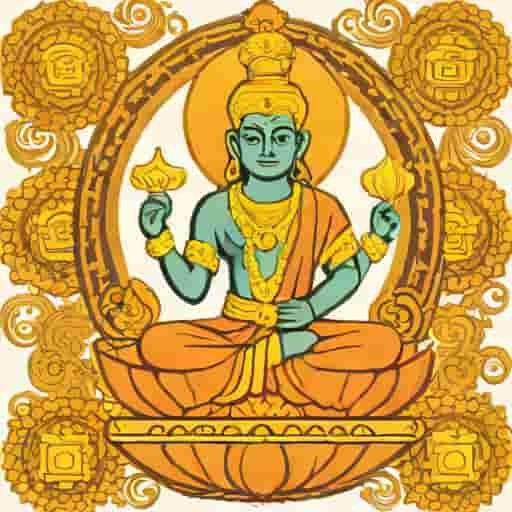
In Hinduism, the concept of cosmic preservation is central to understanding the balance of the universe, and the god most closely associated with this role is Vishnu, widely revered as the Preserver. Vishnu’s role as the Preserver is integral to the Hindu trinity, or Trimurti, which also includes Brahma the Creator and Shiva the Destroyer. While Brahma brings the universe into existence and Shiva oversees its transformation or dissolution, Vishnu maintains order, protects dharma (cosmic law), and ensures the stability and continuity of life. This role highlights not only divine responsibility but also the importance of balance, morality, and sustenance in Hindu cosmology. The concept of preservation goes beyond mere survival; it involves active protection, guidance, and intervention when cosmic or moral order is threatened.
The Role of Vishnu as the Preserver
Vishnu, as the Preserver, embodies mercy, benevolence, and protection. He is often depicted with blue skin, symbolizing his infinite nature, and holding four attributes in his hands a conch (symbolizing the cosmic sound), a discus (representing the mind and power), a mace (signifying strength), and a lotus (denoting purity and creation). These symbols collectively represent his role in maintaining balance, intervening in the world, and guiding humanity toward righteousness. Vishnu’s preservation extends to all aspects of existence, including humans, animals, and the universe itself, reflecting his all-encompassing influence and compassionate nature.
Vishnu’s Incarnations (Avatars)
One of the most unique aspects of Vishnu as the Preserver is his ability to incarnate in various forms, called avatars, whenever the world faces significant threats. These incarnations serve to restore dharma and protect the innocent. The most famous avatars include
- RamaThe hero of the Ramayana, embodying virtue, justice, and adherence to dharma.
- Krsna (Krishna)Central to the Mahabharata and Bhagavad Gita, guiding humanity through wisdom, diplomacy, and divine love.
- NarasimhaThe half-man, half-lion form, who preserved cosmic order by defeating the tyrant Hiranyakashipu.
- VamanaThe dwarf incarnation, who restored balance by subduing the demon king Bali.
Through these avatars, Vishnu demonstrates active intervention in the world, ensuring that goodness triumphs over evil and that dharma is upheld.
The Philosophical Significance of Preservation
In Hindu philosophy, preservation is more than protecting physical life; it is about maintaining moral, ethical, and spiritual order. Vishnu, as the Preserver, ensures that the universe functions harmoniously, that societal norms aligned with dharma are respected, and that human beings are guided toward righteous living. Preservation is thus a holistic concept, encompassing both material sustenance and spiritual guidance.
Key Aspects of Vishnu’s Preservation
- Protection of DharmaVishnu ensures that the cosmic law and moral order are maintained, intervening when chaos or adharma (unrighteousness) prevails.
- Guidance of HumanityThrough avatars, teachings, and divine interaction, Vishnu helps humanity navigate moral dilemmas and spiritual challenges.
- Balance of the UniverseVishnu’s role ensures that the creation and destruction cycles initiated by Brahma and Shiva proceed without disorder.
- Compassion and MercyHis preservation is marked by care for all beings, reflecting the principle of ahimsa (non-violence) and universal benevolence.
This comprehensive approach illustrates how preservation is both proactive and reactive, addressing threats to order while nurturing life and spiritual growth.
Worship and Devotion to Vishnu
Devotion to Vishnu, the Preserver, is widespread across India and in many Hindu communities worldwide. Temples dedicated to Vishnu, such as the famous Tirupati Balaji Temple and the Jagannath Temple in Puri, are centers of pilgrimage and devotion. Devotees engage in various practices to honor Vishnu’s preserving role, including prayer, meditation, chanting of mantras, and participation in festivals celebrating his avatars.
Popular Practices
- Chanting Vishnu MantrasReciting the Om Namo Bhagavate Vasudevaya mantra to invoke protection and guidance.
- Observing FestivalsCelebrating events like Janmashtami (Krishna’s birth) and Rama Navami (Rama’s birth) as reminders of preservation through divine intervention.
- Temple WorshipOffering prayers, food, and flowers to Vishnu idols as acts of devotion and reverence.
- Reading Sacred TextsStudying the Bhagavad Gita, Vishnu Purana, and Ramayana to understand dharma and the principles of divine preservation.
Through these practices, devotees express gratitude for Vishnu’s protective care and seek his guidance in personal and spiritual matters.
Symbolism and Iconography
Vishnu’s depiction as the Preserver carries deep symbolic meaning. His blue skin reflects infinite depth and his omnipresence, while his four arms symbolize his ability to act in multiple directions to maintain cosmic order. Each item he holds represents essential aspects of preservation
- Conch (Shankha)Symbolizes the sacred sound of creation and the spread of divine wisdom.
- Discus (Chakra)Represents mental clarity, power, and protection against evil forces.
- Mace (Gada)Denotes strength, authority, and the ability to uphold justice.
- Lotus (Padma)Embodies purity, spiritual awakening, and the nurturing of life.
These symbols collectively emphasize the Preserver’s active role in sustaining life, morality, and spiritual order.
Vishnu’s Role in Hindu Cosmology
In the Hindu understanding of the cosmos, Vishnu’s preservation is essential for maintaining balance between creation and destruction. While Brahma initiates creation and Shiva facilitates transformation, Vishnu ensures continuity and stability. Without preservation, creation would be chaotic and short-lived. Thus, Vishnu’s role is indispensable for the proper functioning of the universe, bridging the energies of creation and destruction with mercy, guidance, and protection.
Interconnected Roles of the Trimurti
- Brahma (Creator)Brings the universe into existence and initiates life cycles.
- Vishnu (Preserver)Maintains cosmic balance, sustains life, and guides humanity.
- Shiva (Destroyer)Facilitates transformation and renewal through destruction of what is corrupt or unnecessary.
This triadic system illustrates a sophisticated understanding of the universe, where preservation ensures continuity, moral integrity, and spiritual progress.
The Hindu god Vishnu, known as the Preserver, occupies a crucial place in both theology and devotional practice. His role extends beyond protecting the physical universe to preserving dharma, guiding humanity, and maintaining spiritual and moral order. Through his avatars, symbols, and teachings, Vishnu demonstrates that preservation is an active, compassionate, and dynamic force that ensures balance and continuity. Devotion to Vishnu encourages ethical living, spiritual growth, and faith in divine guidance. By understanding Vishnu’s role as the Preserver, believers gain insight into the broader principles of Hindu cosmology, emphasizing the interconnection between creation, sustenance, and transformation, and the enduring power of divine protection.