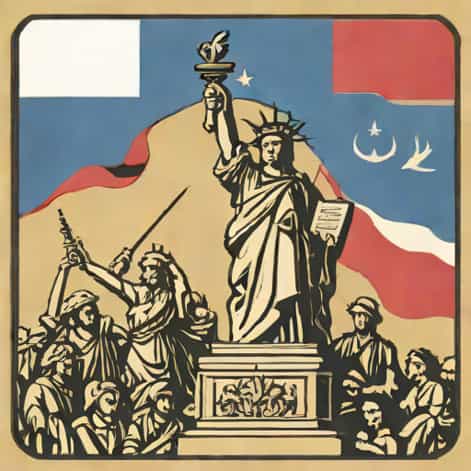
The French Revolution was one of the most transformative events in human history, reshaping the political, social, and cultural landscape of Europe. Taking place in the year 1789 and continuing through the 1790s, it marked the end of absolute monarchy in France and introduced ideas of liberty, equality, and fraternity that continue to influence the modern world. The revolution was not just a French event; it inspired democratic movements across continents and challenged centuries-old systems of power and privilege. Understanding the causes, events, and consequences of the French Revolution provides insight into how societies evolve and how ordinary people can change the course of history.
The Year 1789 The Beginning of the French Revolution
The year 1789 is recognized as the starting point of the French Revolution. France at that time was under the rule of King Louis XVI, and the nation was in deep financial trouble. Years of wars, including support for the American Revolution, had left the country in massive debt. The economy was in crisis, the tax system was unfair, and the majority of citizens known as the Third Estate bore the heaviest burden while the nobility and clergy lived in privilege.
In May 1789, the Estates-General was called to meet for the first time in 175 years. This assembly was supposed to find solutions to France’s economic problems, but it instead revealed the deep divisions within French society. The Third Estate, representing the common people, soon broke away and declared itself the National Assembly, signaling the start of a revolutionary movement that would transform France forever.
The Tennis Court Oath
One of the defining moments in 1789 was the Tennis Court Oath. When the Third Estate was locked out of their meeting hall, they gathered in an indoor tennis court and swore not to disband until they had written a new constitution for France. This act of defiance showed the determination of ordinary citizens to take control of their political future and challenged the authority of the king.
The Tennis Court Oath symbolized the birth of popular sovereignty the idea that power should come from the people, not from hereditary rulers. This concept became one of the central principles of the revolution and a foundation for modern democracy.
The Storming of the Bastille
On July 14, 1789, tensions in Paris erupted into violence with the Storming of the Bastille, a medieval fortress and prison that represented royal tyranny. Citizens, angered by rising bread prices and rumors of military action against them, seized weapons and attacked the fortress. The fall of the Bastille became a powerful symbol of freedom and the collapse of royal authority.
Today, July 14 is celebrated as Bastille Day in France, marking the birth of the nation’s modern identity. The event demonstrated that the people of France were willing to fight for their rights and would no longer tolerate oppression from the monarchy.
The Social and Economic Causes of the Revolution
The French Revolution was fueled by a combination of long-standing social inequalities and economic distress. France’s population was divided into three estates
- The First EstateThe clergy, who enjoyed tax exemptions and owned large amounts of land.
- The Second EstateThe nobility, who also avoided most taxes and held key government and military positions.
- The Third EstateEveryone else, including peasants, urban workers, and the middle class (bourgeoisie), who made up around 98% of the population but had little political power.
In addition to inequality, the country’s financial crisis was severe. France’s involvement in expensive wars, combined with extravagant royal spending, left the government bankrupt. King Louis XVI’s attempts to raise taxes failed because the privileged classes resisted reforms. Meanwhile, bad harvests led to food shortages, rising bread prices, and widespread hunger. For many ordinary French citizens, survival itself became a daily struggle, fueling anger toward the monarchy and the aristocracy.
Key Events Following 1789
While 1789 was the year the revolution began, the years that followed saw escalating conflict and dramatic change. The monarchy, church, and traditional institutions were all transformed or destroyed as revolutionary fervor spread.
The Declaration of the Rights of Man and of the Citizen
In August 1789, the National Assembly adopted the Declaration of the Rights of Man and of the Citizen, one of the most significant documents in history. It proclaimed that men are born and remain free and equal in rights, establishing the principles of liberty, property, security, and resistance to oppression. Inspired by Enlightenment ideas and the American Declaration of Independence, it became a model for human rights movements around the world.
The Abolition of Feudalism
On the night of August 4, 1789, the National Assembly voted to abolish feudal privileges. Nobles and clergy gave up their rights to collect taxes and special dues from peasants. This historic decision effectively ended centuries of feudal oppression and established equality before the law.
The Fall of the Monarchy
Despite these reforms, tensions continued to grow. In 1791, King Louis XVI attempted to flee the country but was captured and brought back to Paris. His betrayal destroyed the last remnants of trust between the monarchy and the people. By 1792, the monarchy was abolished, and France was declared a republic. The king was put on trial for treason and executed by guillotine in January 1793, followed by his wife, Queen Marie Antoinette.
The Reign of Terror
After the execution of the king, France entered one of the most violent periods of its history the Reign of Terror (1793 1794). Led by Maximilien Robespierre and the Committee of Public Safety, the government sought to eliminate enemies of the revolution. Thousands were executed by guillotine, including former nobles, clergy, and even revolutionary leaders accused of betrayal.
The Reign of Terror showed the extremes to which revolutionary zeal could go. While it defended the revolution from internal and external enemies, it also demonstrated the dangers of unchecked power and political fanaticism.
The Rise of Napoleon Bonaparte
By 1799, the revolution had lost much of its direction. Economic hardship, political instability, and ongoing wars had exhausted the nation. Amid this chaos, a young and ambitious military leader named Napoleon Bonaparte seized power through a coup d’état. He established the Consulate, later declaring himself Emperor of France in 1804. Although Napoleon’s rule ended the revolution, he preserved many of its reforms, such as equality before the law and the end of feudal privileges.
Napoleon spread revolutionary ideals across Europe through his conquests, reshaping nations and inspiring movements for independence and reform. In many ways, his rise marked the continuation of the revolutionary spirit, even under a new form of leadership.
The Impact of the French Revolution
The French Revolution profoundly changed not only France but the entire world. It dismantled the old social order and introduced modern ideas about democracy, human rights, and citizenship. Monarchies across Europe watched in fear as revolutionary ideals spread, leading to political reforms and uprisings in other countries.
Some of the key legacies of the revolution include
- The end of feudal privileges and class-based inequality.
- The establishment of secularism and separation of church and state.
- The rise of nationalism and the idea that sovereignty belongs to the people.
- The influence on later revolutions, including those in Latin America and Europe in the 19th century.
Although the revolution’s path was violent and complex, its achievements laid the foundation for the modern democratic world. The principles of liberty, equality, and fraternity remain central to French identity and continue to inspire movements for justice and freedom globally.
The year 1789 marked the beginning of the French Revolution, a turning point that forever changed the course of history. What began as a struggle against financial crisis and inequality evolved into a fight for democracy and human rights. The revolution overthrew the monarchy, transformed society, and introduced political ideas that still shape nations today. Despite its violence and contradictions, the French Revolution remains a symbol of the power of the people to demand change and the enduring quest for liberty and justice. Its influence echoes through every modern constitution and continues to remind us of the importance of equality and civic freedom in shaping a better world.