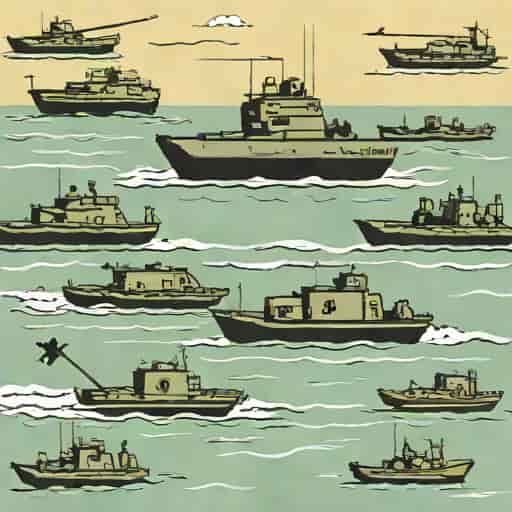
The largest amphibious invasion in history is widely recognized as the Allied invasion of Normandy, known as D-Day, which took place on June 6, 1944, during World War II. This monumental military operation involved an unprecedented combination of land, sea, and air forces, aimed at liberating Nazi-occupied Western Europe. The planning, logistics, and execution of this operation were unparalleled in the history of warfare. It required meticulous coordination among multiple Allied nations, including the United States, the United Kingdom, Canada, and Free French forces. D-Day is remembered not only for its scale and complexity but also for its strategic significance, marking a turning point in World War II and demonstrating the immense human effort and ingenuity required to conduct such a massive amphibious assault.
Background of the Normandy Invasion
By 1944, Nazi Germany controlled much of Western Europe, and the Allies were searching for a way to open a Western front to relieve pressure on the Soviet Union in the East. The invasion of Normandy was conceived as the most effective method to achieve this goal. Planning for the operation, codenamed Operation Overlord, began years in advance, involving extensive reconnaissance, deception strategies, and the construction of specialized equipment. The Allies aimed to secure a foothold in France that would allow for the gradual liberation of Western Europe, ultimately leading to the defeat of Nazi Germany. The choice of Normandy as the landing site was influenced by several factors, including its beaches, relative distance from German fortifications, and the element of surprise.
Planning and Logistics
Executing the largest amphibious invasion required careful planning and extraordinary logistical coordination. The Allies amassed over 5,000 ships, 13,000 aircraft, and approximately 156,000 troops for the initial assault. These forces were supported by an enormous amount of supplies, including tanks, artillery, ammunition, and food, all of which had to be transported across the English Channel. Extensive deception operations, such as Operation Bodyguard, were employed to mislead the Germans about the actual landing site, ensuring that Normandy would face less resistance than expected. Planning also involved precise timing, with landings coordinated to coincide with low tides, moonlight conditions, and synchronized bombardments from air and naval forces.
The Amphibious Assault on D-Day
The invasion commenced in the early hours of June 6, 1944. Thousands of paratroopers were dropped behind enemy lines in Normandy to disrupt German defenses and secure key positions. Following this, waves of landing craft transported soldiers from the sea onto five designated beaches Utah, Omaha, Gold, Juno, and Sword. Each beach presented unique challenges, including fortified bunkers, minefields, and obstacles designed to impede the landing. Despite heavy German resistance, the Allied forces managed to establish beachheads and begin their advance inland. The courage and determination of soldiers during these landings have been widely documented and celebrated in military history.
Challenges and Obstacles
The Normandy invasion faced numerous challenges that tested the Allies’ planning and resilience. Rough seas, strong tides, and adverse weather conditions delayed some landing operations and caused the loss of equipment and personnel. German fortifications, including artillery, machine-gun nests, and barbed wire, inflicted heavy casualties, particularly at Omaha Beach. Communication difficulties, navigational errors, and the chaos of battle further complicated the operation. Nevertheless, the adaptability of the Allied commanders and the determination of the troops allowed them to overcome these obstacles and maintain momentum, gradually securing critical positions along the coastline.
Strategic Importance
The success of the Normandy invasion had profound strategic implications for World War II. Establishing a Western front forced Germany to divert troops from the Eastern front, where the Soviet Union was pressing hard. This two-front pressure weakened German defenses and accelerated the overall collapse of Nazi control in Europe. The invasion also allowed the Allies to advance into France, eventually leading to the liberation of Paris in August 1944. By creating a secure foothold, D-Day facilitated subsequent operations across Western Europe, enabling coordinated military campaigns that would ultimately lead to Germany’s surrender in May 1945.
Coordination Among Allied Forces
Operation Overlord required unprecedented cooperation among multiple Allied nations. American, British, and Canadian forces coordinated their landings, while air and naval support was provided by combined fleets from these nations. Intelligence-sharing, joint planning, and unified command structures were crucial to the operation’s success. Engineers and logisticians worked alongside combat units to clear obstacles, construct temporary harbors, and ensure that reinforcements and supplies could reach the front lines. This level of international cooperation set a precedent for future military alliances and demonstrated the importance of strategic collaboration in large-scale operations.
Casualties and Human Cost
The largest amphibious invasion in history came at a significant human cost. Estimates suggest that on D-Day alone, over 10,000 Allied soldiers were killed, wounded, or went missing. German casualties were also substantial, with thousands of soldiers defending the beaches and inland positions. Beyond the immediate casualties, the operation caused disruption to local civilian populations, leading to displacement and damage to infrastructure. The bravery and sacrifices of those involved are remembered in numerous memorials, museums, and historical accounts, highlighting the immense human effort required to conduct such a complex military operation.
Legacy and Commemoration
The legacy of the Normandy invasion extends far beyond the immediate military victory. D-Day has become a symbol of courage, sacrifice, and strategic ingenuity in the face of overwhelming odds. Annual commemorations, documentaries, and scholarly studies continue to honor the soldiers who fought and the planners who coordinated the operation. The invasion also influenced military tactics and amphibious warfare strategies in subsequent conflicts, providing lessons on logistics, planning, and the integration of land, sea, and air forces.
Technological and Tactical Innovations
The Normandy invasion showcased several technological and tactical innovations that contributed to its success. Specialized landing craft, such as the Higgins boats, were developed to transport troops and vehicles directly onto beaches. Engineers used temporary floating harbors called Mulberry harbors to facilitate the rapid offloading of supplies. Additionally, pre-invasion aerial bombardments and naval gunfire were coordinated with infantry landings to suppress German defenses. These innovations reflected careful planning and the integration of new technologies into traditional military tactics, highlighting the adaptability and ingenuity of the Allied forces.
Impact on Modern Military Strategy
The principles and lessons learned from the largest amphibious invasion in history continue to influence modern military strategy. The operation demonstrated the importance of intelligence, deception, coordination, and logistical planning in large-scale operations. Military academies and training programs frequently study D-Day to understand the complexities of amphibious assaults, the challenges of joint operations, and the value of international collaboration. The invasion’s success reinforced the notion that careful preparation and innovation can overcome formidable defenses and achieve strategic objectives.
The Allied invasion of Normandy stands as the largest amphibious invasion in history, combining unparalleled planning, coordination, and bravery to achieve a decisive victory. The operation’s scale, complexity, and strategic importance made it a turning point in World War II, ultimately leading to the liberation of Western Europe and the defeat of Nazi Germany. The sacrifices of thousands of soldiers, the innovations in military technology and strategy, and the lessons learned from overcoming tremendous challenges continue to resonate in military history and education. D-Day remains a powerful reminder of human determination, international cooperation, and the profound impact of well-executed planning in shaping the course of history.