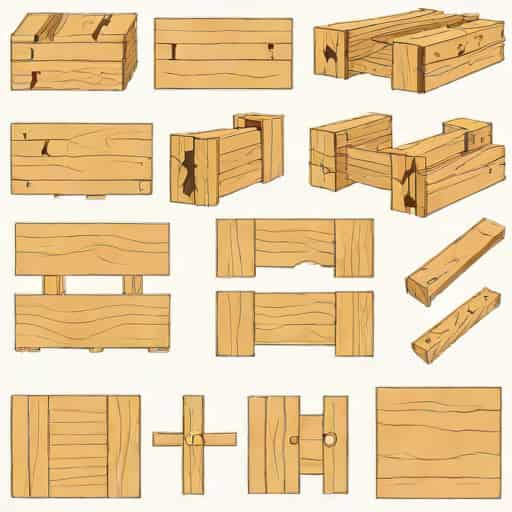
The mortise and tenon joint is one of the oldest and most reliable woodworking techniques, with a history spanning thousands of years. This traditional joinery method involves inserting a protruding tenon on one piece of wood into a corresponding mortise hole on another, creating a strong and stable connection. Known for its durability and aesthetic appeal, the mortise and tenon joint is widely used in furniture making, cabinetry, timber framing, and even modern construction. Its strength comes from both mechanical interlocking and, in many cases, the addition of adhesives, making it suitable for applications requiring long-lasting structural integrity. Understanding the uses and benefits of mortise and tenon joinery helps craftsmen, architects, and DIY enthusiasts make informed choices for their projects, blending functionality with timeless design.
Fundamental Uses in Furniture Making
One of the most common applications of mortise and tenon joints is in the construction of furniture. Chairs, tables, bed frames, and cabinets often rely on this joinery for their primary framework. The joint provides a stable connection between horizontal and vertical components, ensuring that furniture can withstand daily use without loosening or wobbling over time.
Tables and Chairs
Mortise and tenon joints are ideal for connecting chair legs to seats or table legs to aprons. The interlocking nature of the joint distributes stress evenly, reducing the risk of cracking or splitting. In high-quality furniture, craftsmen often pair the joint with glue and pins for added strength, resulting in pieces that can endure decades of use.
Cabinetry and Shelving
Cabinets and shelves benefit from mortise and tenon joints due to their load-bearing capacity. The joints support vertical and horizontal panels, ensuring that weight is distributed effectively. This method is preferred in fine cabinetry because it maintains a clean aesthetic without visible screws or nails, preserving the elegance of the woodwork.
Structural Applications in Timber Framing
Mortise and tenon joints are not limited to small-scale furniture; they have historically been a cornerstone in timber framing for buildings. Traditional wooden structures, including barns, houses, and temples, frequently employed this joint for connecting beams and posts. Its ability to handle significant weight and resist lateral forces makes it ideal for constructing durable frames without relying solely on metal fasteners.
Beams and Posts
In timber framing, mortise and tenon joints connect large beams to vertical posts. The tenon, precisely cut to fit the mortise, ensures stability while allowing for natural wood movement caused by humidity and temperature changes. This technique reduces stress on individual components and increases the longevity of wooden structures.
Bridges and Outdoor Structures
Outdoor structures such as wooden bridges, pergolas, and gazebos often utilize mortise and tenon joinery. The joint provides strong, weather-resistant connections that withstand environmental pressures. When combined with protective coatings, these joints can maintain structural integrity for many years, offering both functional and aesthetic benefits.
Advantages in Modern Construction and Design
While modern construction often relies on metal fasteners and adhesives, mortise and tenon joints remain relevant due to their unmatched mechanical strength and visual appeal. Architects and designers incorporate these joints in contemporary furniture and timber structures, blending traditional craftsmanship with modern aesthetics.
Durability and Strength
The mortise and tenon joint is inherently strong because of its mechanical interlock. This allows it to resist twisting and shearing forces better than many alternative joints. Even without glue, a properly fitted joint can maintain its stability under significant load, making it suitable for both functional and decorative purposes.
Aesthetic Appeal
Mortise and tenon joints are appreciated for their clean, elegant appearance. Unlike screws or brackets, they do not require visible hardware, allowing the beauty of the wood to shine through. This makes the joint a preferred choice for high-end furniture, exposed timber beams, and decorative wooden structures, where appearance is as important as functionality.
Specialized Applications
Beyond general furniture and timber framing, mortise and tenon joints have specialized uses in certain industries and crafts. They can be adapted to suit curved surfaces, multi-component assemblies, and even modular designs.
Door and Window Frames
Doors and windows frequently use mortise and tenon joinery to connect stiles and rails. This ensures that frames remain square and stable over time, preventing sagging or misalignment. In combination with traditional lock and hinge fittings, these joints contribute to the overall durability and security of door and window assemblies.
Musical Instruments
High-quality wooden musical instruments, such as pianos and harps, sometimes incorporate mortise and tenon joints. These joints provide precise alignment and secure connections for components under tension or pressure. The stability offered by the joint ensures consistent performance and longevity of the instrument.
Boat Building
Wooden boats often utilize mortise and tenon joints for connecting frames, ribs, and planks. The joint’s ability to handle dynamic stresses caused by water movement and weight distribution makes it an ideal choice for marine construction. Combined with waterproof adhesives, it provides both durability and flexibility.
Techniques and Variations
There are several variations of mortise and tenon joints designed to meet specific structural or aesthetic requirements. Craftsmen may choose from through tenons, blind tenons, haunched tenons, or wedged tenons, depending on the project’s needs.
Through Tenons
A through tenon passes completely through the mortised piece, creating a visible end. This type of joint is strong and often used decoratively, allowing the end grain of the tenon to be seen as a design element.
Blind Tenons
Blind tenons do not extend through the mortised piece, maintaining a smooth surface. This variation is commonly used in fine furniture where a seamless appearance is desired.
Haunched and Wedged Tenons
Haunched tenons add extra material to resist twisting, while wedged tenons expand inside the mortise to lock the joint securely. These adaptations increase the joint’s mechanical strength and stability, particularly in load-bearing or high-stress applications.
Mortise and tenon joinery is a versatile, durable, and aesthetically pleasing technique that has been used for centuries in woodworking, furniture making, and timber construction. Its applications range from everyday furniture to large-scale structures, providing mechanical strength and stability that modern fasteners often cannot match. By understanding the various uses, techniques, and advantages of mortise and tenon joints, craftsmen, designers, and builders can create projects that are not only functional but also showcase the beauty and precision of traditional woodworking. Whether in historical restoration, contemporary design, or structural construction, the mortise and tenon joint remains a testament to enduring craftsmanship and practical ingenuity.