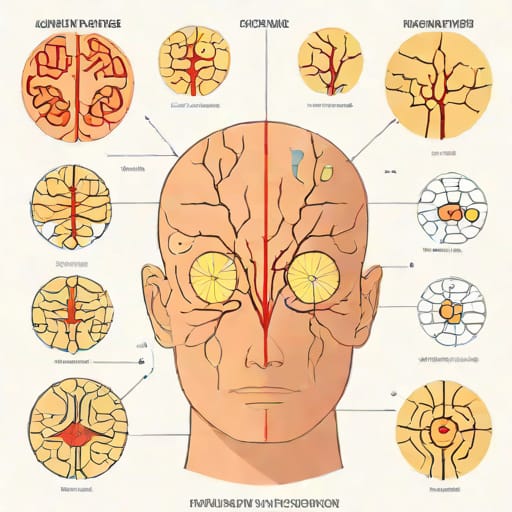
The human nervous system is a complex and highly organized network that controls virtually every function of the body. Among its critical components are the cranial nerves, which play a vital role in connecting the brain to various parts of the head, neck, and body. These nerves are responsible for a range of sensory, motor, and autonomic functions, from controlling facial expressions and eye movements to transmitting sensory information like smell and taste. Understanding cranial nerves and their functions is essential for students, healthcare professionals, and anyone interested in human anatomy, as they form a crucial link between the central nervous system and the body’s peripheral regions. This topic explores the twelve cranial nerves, their specific roles, and their clinical significance in detail.
Overview of Cranial Nerves
Cranial nerves are twelve pairs of nerves that emerge directly from the brain, including the brainstem, rather than from the spinal cord. Each cranial nerve has a specific function or combination of functions that may include sensory, motor, or both. These nerves are numbered using Roman numerals I through XII, reflecting their order from the front of the brain to the back. Their primary roles involve sensation, movement, and autonomic control, particularly in the head and neck regions.
Classification of Cranial Nerves
- Sensory nerves Responsible for transmitting sensory information from the body to the brain. Examples include the olfactory and optic nerves.
- Motor nerves Control voluntary muscle movements, such as facial expressions and eye movements.
- Mixed nerves Contain both sensory and motor fibers, performing dual functions. An example is the trigeminal nerve.
Proper classification helps in diagnosing neurological conditions and understanding how these nerves contribute to overall bodily functions.
The Twelve Cranial Nerves and Their Functions
Cranial Nerve I Olfactory Nerve
The olfactory nerve is purely sensory and is responsible for the sense of smell. It transmits olfactory information from the nasal cavity to the brain. Dysfunction in this nerve can lead to anosmia, or loss of smell, which can impact taste and overall quality of life.
Cranial Nerve II Optic Nerve
The optic nerve is also sensory and transmits visual information from the retina to the brain. It is crucial for vision and visual perception. Damage to the optic nerve can result in partial or complete blindness in the affected eye.
Cranial Nerve III Oculomotor Nerve
The oculomotor nerve is primarily motor, controlling most eye movements, eyelid elevation, and pupil constriction. It also plays a role in focusing vision. Lesions in this nerve can cause drooping eyelids (ptosis), double vision (diplopia), and pupil abnormalities.
Cranial Nerve IV Trochlear Nerve
This motor nerve innervates the superior oblique muscle of the eye, which is responsible for downward and inward eye movements. Damage to the trochlear nerve may cause vertical double vision and difficulty looking downward, especially when descending stairs.
Cranial Nerve V Trigeminal Nerve
The trigeminal nerve is a mixed nerve with both sensory and motor functions. It provides sensation to the face, scalp, and oral cavity, and controls muscles involved in mastication (chewing). Disorders such as trigeminal neuralgia can result in severe facial pain.
Cranial Nerve VI Abducens Nerve
This motor nerve controls the lateral rectus muscle, which abducts the eye, allowing it to move outward. Dysfunction can result in medial eye deviation and horizontal double vision.
Cranial Nerve VII Facial Nerve
The facial nerve is mixed, responsible for facial expressions, taste sensations from the anterior two-thirds of the tongue, and controlling certain salivary and lacrimal glands. Damage can lead to facial paralysis, such as Bell’s palsy, and loss of taste or tear production.
Cranial Nerve VIII Vestibulocochlear Nerve
This sensory nerve has two components the cochlear part for hearing and the vestibular part for balance. Dysfunction may result in hearing loss, vertigo, or balance disturbances.
Cranial Nerve IX Glossopharyngeal Nerve
The glossopharyngeal nerve is mixed, providing taste sensations from the posterior third of the tongue, sensory input from the pharynx, and motor control to certain muscles involved in swallowing. Damage can cause difficulty swallowing, loss of taste, or impaired gag reflex.
Cranial Nerve X Vagus Nerve
The vagus nerve is mixed and plays a critical role in autonomic control of the heart, lungs, and digestive tract. It also provides motor control to the larynx and pharynx, influencing speech and swallowing. Vagus nerve damage can result in hoarseness, swallowing difficulties, or cardiac abnormalities.
Cranial Nerve XI Accessory Nerve
This motor nerve controls the sternocleidomastoid and trapezius muscles, which are important for head movement and shoulder elevation. Dysfunction can cause weakness in head rotation and shoulder shrugging.
Cranial Nerve XII Hypoglossal Nerve
The hypoglossal nerve is motor and controls tongue movements essential for speech, swallowing, and mastication. Damage can lead to tongue deviation, atrophy, or difficulty articulating words.
Clinical Significance of Cranial Nerves
Knowledge of cranial nerves is essential in clinical practice. Neurologists and healthcare providers use cranial nerve examinations to diagnose neurological disorders, assess brain injuries, and monitor disease progression. Abnormalities in cranial nerve function can indicate lesions in the brainstem, tumors, infections, or systemic conditions such as diabetes.
Common Diagnostic Tests
- Olfactory testing for sense of smell.
- Visual acuity and field testing for the optic nerve.
- Pupil reflex and eye movement assessments for the oculomotor, trochlear, and abducens nerves.
- Facial sensation and movement evaluation for the trigeminal and facial nerves.
- Hearing and balance tests for the vestibulocochlear nerve.
- Swallowing and gag reflex assessments for the glossopharyngeal and vagus nerves.
- Shoulder shrug and head rotation tests for the accessory nerve.
- Tongue movement and strength examination for the hypoglossal nerve.
Cranial nerves are fundamental components of the human nervous system, connecting the brain to sensory organs, muscles, and internal organs. Each of the twelve cranial nerves has specific sensory, motor, or mixed functions that contribute to essential bodily processes such as vision, hearing, balance, facial expressions, speech, and autonomic control. Understanding their roles, pathways, and potential clinical issues is crucial for medical professionals and students studying human anatomy and neurology. Proper evaluation and knowledge of cranial nerves allow for early detection of neurological disorders, guiding appropriate treatment and management. By exploring cranial nerves and their functions, we gain a deeper appreciation of the intricate design and complexity of the human nervous system, highlighting its importance in maintaining overall health and functionality.