Cooking meat or vegetables until tender and flavorful is an art, and understanding different cooking methods is essential for achieving the best results. Two popular techniques often used to achieve deep, rich flavors and tender textures are braising and slow cooking. While both methods involve cooking food slowly over time, they are not the same. Each method has its own techniques, advantages, and best-use cases. Knowing the difference between braise and slow cook can help home cooks and professionals alike elevate their meals and avoid common mistakes in preparation and cooking time.
What is Braising?
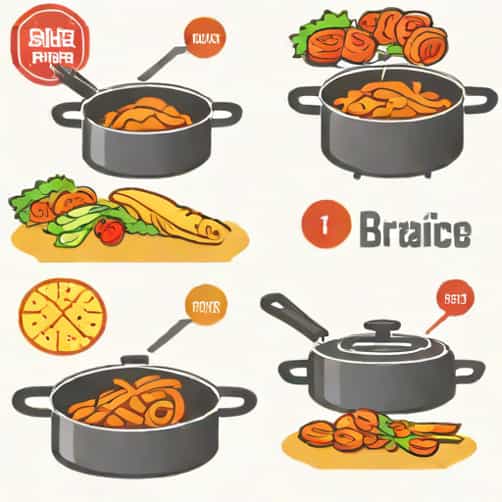
Braising is a cooking method that combines both dry and wet heat to cook food slowly. Typically, it is used for tougher cuts of meat, root vegetables, or even certain grains. The process usually begins by searing the food in oil or fat over medium-high heat. This step creates a caramelized crust and enhances the flavor through the Maillard reaction. After searing, liquid such as broth, wine, or water is added, and the food is covered and cooked slowly at low heat, often in an oven or on the stovetop.
Key Characteristics of Braising
- Combination of heatStarts with dry heat (searing) and finishes with moist heat (simmering in liquid).
- Cooking vesselTypically uses a heavy, lidded pot like a Dutch oven or a deep skillet.
- Liquid levelUsually covers about one-third to halfway up the food rather than fully submerging it.
- TimeUsually takes 1.5 to 4 hours depending on the size and toughness of the food.
- OutcomeTender, flavorful food with concentrated sauce or gravy.
What is Slow Cooking?
Slow cooking, on the other hand, is a method that uses low, consistent heat over an extended period to cook food, typically in a slow cooker or crockpot. Unlike braising, slow cooking does not usually start with searing the food, although some recipes suggest browning meat for extra flavor. Food is placed in a pot with enough liquid to cover or nearly cover it and then cooked at a low temperature for several hours, often between 6 to 10 hours, depending on the recipe.
Key Characteristics of Slow Cooking
- Heat applicationConsistently low heat without initial searing is the main feature.
- Cooking vesselUsually an electric slow cooker or crockpot designed for long, unattended cooking.
- Liquid levelTypically enough to immerse the food completely or maintain moisture throughout cooking.
- TimeLong cooking times, ranging from 6 to 12 hours, sometimes overnight.
- OutcomeExtremely tender food that often falls apart easily, with flavorful liquid or sauce.
Main Differences Between Braise and Slow Cook
Although braising and slow cooking share the principle of cooking food slowly to break down tough fibers, they differ in several important aspects
Heat Source and Control
Braising often uses stovetop or oven heat, allowing precise control over temperature and adjustments during cooking. Slow cooking uses low electric heat that is consistent and requires minimal supervision, making it convenient for busy schedules.
Preparation Steps
Braising usually begins with searing the food to develop flavor, which is not always necessary in slow cooking. Slow cooking often allows the ingredients to cook without pre-browning, although this can enhance taste if done beforehand.
Cooking Vessel and Liquid
Braising requires a heavy pot with a tight-fitting lid, and the liquid usually partially covers the food. Slow cooking requires a crockpot or slow cooker, where the food is typically immersed in liquid or has sufficient moisture for long cooking without drying out.
Timeframe
Braising is generally faster than slow cooking, taking a few hours, whereas slow cooking is designed for long durations that can span most of the day. This extended cooking time allows flavors to meld gradually and is ideal for set it and forget it meals.
Texture and Flavor Outcomes
Braising results in a slightly firmer texture with a concentrated sauce that enhances flavor intensity. Slow cooking produces ultra-tender food that may fall apart easily and often has a broth-like consistency, suitable for soups and stews.
When to Use Braising
Braising is ideal for recipes that require concentrated flavors and a controlled cooking environment. Common foods to braise include
- Beef chuck or short ribs
- Lamb shanks
- Pork shoulder
- Root vegetables such as carrots, parsnips, and turnips
- Chicken thighs or legs
Recipes that call for rich sauces or reduced gravies benefit from braising because the partial submersion allows liquids to concentrate while infusing flavors directly into the food.
When to Use Slow Cooking
Slow cooking is best for dishes that require long, unattended cooking with consistent low heat. It works well for
- Stews, soups, and chili
- Whole chickens or large cuts of meat
- Beans and legumes
- Pot roasts or shredded meats for sandwiches
- Meals for busy schedules where preparation time is limited
Slow cooking is convenient for busy households, allowing ingredients to simmer for hours without active attention while producing tender and flavorful results.
Advantages of Each Method
- BraisingMore control over texture and flavor, ability to reduce sauces, relatively faster cooking than slow cooking, excellent for restaurant-style dishes.
- Slow CookingMinimal supervision, convenient for all-day cooking, produces very tender meat, ideal for meal prep and family-sized portions.
Combining Techniques
In some cases, cooks use a combination of braising and slow cooking. For example, meat can be seared first to develop flavor and then transferred to a slow cooker to finish cooking over several hours. This approach combines the flavor development of braising with the convenience of slow cooking, giving the best of both worlds.
While braising and slow cooking both involve cooking food slowly to break down tough fibers, they are distinct methods with different approaches, cooking times, vessels, and outcomes. Braising emphasizes searing and partial liquid immersion with controlled heat for concentrated flavors and firm textures. Slow cooking emphasizes long, unattended low-heat cooking, often producing very tender food with a broth-like consistency. Understanding the difference between braise and slow cook allows home cooks and professionals to choose the right method for their recipe, schedule, and desired results, ensuring that each meal achieves optimal flavor and texture.