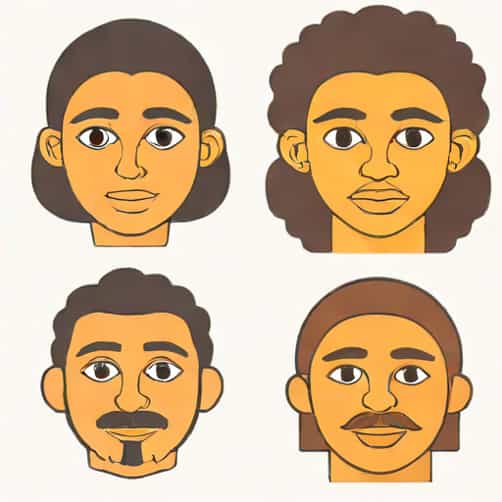
The words mestizo and mulatto are often found in historical texts, colonial records, and cultural discussions, yet many people today are not fully aware of what they truly mean. Both terms emerged during the colonial era to describe people of mixed ancestry, particularly in regions colonized by Europeans. However, they refer to different types of racial and ethnic mixtures, each reflecting the complex social hierarchies and cultural dynamics of that period. Understanding the difference between mestizo and mulatto requires looking at history, social context, and how these identities evolved across regions and time.
Historical Origins of the Terms
The term mestizo originated from the Spanish word meaning mixed. It was used primarily in Spanish colonies to describe individuals of mixed European (usually Spanish) and Indigenous American ancestry. As Spanish conquistadors settled in the Americas, relationships between Europeans and native peoples resulted in new generations that did not fit neatly into the existing social order. The term mestizo became an official category in the caste system that colonial authorities used to classify people by race and heritage.
On the other hand, mulatto comes from the Spanish and Portuguese word mulato, which is believed to derive from mula, meaning mule, a hybrid animal. Although this origin carries negative connotations today, the term was historically used to describe individuals born to one European (typically white) parent and one African parent. Mulatto was a classification that emerged in both Spanish and Portuguese colonies, as well as in English and French territories in the Caribbean and the Americas.
Racial and Cultural Context
During the colonial era, racial identity was not merely about physical appearance-it determined one’s social standing, rights, and opportunities. Mestizos often occupied a middle position between the Indigenous population and Europeans. They were generally seen as more civilized than the native peoples but still inferior to those of pure European descent. Over time, many mestizos assimilated into European culture, adopting Spanish language and customs, which allowed them to climb the social ladder.
Mulattos, meanwhile, had a different experience. Because African slavery played a central role in colonial economies, individuals of African descent, including mulattos, were often subjected to legal and social discrimination. In many societies, they were considered closer to the enslaved population than to the European elite. However, some mulattos, especially those born to free mothers or European fathers, were able to attain higher social status or even own property.
Geographical Differences in Usage
The meanings and implications of mestizo and mulatto varied depending on where they were used. In Latin America, mestizo became one of the most common terms, especially in Mexico, Central America, and the Andean regions. As time passed, mestizo identity evolved into a cultural and national one rather than a strictly racial category. In many countries today, being mestizo represents a blend of Indigenous and European heritage that forms part of the national identity.
In contrast, mulatto was more prevalent in regions with large African populations, such as the Caribbean, Brazil, and parts of the southern United States. In Brazil, for example, mulatto became part of a broader racial spectrum that included many categories like pardo (brown) and moreno (dark-skinned). In the Caribbean islands, where African slavery dominated, mulattoes sometimes formed a distinct social class that separated them from both Europeans and enslaved Africans.
Social Hierarchies and the Casta System
In Spanish colonies, racial mixing was codified through a complex system known as the casta system. This system assigned people to categories based on their ancestry, which determined their rights and privileges. Mestizos were considered higher than Indigenous people but lower than Spaniards (peninsulares) and creoles (Spaniards born in the Americas). Mulattos, however, were placed lower in the hierarchy, reflecting the deep racial prejudice against African ancestry.
Some examples of classifications within this system included
- MestizoSpanish and Indigenous parentage.
- MulattoEuropean and African parentage.
- ZamboAfrican and Indigenous parentage.
- CastizoOffspring of a Spanish and a mestizo.
This rigid hierarchy influenced social mobility and reinforced European dominance. Yet, over time, as racial intermixing continued and independence movements rose, these divisions began to blur.
Cultural Identity and Modern Perspectives
In the modern world, the difference between mestizo and mulatto has shifted from a purely racial definition to a more cultural and historical one. In many Latin American countries, mestizo is now a national identity that celebrates cultural hybridity. It represents the blending of Indigenous traditions and European influence, often seen in language, cuisine, and religion. For instance, in Mexico, the majority of the population identifies as mestizo, and the concept is intertwined with Mexican nationalism and heritage.
Mulatto, by contrast, is a term that has fallen out of favor in most places due to its historical ties to racism and slavery. In contemporary discussions, people are more likely to use terms like mixed race, biracial, or Afro-Latino to describe individuals of combined African and European ancestry. However, the cultural contributions of mulatto communities-especially in music, literature, and art-remain significant in regions like Brazil, Haiti, and the Caribbean.
Representation in Literature and History
Both mestizos and mulattos have been central figures in literature and history. Writers from Latin America and the Caribbean have explored themes of mixed heritage and identity in their works. For example, mestizo characters often represent the tension between Indigenous roots and European modernity, while mulatto characters highlight the struggles of racial inequality and belonging in societies shaped by colonialism.
Throughout history, individuals of mixed descent have played pivotal roles in independence movements, cultural development, and political change. Figures like José Martà in Cuba, Simón BolÃvar in South America, and many others recognized the power of unity among diverse racial groups in building new nations free from colonial rule.
Language Evolution and Modern Usage
From a linguistic standpoint, both words-mestizo and mulatto-have evolved and adapted over time. Mestizo remains a common term in Spanish-speaking countries, often without any negative connotation. It is sometimes even used proudly to express a shared cultural identity. In contrast, mulatto is considered outdated and offensive in many modern contexts, especially in English-speaking societies, due to its association with dehumanizing racial classifications.
Nevertheless, understanding these words is important for historical literacy. They help explain how colonial societies understood race and how those definitions shaped the development of modern nations. Today, discussions around mixed identity are more focused on inclusion, diversity, and mutual respect, rather than rigid racial categories.
The difference between mestizo and mulatto lies primarily in the ancestry they describe mestizo refers to people of mixed European and Indigenous descent, while mulatto refers to those of European and African descent. Both terms originated in colonial contexts that sought to categorize and control populations, but they have taken on different meanings over time. While mestizo has evolved into a positive cultural identity in many regions, mulatto has largely been replaced by more respectful and inclusive language. Understanding these terms provides valuable insight into the complex history of race, culture, and identity that continues to shape societies today.