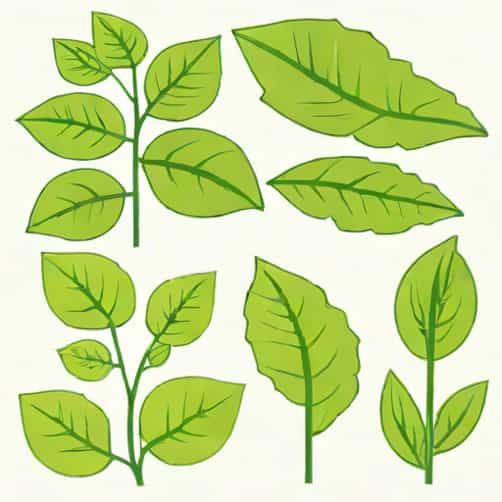
When studying plant morphology, two important terms often come up when describing the structure of leaves petiole and rachis. These parts play essential roles in connecting the leaf to the stem and supporting its various components. However, despite their similar appearance and function, the petiole and rachis are not the same. Understanding the difference between petiole and rachis helps in identifying leaf types, their adaptations, and how they contribute to the overall growth of the plant. This topic is fundamental in botany and plant biology because it provides insight into how plants are structured to optimize photosynthesis and support.
Understanding the Basic Structure of a Leaf
A typical leaf consists of three main parts the leaf base, the petiole, and the lamina or leaf blade. In some complex leaves, a fourth component, the rachis, is also present. These parts work together to capture sunlight, exchange gases, and transport nutrients throughout the plant. Before exploring the differences between the petiole and rachis, it’s helpful to understand how each part functions within the overall structure of the leaf.
- Leaf baseThe portion of the leaf that attaches to the stem or branch.
- PetioleThe stalk that connects the leaf blade to the stem.
- LaminaThe flat, green portion of the leaf that performs photosynthesis.
- RachisThe central axis in compound leaves where multiple leaflets attach.
What Is a Petiole?
The petiole is the slender stalk that connects the leaf blade (lamina) to the stem. It acts as a bridge between the leaf and the main plant body, allowing nutrients, water, and photosynthetic products to flow between them. The petiole also plays a mechanical role by holding the leaf in a position that maximizes exposure to sunlight for photosynthesis.
Functions of the Petiole
- Provides support to the leaf blade.
- Transports water, minerals, and food through vascular tissues (xylem and phloem).
- Allows flexibility, enabling leaves to move and reduce damage from wind.
- Holds the leaf in an orientation that optimizes light absorption.
In some plants, the petiole is long and flexible, as seen in banana leaves, while in others it is short or even absent, making the leaf sessile. In certain species, the petiole can also become modified into special structures, such as tendrils for climbing (as in Clematis) or spines for defense (as in Acacia).
What Is a Rachis?
The rachis is a term used mainly in the context of compound leaves or inflorescences. It refers to the main axis or central stalk that bears the leaflets or flowers. In simple leaves, there is no rachis because the leaf blade is continuous. However, in compound leaves-like those found in ferns, neem, or rose plants-the rachis acts as an extension of the petiole, with multiple small leaflets attached along its length.
Functions of the Rachis
- Acts as the central support structure for the leaflets.
- Provides pathways for vascular tissues that transport water and nutrients.
- Allows flexibility and movement of individual leaflets.
- Contributes to the overall surface area for photosynthesis in compound leaves.
The rachis may be rigid or flexible depending on the plant species. In some ferns, the rachis is long and arching, while in others, it is short and sturdy. Its structure ensures that the leaflets are positioned optimally for sunlight exposure and air circulation.
Key Difference Between Petiole and Rachis
While both the petiole and rachis serve as stalk-like structures in leaves, they differ in their position, function, and the type of leaf they are associated with. The following are the main distinctions
- PositionThe petiole connects the entire leaf blade to the stem, whereas the rachis is an extension of the petiole that bears leaflets in a compound leaf.
- PresenceThe petiole is present in both simple and compound leaves, while the rachis is only found in compound leaves.
- StructureThe petiole is usually a single stalk, while the rachis can be branched or segmented, depending on whether the leaf is pinnate or bipinnate.
- FunctionThe petiole primarily supports the leaf blade and transports materials, while the rachis supports and organizes multiple leaflets.
- Morphological TypeThe petiole is part of the leaf base system, but the rachis is part of the compound leaf’s midrib extension.
Example for Better Understanding
In a mango tree (Mangifera indica), the leaves are simple and have a distinct petiole connecting the lamina to the stem-no rachis is present. In contrast, the neem tree (Azadirachta indica) has compound leaves where the central axis (rachis) bears several small leaflets on either side. The petiole in neem connects the rachis to the stem, showing a clear difference between the two structures.
Types of Leaves Based on the Presence of Rachis
The presence or absence of a rachis helps distinguish between two major leaf types-simple and compound leaves. Understanding these categories makes it easier to identify plants and study their morphology.
1. Simple Leaves
Simple leaves have a single, undivided lamina. The petiole attaches the lamina directly to the stem, and there is no rachis. Examples include guava, banana, and mango. In these plants, all photosynthetic activity occurs in a single, continuous leaf blade.
2. Compound Leaves
Compound leaves are divided into multiple leaflets, each attached to a central rachis. Each leaflet may resemble a small leaf, but together they form one compound leaf. Examples include rose, neem, and gulmohar. In such leaves, the rachis provides both structure and vascular connectivity to each leaflet.
Adaptations and Modifications
Both the petiole and rachis can undergo modifications depending on the plant’s environment and survival needs. These adaptations showcase the versatility and evolutionary significance of these structures.
Petiole Modifications
- Tendrillar petioleThe petiole becomes coiled and helps in climbing, as in Clematis.
- PhyllodeIn Acacia, the petiole becomes flattened and photosynthetic, replacing the function of the leaf blade.
- Spiny petioleIn certain desert plants, the petiole transforms into a spine to reduce water loss and deter herbivores.
Rachis Modifications
- Climbing rachisSome plants, like certain species of ferns, have a rachis that coils around supports to help climbing.
- Reduced rachisIn some compound leaves, the rachis is very short or almost absent, giving the leaf a clustered appearance.
Similarities Between Petiole and Rachis
Although distinct in structure and function, the petiole and rachis share several similarities. Both contain vascular tissues (xylem and phloem) for transport, both provide mechanical support, and both help position leaf structures for optimal light capture. Their combined role ensures efficient functioning of the leaf system in photosynthesis and gas exchange.
- Both serve as supportive axes in the leaf structure.
- Each has vascular bundles for transport of water and nutrients.
- Both provide flexibility to withstand wind and environmental pressure.
Importance of Understanding the Difference
Knowing the difference between petiole and rachis is important for students, botanists, and gardeners alike. It helps in plant identification, taxonomy, and understanding evolutionary adaptations in leaf structures. Moreover, recognizing these distinctions provides insight into how plants optimize energy use and adapt to their surroundings.
In summary, the difference between petiole and rachis lies mainly in their function and position. The petiole connects the leaf to the stem, while the rachis extends within compound leaves to bear multiple leaflets. Both are essential for support, transport, and positioning in the plant’s overall physiology. While the petiole appears in all leaves, the rachis is unique to compound ones, symbolizing nature’s incredible diversity in form and function. By understanding these structures, one gains a deeper appreciation of how plants have evolved intricate designs to survive and thrive in their environments.