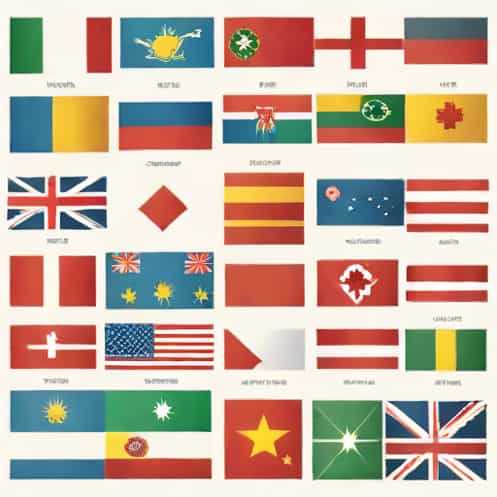
Flags are more than just colorful pieces of fabric; they serve as powerful symbols representing the identity, history, and values of countries around the world. Each flag carries a unique story through its colors, patterns, and emblems, reflecting the culture, struggles, and achievements of the nation it represents. From the stars and stripes of the United States to the rising sun of Japan, understanding flags helps us appreciate not only their aesthetic appeal but also their historical and political significance. Flags are flown on public buildings, during international events, and on national holidays, acting as visual representations of patriotism and unity across diverse societies.
The Importance of Flags
Flags play a crucial role in symbolizing national identity and pride. They are used during official ceremonies, international gatherings, and even sports events to denote a country’s presence. Beyond their practical use, flags often communicate deeper meanings through colors and designs. For instance, red can symbolize bravery, blue often represents freedom or peace, and green can indicate growth or fertility. These visual cues allow people to understand the essence of a country’s values and traditions at a glance.
Flags as Historical Symbols
Many flags have historical significance, representing struggles for independence or key events in a country’s history. For example, the United States flag, with its 13 stripes and 50 stars, symbolizes the original 13 colonies and the 50 states of the union. Similarly, the flag of South Africa incorporates multiple colors representing unity after the end of apartheid, illustrating the nation’s journey toward equality and reconciliation. Understanding these symbols provides insight into a nation’s past and its evolution over time.
Famous Flags and Their Countries
Some flags are recognized worldwide due to their unique designs or historical prominence. Learning about these flags and the countries they represent can help in understanding global culture and geography.
The United States
The American flag, often called the Stars and Stripes, consists of 13 horizontal stripes alternating red and white, with a blue rectangle in the top left corner containing 50 white stars. Each element of the flag has significance the stripes represent the original colonies, and the stars stand for the current states. The colors also carry meaning, with red symbolizing valor, white for purity, and blue for justice.
Japan
Japan’s flag, known as the Nisshōki or Hinomaru, is simple yet striking. It features a red circle in the center of a white field, representing the sun. The flag symbolizes brightness, sincerity, and warmth, and its minimalist design has become an international icon of Japan’s culture and identity. It reflects the nation’s connection to nature and its reverence for the sun as a symbol of life and energy.
Brazil
The Brazilian flag is recognized for its vibrant green field, yellow diamond, and blue globe with stars. The globe contains a banner with the national motto Ordem e Progresso (Order and Progress). The green represents the lush forests of Brazil, the yellow symbolizes the country’s wealth in gold, and the blue globe with stars depicts the night sky over Rio de Janeiro on the day of Brazil’s independence. This flag showcases the country’s natural beauty and aspirations for progress.
United Kingdom
The United Kingdom’s flag, commonly called the Union Jack, combines elements of three older national flags the crosses of St. George for England, St. Andrew for Scotland, and St. Patrick for Ireland. Its intricate design represents the historical union of these countries under one sovereign state. The Union Jack is not only a symbol of the UK but also appears in some former British colonies’ flags, reflecting historical ties.
South Africa
The South African flag is known for its colorful and complex design, representing unity after apartheid. It includes green, yellow, black, white, red, and blue colors arranged in a unique Y-shaped pattern. Each color holds significance black, green, and yellow are inspired by the African National Congress, red and blue reflect European influence, and white symbolizes peace. This flag is a symbol of reconciliation and national identity.
How Flags Reflect National Identity
Flags serve as visual representations of a country’s values, heritage, and unity. The choice of colors, patterns, and symbols is often deliberate, conveying messages about the nation’s history and aspirations. For example, the flag of India has saffron for courage, white for peace, and green for fertility, with a blue Ashoka Chakra symbolizing law and justice. Similarly, Mexico’s flag incorporates green for hope, white for unity, and red for the blood of national heroes, with a central emblem depicting an eagle on a cactus.
Flags in International Relations
Flags play a vital role in international diplomacy and global events. They are displayed at the United Nations, during summits, and in sporting competitions such as the Olympics. The presence of a country’s flag represents sovereignty, respect, and recognition among nations. Additionally, flags are used in embassies and consulates to indicate official representation abroad, reinforcing national presence and identity.
Fun Facts About Flags
- Some countries have more than one official flag. For example, Switzerland has a national flag and separate cantonal flags for each region.
- The flag of Nepal is unique because it is not rectangular. It consists of two stacked triangles.
- Many flags incorporate historical or religious symbols, such as the crescent in Turkey and the cross in Scandinavian countries.
- Some colors and symbols are universally recognized, like red for bravery or white for peace, though meanings can vary by culture.
- Flags can also change over time due to political shifts, independence, or cultural changes, reflecting the evolving identity of a country.
Flags and their countries are more than identifiers; they are symbols of national pride, culture, and history. Each flag tells a story about the country it represents, from historical struggles to cultural values and aspirations for the future. Recognizing the meaning behind flags allows people to understand global diversity and appreciate the significance of these national symbols. Whether it is the simplicity of Japan’s Hinomaru or the complexity of South Africa’s vibrant colors, flags remain powerful emblems of identity and unity, connecting citizens to their heritage and representing nations to the world.
“`