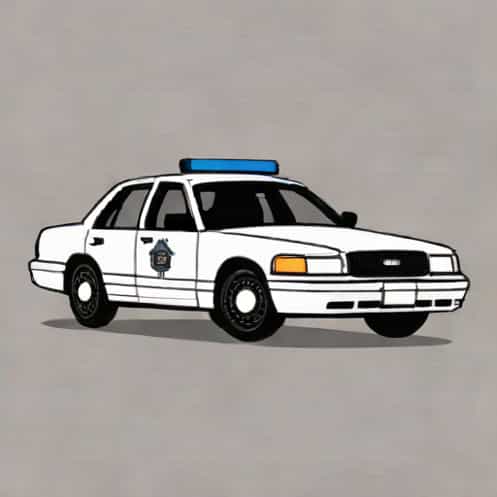
For decades, the Ford Crown Victoria Police Interceptor has been an unmistakable symbol of law enforcement across North America. Its boxy silhouette, authoritative stance, and throaty V8 engine made it the go-to vehicle for countless police departments. Known for its reliability, durability, and commanding presence, the Crown Victoria Police Interceptor (often shortened to CVPI) became a legend among police cars. Even years after its discontinuation, it continues to be a favorite among enthusiasts, collectors, and security fleets. Understanding the history, design, and legacy of this car provides insight into why it remains one of the most respected vehicles ever to patrol the streets.
Origins and Development of the Crown Victoria Police Interceptor
The story of the Ford Crown Victoria Police Interceptor begins with the full-size sedans that Ford produced throughout the latter half of the 20th century. In the 1980s and 1990s, police departments required vehicles that could handle high-speed pursuits, offer room for equipment, and withstand the rigors of constant use. Ford’s solution was the Crown Victoria, built on the Panther platform, which emphasized strength and rear-wheel drive-a layout favored by officers for its handling and performance characteristics.
The Police Interceptor variant officially debuted in 1992. Designed specifically for law enforcement use, it was equipped with features that differentiated it from the civilian Crown Victoria. This included a heavy-duty suspension, upgraded cooling systems, reinforced chassis components, and specialized interior fittings to accommodate radios, computers, and weapons mounts. These enhancements made it one of the toughest vehicles ever produced for public service.
Design and Mechanical Features
One of the reasons the Ford Crown Victoria Police Interceptor became so popular was its blend of simplicity and rugged engineering. The car wasn’t flashy or overly complicated; it was built to perform reliably under extreme conditions. Every aspect of the CVPI was designed with functionality and endurance in mind.
Engine and Performance
Under the hood, the Crown Victoria Police Interceptor featured Ford’s 4.6-liter Modular V8 engine. While its 250 horsepower output might seem modest by modern standards, the engine’s durability and torque made it ideal for police work. It could handle extended idling, high-speed chases, and heavy loads with ease. The car’s rear-wheel-drive setup provided predictable handling, especially during pursuit situations, while its four-speed automatic transmission ensured smooth acceleration and minimal maintenance issues.
Suspension and Handling
The CVPI’s suspension system was one of its defining features. Built with stiffer springs, heavy-duty shocks, and a thicker stabilizer bar, the Interceptor could handle sharp turns and uneven roads far better than a typical sedan. The setup allowed officers to maintain control at high speeds and provided a smoother ride when carrying heavy equipment or passengers in the back seat. Police versions also came with a calibrated speedometer, upgraded brakes, and specialized tires designed for high-speed performance and durability.
Interior and Equipment
The interior of the Ford Crown Victoria Police Interceptor was built for utility rather than luxury. The front seats were reinforced and designed to accommodate officers wearing duty belts, while the dashboard was simplified for easy access to critical controls. Many models came equipped with steel partitions, heavy-duty flooring, and wiring harnesses for lights, sirens, and communication systems. Some later models even featured upgraded airbags and safety systems, ensuring that officers remained protected in high-risk situations.
Why Police Departments Loved the Crown Victoria
For more than two decades, the Ford Crown Victoria Police Interceptor dominated police fleets in the United States, Canada, and even parts of the Caribbean. Its popularity wasn’t based solely on performance-it was also due to its practicality, cost efficiency, and proven reliability in the field.
- DurabilityThe Panther platform was built like a tank. The frame-on-body design allowed departments to easily repair damaged sections without replacing the entire car, reducing maintenance costs.
- Rear-Wheel DriveOfficers appreciated the predictable handling, especially in high-speed chases, where front-wheel-drive cars often underperformed.
- SpaciousnessThe Crown Victoria offered ample space for officers, equipment, and detainees. Its wide rear bench seat became an iconic sight for anyone riding in the back of a patrol car.
- AffordabilityFord offered competitive fleet pricing, making it the most cost-effective option for large-scale law enforcement purchases.
- ServiceabilityMechanics loved it because parts were cheap, and the car was easy to work on. Departments could keep their fleets running for years without major overhauls.
The Decline and Discontinuation
Despite its iconic status, the Ford Crown Victoria Police Interceptor’s production came to an end in 2011. Changing safety standards, stricter emissions regulations, and evolving technology made it increasingly difficult for Ford to keep the platform competitive. The company introduced replacements like the Ford Taurus Police Interceptor and the Police Interceptor Utility (based on the Ford Explorer), both featuring all-wheel-drive systems and more modern designs.
However, the transition was not immediate. Many police departments continued to use their existing Crown Victorias well into the 2020s. Some agencies even stockpiled spare parts to keep their fleets operational, a testament to the car’s enduring legacy. Even today, decommissioned Crown Victorias can be found serving as taxis, security vehicles, or enthusiast restorations across North America.
The Civilian Afterlife
When police departments began retiring their Crown Victorias, a new market emerged among civilians. Enthusiasts were quick to buy up these used patrol cars, attracted by their power, reliability, and affordability. The term P71, referring to the Interceptor’s production code, became a badge of pride among car lovers. Many drivers appreciated the commanding feel of the car and its unmistakable presence on the road-other motorists would instinctively slow down when one appeared in the rearview mirror.
Some owners restored their CVPIs to their original police configurations, complete with push bars and spotlights, while others customized them for performance or comfort. The Crown Victoria even found its way into Hollywood, appearing in countless films and television shows as the quintessential police car.
Legacy and Cultural Impact
The Ford Crown Victoria Police Interceptor left behind more than just a mechanical legacy-it became a cultural icon. For many, it represents an era when cars were simpler, tougher, and built with a clear purpose. Its unmistakable design, often seen in movies, TV series, and real-life patrol fleets, symbolizes authority, discipline, and endurance.
Beyond law enforcement, the CVPI also became a symbol of Americana. It embodies the image of the dependable, all-purpose vehicle that could withstand years of abuse while still running strong. Enthusiast groups continue to celebrate the car, hosting events and forums dedicated to preserving its history. Even today, its V8 rumble and unmistakable silhouette evoke a sense of nostalgia and respect.
Technical Specifications Overview
To understand why the Ford Crown Victoria Police Interceptor earned its reputation, it’s worth taking a quick look at its core specifications
- Engine 4.6L SOHC Modular V8
- Horsepower 239-250 hp (depending on model year)
- Torque 287 lb-ft
- Transmission 4-speed automatic (4R70W or 4R75E)
- Drivetrain Rear-wheel drive
- Chassis Panther platform, body-on-frame construction
- Brakes Heavy-duty four-wheel disc brakes with ABS
- Fuel Economy Approximately 15-23 mpg
These specifications highlight the car’s balance between performance and practicality. It was never meant to be a sports car-but it could accelerate quickly, handle demanding conditions, and remain mechanically dependable for hundreds of thousands of miles.
The Ford Crown Victoria Police Interceptor remains one of the most respected and recognizable vehicles in automotive history. Its combination of toughness, simplicity, and reliability made it the cornerstone of law enforcement fleets for over two decades. Though it has been replaced by newer, more technologically advanced models, the Crown Victoria’s reputation endures. For officers, enthusiasts, and everyday drivers alike, it represents a time when cars were built to last-and when a simple, powerful sedan could command both the road and the respect of all who saw it.