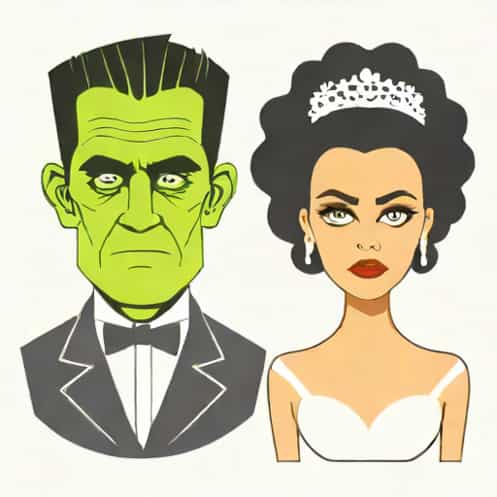
Few cinematic creations have had as much cultural impact as Frankenstein and The Bride of Frankenstein. These two classic films, released in the early 1930s, helped define the horror genre and shaped how audiences perceive monsters, science, and humanity. They were not just frightening tales but emotional and philosophical reflections on life, death, and the consequences of playing god. Even today, decades after their release, the legacy of Frankenstein’s monster and his tragic bride continues to captivate audiences around the world.
The Origins of Frankenstein
The story of Frankenstein begins with Mary Shelley’s 1818 novel,Frankenstein; or, The Modern Prometheus. In this groundbreaking book, Victor Frankenstein, a young scientist, creates life from dead tissue. However, instead of producing beauty, he brings forth a hideous creature who is rejected and abandoned by its maker. The novel explores deep questions about creation, responsibility, and isolation. When Universal Pictures adapted this story into a film in 1931, it brought Shelley’s gothic tale to a new audience and established Frankenstein as a cornerstone of horror cinema.
The 1931 Film Frankenstein
Directed by James Whale, the 1931 movieFrankensteinintroduced visual and emotional elements that would become iconic. Boris Karloff’s portrayal of the Monster-with his square head, heavy boots, and mournful eyes-became the definitive image of Frankenstein’s creation. Unlike Shelley’s more articulate creature, Whale’s Monster was largely mute, expressing emotion through movement and expression rather than words.
The film opens with Dr. Henry Frankenstein (the movie changed the first name from Victor) obsessively working in his laboratory to bring a body to life. With his assistant Fritz, he collects body parts and assembles them into a human form. When lightning strikes and the creature opens its eyes, Frankenstein exclaims, It’s alive!-one of the most famous lines in cinema history.
However, the film quickly turns tragic. The Monster, though innocent and childlike, is feared by everyone. After accidentally killing a young girl, he becomes hunted by an angry mob. The movie ends with the Monster being trapped in a burning windmill, seemingly destroyed. This emotional and symbolic ending made the Monster a figure of both terror and sympathy.
The Sequel The Bride of Frankenstein
Due to the success of the first film, Universal Pictures released a sequel,The Bride of Frankenstein, in 1935, again directed by James Whale. This film is widely regarded as one of the greatest sequels ever made-not only expanding the story but deepening its emotional and moral themes. The movie begins shortly after the events of the original, revealing that both Dr. Frankenstein and his Monster survived the fire.
Creating the Bride
In this sequel, the mad scientist is approached by his old mentor, Dr. Pretorius, who convinces him to continue his experiments. Pretorius dreams of creating a mate for the Monster-a female counterpart who might bring companionship to the lonely creature. Frankenstein reluctantly agrees, and together they construct the Bride, a creature assembled from various body parts and brought to life through electricity.
When the Bride awakens, she becomes one of cinema’s most memorable characters. Played by Elsa Lanchester, she appears with tall hair streaked with white lightning bolts and jerky, birdlike movements. Her scream upon seeing the Monster-her intended mate-reveals her fear and rejection. In the final scene, realizing that even his Bride cannot love him, the Monster utters the heartbreaking line, We belong dead, before destroying the laboratory and himself.
Symbolism and Themes
BothFrankensteinandThe Bride of Frankensteinexplore timeless themes that continue to resonate with audiences. The films go beyond simple horror, addressing questions about identity, loneliness, and the nature of humanity. The Monster represents both the dangers of unchecked scientific ambition and the pain of social rejection. His search for acceptance and love mirrors the human desire to belong.
The Consequences of Playing God
One of the most powerful themes in both films is the danger of humans trying to play god. Dr. Frankenstein’s desire to create life reflects human curiosity and ambition, but it also exposes moral and ethical boundaries. By overstepping nature’s limits, he brings suffering to himself and others. This idea remains relevant in modern discussions about artificial intelligence, cloning, and genetic engineering.
Loneliness and Rejection
The Monster’s greatest tragedy is not his appearance, but his loneliness. Despite his strength, he longs for understanding and companionship. When he finally receives a chance for love in the form of the Bride, she too recoils in horror. His final act of destruction is both violent and deeply sorrowful, emphasizing the emotional pain of being unwanted.
Religious and Moral Undertones
James Whale also incorporated religious imagery into both films, particularly the sequel. The Monster’s crucifix-like poses and the theme of resurrection evoke Christian symbolism. The story questions the morality of creating life and whether science should have limits. The balance between faith, ethics, and innovation makes these films more than just horror-they become moral fables about human nature.
Cinematic Innovation and Legacy
Technically and artistically,FrankensteinandThe Bride of Frankensteinwere ahead of their time. The atmospheric lighting, gothic sets, and expressive camera angles helped define Universal’s horror style. Whale’s direction balanced terror with dark humor and poetic beauty, particularly in the sequel, which introduced more complex characters and themes.
Boris Karloff’s performance as the Monster remains legendary. Without relying on dialogue, he conveyed deep emotion through movement and facial expression. Elsa Lanchester’s brief but unforgettable portrayal of the Bride made her a cultural icon, even though she appeared on screen for only a few minutes. The music, designed by Franz Waxman for the sequel, added emotional depth, using leitmotifs for each main character.
Influence on Popular Culture
The influence of Frankenstein and The Bride of Frankenstein extends far beyond their original era. They have inspired countless adaptations, from films and television shows to books, plays, and artworks. The Monster and the Bride have appeared in comedies, parodies, and even romantic interpretations. Their image has become a symbol of misunderstood beauty and tragic love.
Moreover, these films paved the way for modern science fiction and horror storytelling. Themes of creation, technology, and human error continue to appear in movies likeBlade Runner,Jurassic Park, andEx Machina. The emotional depth of Frankenstein’s Monster also influenced later portrayals of sympathetic villains, proving that monsters can have hearts too.
The Enduring Appeal of the Monster and His Bride
What makes Frankenstein and The Bride of Frankenstein endure after so many decades is their emotional truth. Beneath the horror lies a deeply human story about love, fear, and the search for belonging. The Monster’s struggle to understand his place in the world speaks to anyone who has ever felt different or rejected. The Bride, though she appears briefly, represents the unattainable hope of connection and acceptance.
Even in today’s age of digital effects and high-budget productions, these films retain their power. Their artistry, performances, and universal themes remind viewers that the most haunting monsters are often reflections of ourselves. Frankenstein’s creation and his doomed bride continue to live on-not as mere figures of fear, but as timeless symbols of humanity’s brilliance, arrogance, and heartbreak.