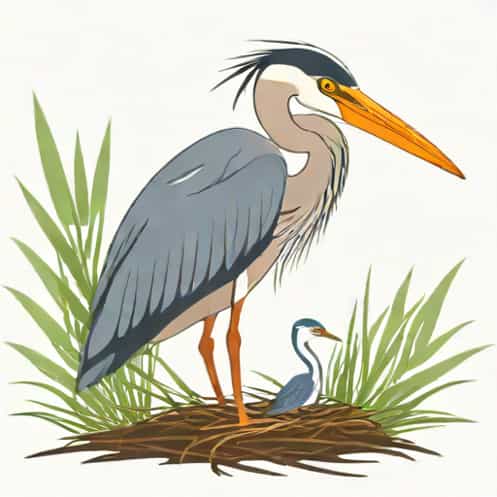
The great blue heron nestling is a fascinating stage in the life cycle of one of North America’s most iconic wading birds. These young herons, still dependent on their parents, are often found in large communal nests high in trees or on isolated platforms near wetlands, rivers, and lakes. Observing nestlings provides insight into the early development, behavior, and survival strategies of these majestic birds. From the moment they hatch to the point when they fledge and leave the nest, great blue heron nestlings undergo significant changes in appearance, strength, and behavior, making their study important for both bird enthusiasts and wildlife researchers.
Nesting Habits and Location
Great blue herons are known for their large stick nests, often built in colonies known as rookeries. Nesting sites are typically chosen for safety and proximity to feeding areas. Nestlings are hatched in nests that may be located high in deciduous or coniferous trees, on cliff ledges, or occasionally on the ground in areas free from predators. The construction of these nests involves layering sticks and branches to create a sturdy platform capable of supporting multiple nestlings and adult birds.
Colony Behavior
Great blue herons often nest in colonies ranging from a few pairs to hundreds of pairs. Nestlings in these colonies benefit from the collective vigilance of adult birds, which helps protect against predators such as raccoons, crows, and large birds of prey. While competition for food among nestlings can occur, the presence of many adults ensures that most young birds receive sufficient nourishment to grow and develop properly.
Hatching and Early Development
Great blue heron eggs are typically pale blue and measure about 2.2 inches in length. Clutch sizes usually range from three to five eggs. Incubation lasts approximately 25 to 30 days, during which both parents share responsibilities for keeping the eggs warm. Upon hatching, nestlings are altricial, meaning they are born blind, naked, and completely dependent on their parents for warmth and feeding. At this stage, nestlings are highly vulnerable and require constant care.
Feeding and Nutrition
Parent herons feed nestlings by regurgitating partially digested fish, amphibians, and small invertebrates. Feeding frequency is high during the early weeks, often every 20 to 40 minutes, ensuring rapid growth and development. The diet is rich in protein, which is essential for the nestlings’ development of feathers, muscles, and bones. Sibling competition is common, with stronger nestlings sometimes dominating feeding opportunities, although parents generally strive to provide for all chicks.
Physical Growth and Feather Development
During the first few weeks, great blue heron nestlings experience rapid growth. Downy feathers appear within the first week, providing some insulation. By two to three weeks, contour feathers begin to develop, allowing nestlings to maintain body heat more effectively. The wing feathers, critical for eventual flight, grow steadily, while the long legs and neck characteristic of adult herons become increasingly noticeable. The growth rate depends on food availability and environmental conditions, with well-fed nestlings maturing more quickly.
Behavioral Development
As nestlings grow, they begin to exhibit behaviors that prepare them for independence. They start to stretch their wings, practice balancing on the nest edges, and show early hunting instincts by snapping at small objects brought by parents. These behaviors are crucial for survival once they leave the nest. Observing these actions provides insight into the instinctual learning process that great blue herons undergo before becoming fully independent.
Fledging Process
Fledging, the stage at which nestlings leave the nest, typically occurs between 60 and 90 days after hatching. Before fledging, nestlings demonstrate increased coordination, wing strength, and curiosity. Parents continue to feed fledglings for a short period after they leave the nest, gradually reducing support to encourage self-sufficiency. Successful fledging depends on a combination of physical readiness, environmental safety, and the nestlings’ ability to respond to threats in their surroundings.
Survival Challenges
Great blue heron nestlings face numerous challenges that affect survival rates. Predation, harsh weather, and food scarcity can all impact development and fledging success. Nestlings in more exposed nests are at higher risk from aerial and terrestrial predators. However, nesting in colonies provides some protection through communal vigilance. Environmental factors, such as flooding or habitat destruction, also influence nestling survival, making conservation of wetland areas critical for maintaining healthy heron populations.
Importance in Ecosystems
Great blue heron nestlings play a vital role in their ecosystems. By eventually growing into adult herons, they contribute to controlling fish and amphibian populations, maintaining balance in aquatic habitats. The nesting colonies themselves provide microhabitats for other species, such as insects and small birds, which benefit from the shelter and activity generated by the herons. Studying nestlings also helps ecologists monitor the health of wetland environments, as their survival rates can indicate changes in food availability and environmental quality.
Human Interaction and Conservation
Human activity can significantly impact great blue heron nestlings. Habitat loss due to development, pollution, and disturbance from recreational activities can threaten nest success. Conservation efforts, including the protection of nesting sites and public education about minimizing disturbance, are essential. Observers are encouraged to watch from a distance, using binoculars or cameras with zoom lenses, to avoid stressing the nestlings or adult birds.
Observation Tips for Bird Enthusiasts
- Visit heron rookeries during the breeding season to see nestlings at various stages of development.
- Maintain a respectful distance to avoid disturbing the birds.
- Use binoculars or telephoto lenses for close observation without intrusion.
- Take notes or photos to document growth stages, feeding behavior, and interactions among nestlings.
- Support local conservation initiatives that protect wetlands and nesting habitats.
The great blue heron nestling represents a critical phase in the life of this iconic species, showcasing the early stages of growth, development, and preparation for independence. Understanding nestling behavior, feeding patterns, and challenges provides valuable insight into the species’ ecology and the importance of conserving wetland habitats. Observing these young herons offers a unique opportunity to witness nature’s intricate processes, from the vulnerability of newly hatched chicks to the strength and independence of fledglings ready to explore the world. Protecting these nestlings ensures the continuation of healthy heron populations and the balance of the ecosystems they inhabit.