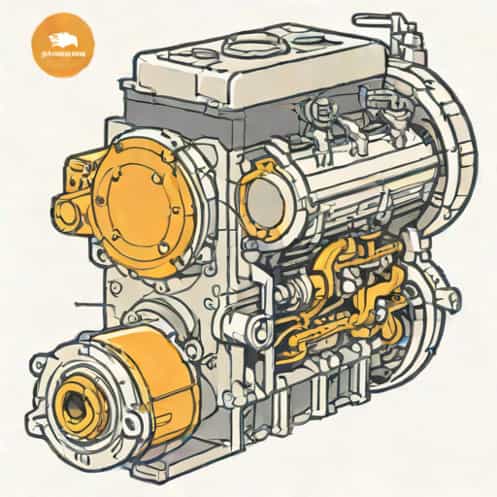
The Wankel engine is one of the most fascinating designs in the history of automotive engineering. Unlike traditional piston engines, the Wankel engine operates using a rotary motion rather than the up-and-down movement of pistons. This unique design allows for smoother operation, fewer moving parts, and high power output relative to its size. Understanding how a Wankel engine works provides insight into both its efficiency and its challenges, as well as why it continues to capture the imagination of engineers and car enthusiasts alike.
The Basic Concept of the Wankel Engine
The Wankel engine, named after its inventor Felix Wankel, is a type of internal combustion engine that converts pressure into rotating motion using a triangular-shaped rotor instead of pistons. It is often referred to as a rotary engine. The entire process of intake, compression, combustion, and exhaust happens within a single rotating assembly, making the engine compact and lightweight.
In a conventional piston engine, each piston moves up and down within its cylinder, turning the crankshaft through connecting rods. In contrast, the Wankel engine eliminates the need for pistons, valves, and connecting rods, using a rotor that turns within an oval-shaped housing known as the epitrochoid chamber. The result is continuous power delivery and a design that is both elegant and mechanically efficient.
The Structure of a Wankel Engine
To understand how a Wankel engine works, it helps to look at its main components. Although simpler in appearance than a piston engine, each part plays a vital role in the combustion process.
Main Components
- RotorA triangular rotor with curved sides that acts as the moving chamber for the air-fuel mixture. Each face of the rotor serves as a separate combustion chamber.
- HousingThe oval-shaped chamber (epitrochoid) that guides the rotor’s motion and contains intake and exhaust ports.
- Eccentric ShaftSimilar to a crankshaft, it converts the rotor’s orbital motion into rotational motion for the drivetrain.
- SealsApex and side seals that maintain compression and prevent leakage between the different combustion chambers.
The Four-Stroke Cycle in a Wankel Engine
Although it looks different, the Wankel engine performs the same four processes as a piston engine intake, compression, power (combustion), and exhaust. However, these occur simultaneously in different chambers as the rotor moves, giving the engine a very smooth and continuous output.
1. Intake Phase
As the rotor spins, one of its chambers expands, drawing in an air-fuel mixture through the intake port. This happens as the rotor’s leading face moves away from the intake port, creating a vacuum that pulls the mixture inside. This design eliminates the need for intake valves.
2. Compression Phase
When the rotor continues its rotation, the air-fuel mixture is trapped between the rotor face and the housing. As the space decreases, the mixture is compressed, preparing it for ignition. This compression happens naturally due to the shape of the housing and the movement of the rotor.
3. Combustion or Power Phase
At the perfect moment, a spark plug ignites the compressed air-fuel mixture. The resulting explosion pushes the rotor forward, generating rotational force on the eccentric shaft. This is the power-producing phase, and it occurs three times per rotor revolution, compared to one power stroke per two piston strokes in a traditional engine. This gives the Wankel engine a higher power density for its size.
4. Exhaust Phase
As the rotor continues to turn, the spent gases are pushed out through the exhaust port. Again, no exhaust valves are required – the design of the housing ensures that the gases exit efficiently before the next intake phase begins. This continuous cycle allows the engine to run smoothly without the vibration typical of piston engines.
Advantages of the Wankel Engine
The Wankel engine’s design offers several unique benefits that have made it a favorite among certain manufacturers, particularly Mazda, which famously used it in the RX series of cars.
Compact and Lightweight
Because the Wankel engine has fewer moving parts than a piston engine – no valves, camshafts, or connecting rods – it is more compact and lighter. This gives engineers more flexibility in vehicle design, allowing for better weight distribution and lower center of gravity.
Smooth Operation
The rotary motion of the rotor produces less vibration compared to the reciprocating movement of pistons. This results in smoother power delivery and a quieter running engine, enhancing the driving experience.
High Power-to-Weight Ratio
Despite its small size, the Wankel engine can produce a remarkable amount of power. Each rotor face generates a power stroke per revolution, which allows for higher RPMs and greater power output for its displacement. This is one reason why the Wankel engine became popular in sports cars and racing applications.
Simple Design and Maintenance
With fewer parts and a simpler mechanism, the Wankel engine can be easier to assemble and maintain. The absence of valve timing systems reduces mechanical complexity, and the design allows for efficient cooling and lubrication when properly maintained.
Challenges and Disadvantages
Despite its innovations, the Wankel engine also faces challenges that have limited its widespread adoption. Understanding these drawbacks helps explain why it remains a niche technology.
Fuel Efficiency
Wankel engines tend to consume more fuel than piston engines due to less efficient combustion. The elongated combustion chamber shape makes it difficult to achieve complete burning of the air-fuel mixture, leading to higher fuel consumption and emissions.
Emission Problems
One of the biggest obstacles for the Wankel engine has been meeting modern emission standards. Incomplete combustion and oil sealing issues can result in higher hydrocarbon emissions, which made it difficult for automakers to continue using the design without expensive modifications.
Seal Durability
The apex and side seals of the rotor are subject to significant wear, especially under high temperatures. This can lead to loss of compression and decreased engine performance over time. Regular maintenance is crucial to prevent seal-related problems.
Oil Consumption
Because oil is used to lubricate the rotor and seals directly, Wankel engines typically consume more oil than piston engines. This characteristic makes them less environmentally friendly and increases maintenance requirements.
Applications and Legacy
The most famous application of the Wankel engine was in Mazda’s vehicles, including the RX-7 and RX-8. Mazda invested heavily in refining the rotary engine, improving efficiency, reliability, and performance. The Wankel engine also found use in aircraft, motorcycles, and even some experimental vehicles due to its lightweight design and compactness.
Although fewer car manufacturers use it today, the rotary engine continues to attract interest from engineers exploring hybrid and range-extender systems. Its compact form and smooth operation make it ideal as a secondary power unit in modern electric vehicles.
The Wankel engine remains one of the most remarkable examples of engineering creativity. Its unique rotary design allows for smooth, powerful performance in a compact package. While challenges such as fuel efficiency and emissions have limited its widespread use, its influence on automotive innovation is undeniable. Understanding how a Wankel engine works reveals not only the brilliance of its mechanical design but also the enduring quest of engineers to find new and better ways to power the future of transportation.