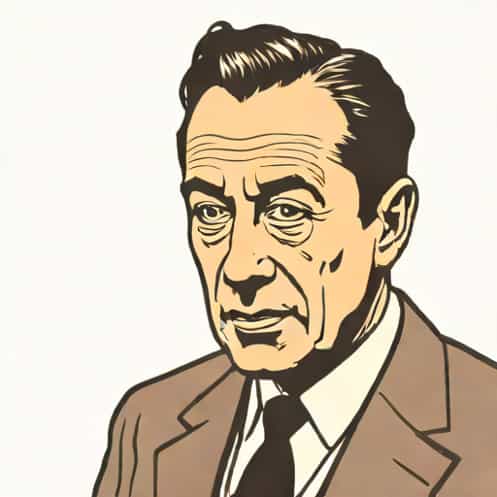
Albert Camus, the French-Algerian philosopher, writer, and journalist, is remembered for his profound contributions to literature and philosophy, particularly existentialism and absurdism. Born on November 7, 1913, in Mondovi, Algeria, Camus lived a life that intertwined deeply with the political and social upheavals of the 20th century. His works, including The Stranger, The Plague, and The Myth of Sisyphus, explored the human condition, the meaning of life, and the absurdity of existence. Despite his intellectual achievements and fame, Camus’s life came to an abrupt and tragic end, shocking the literary world and his many admirers. Understanding how Albert Camus died provides insight into the sudden loss of one of the 20th century’s most influential thinkers.
The Tragic Incident
Albert Camus died on January 4, 1960, at the age of 46. His death was the result of a car accident, an event that was sudden and completely unexpected. Camus was not suffering from any severe illness, nor was there any indication of declining health prior to the accident. He was a man known for his sharp intellect and passion for life, which made the news of his death all the more shocking. The car crash occurred near the village of Villeblevin in France, a tragic event that cut short the life of a man who had already achieved remarkable literary success.
Details of the Accident
The car accident involved a Facel Vega, a luxury French automobile, which was being driven by Camus’s close friend and publisher, Michel Gallimard. Camus was a passenger in the car at the time. Reports indicate that the vehicle lost control and collided with a tree at high speed. The crash was so severe that Camus died instantly, while Michel Gallimard suffered critical injuries and died a few days later. The suddenness of the accident meant that there was little anyone could do to prevent this tragic event.
Speculations and Theories
Over the years, there has been speculation about the circumstances surrounding Camus’s death. Some theories suggest that the car’s speed was excessive, while others point to potential mechanical failure. However, there is no concrete evidence to suggest foul play or intentional harm. Most accounts agree that it was a tragic accident that claimed the life of a literary giant far too early. The randomness of the incident aligns ironically with Camus’s philosophical explorations of absurdism, where life’s events are often unpredictable and beyond human control.
Camus’s Life Before the Accident
Before his untimely death, Albert Camus had led a life full of intellectual pursuit, literary creation, and political engagement. He won the Nobel Prize in Literature in 1957, recognized for his significant contributions to contemporary thought and his exploration of moral and existential questions. Camus’s works often delved into the conflict between human beings and an indifferent universe, and his personal experiences in Algeria, including his witnessing of social injustice, heavily influenced his writings. His sudden death deprived the world of further works that could have expanded his philosophical and literary legacy even more profoundly.
The Aftermath of Camus’s Death
The news of Camus’s death sent shockwaves across the literary and intellectual communities. Writers, philosophers, and fans mourned the loss of a brilliant mind whose words had resonated with so many people worldwide. Tributes poured in from around the globe, reflecting on his insights into human nature, freedom, and morality. Camus’s funeral was attended by close friends, colleagues, and admirers who recognized the profound impact he had on literature and philosophy.
Impact on Literature and Philosophy
The death of Albert Camus at the relatively young age of 46 left a noticeable void in literature and philosophy. His approach to existentialism and absurdism influenced countless writers and thinkers who came after him. Themes of human struggle, the search for meaning, and the confrontation with the absurd continue to be relevant, and his works are still widely read and studied today. The abrupt nature of his death adds a layer of poignancy to his reflections on the fragility of life and the inevitability of death, which he explored in his novels and essays.
Legacy and Remembrance
Even decades after his passing, Albert Camus remains a towering figure in literature and philosophy. His exploration of the absurd, his moral courage, and his literary talent have ensured that his works remain timeless. The story of how Albert Camus died, while tragic, also serves as a reminder of the unpredictability of life-a theme that Camus himself often addressed in his writings. Memorials and literary discussions continue to honor his contributions, ensuring that his voice remains alive for future generations.
The death of Albert Camus was sudden, tragic, and deeply felt by the literary and philosophical communities. Killed in a car accident on January 4, 1960, at the age of 46, Camus’s passing cut short a life of remarkable intellectual and literary achievement. Despite the tragic circumstances, his legacy continues to thrive through his influential works and ideas, which explore the complexities of human existence and the search for meaning in an often indifferent world. Remembering how Albert Camus died also brings renewed attention to the enduring relevance of his thoughts on life, death, and the human condition.