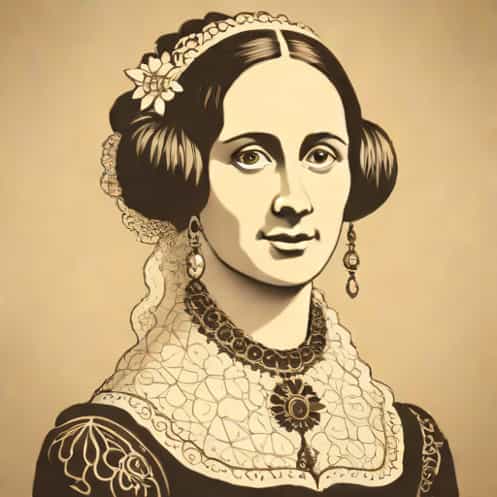
Ada Lovelace, often celebrated as the world’s first computer programmer, was a remarkable figure whose life combined creativity, mathematics, and visionary thinking. She was the daughter of the famous poet Lord Byron and Annabella Milbanke, and from an early age, Ada displayed exceptional intelligence and a passion for mathematics. Her collaboration with Charles Babbage on the Analytical Engine laid the foundation for modern computing, though she lived in an era when women were rarely recognized for scientific achievement. Despite her brilliance, Ada’s life was tragically short, and many people are curious to know how old she was when she died and the circumstances surrounding her untimely passing.
Early Life and Education
Ada Lovelace was born on December 10, 1815, in London, England. Her mother encouraged her studies in mathematics and logic from a young age, partly to counter what she viewed as the potentially erratic poetic temperament inherited from her father. Ada’s education included tutoring in mathematics, science, and logic, as well as exposure to the scientific community of the time. By her teenage years, she had already developed a reputation as a gifted mathematician and thinker.
Introduction to Charles Babbage
In 1833, Ada Lovelace met Charles Babbage, an inventor and mathematician who was developing the concept of the Analytical Engine, an early mechanical general-purpose computer. Ada quickly grasped the potential of Babbage’s machine and began working closely with him. Her notes on the Analytical Engine included the first algorithm designed to be processed by a machine, earning her recognition as the first computer programmer. These contributions were groundbreaking, but at the time, they were largely underappreciated.
Personal Life and Challenges
Ada married William King, who later became the Earl of Lovelace, and they had three children together. Despite her social and family obligations, she continued to pursue mathematics, translating and expanding upon Italian mathematician Luigi Federico Menabrea’s work on the Analytical Engine. Her life, however, was marked by frequent illness and periods of frailty. Historical records indicate that she suffered from a variety of health issues, which would eventually lead to her early death.
Health Problems and Final Years
Ada Lovelace experienced health challenges throughout her life, including bouts of stomach and uterine problems, as well as headaches and other chronic conditions. In her final years, her health deteriorated significantly. She underwent painful medical treatments that were common in the 19th century, which likely exacerbated her condition. These treatments, combined with her pre-existing health issues, contributed to her premature death.
Age at Death
Ada Lovelace died on November 27, 1852, just shy of her 37th birthday. She was 36 years old at the time of her death. Her passing was due to uterine cancer, which at the time had limited treatment options and a very poor prognosis. Ada’s death at such a young age cut short a brilliant mind that had already made significant contributions to mathematics and computing. Despite her brief life, her work has had an enduring influence on technology and programming.
Legacy and Recognition
Although Ada Lovelace died young, her legacy has grown over the decades. She is remembered as a pioneer in computing and as a woman who broke barriers in a male-dominated scientific world. Organizations, awards, and programming languages have been named in her honor, including the Ada programming language, which highlights her lasting impact. Educational programs and Ada Lovelace Day celebrate women in science, technology, engineering, and mathematics (STEM), ensuring that her contributions are widely recognized and inspiring future generations.
Contributions to Computing
Ada’s most famous work, her notes on the Analytical Engine, included a detailed description of how the machine could be programmed to perform calculations. She understood that the machine could go beyond arithmetic and potentially execute complex sequences of operations, effectively foreseeing modern computing concepts. Her insight that machines could manipulate symbols and not just numbers was visionary, and her algorithm laid the conceptual groundwork for software development centuries later.
Notable Achievements
- Writing the first algorithm intended for a machine, making her the first computer programmer.
- Foreseeing the potential for computers to go beyond numerical calculations and handle symbolic logic.
- Translating and expanding Menabrea’s work, providing in-depth notes that explained the operation and potential of the Analytical Engine.
- Inspiring the Ada programming language and Ada Lovelace Day to honor women in technology.
Impact of Early Death on Recognition
Ada Lovelace’s early death meant that she did not live to see the full recognition of her work. Many of her contributions were largely forgotten until the 20th century when historians revisited her writings and notes. The fact that she died at 36 adds a poignant dimension to her story, highlighting how much she accomplished despite her short life. Her premature death also underscores the challenges faced by women in science during the 19th century, where societal expectations and limited medical knowledge often constrained potential.
Historical Context
Living in the early Victorian era, Ada Lovelace faced societal restrictions that limited the educational and professional opportunities available to women. Despite these obstacles, she managed to contribute groundbreaking ideas to the field of computing. Her ability to achieve so much by the age of 36 is remarkable, and it helps explain why her life story continues to inspire people today.
Commemoration and Influence Today
Ada Lovelace is now widely celebrated for her achievements. Schools, universities, and STEM organizations honor her contributions and encourage young women to pursue careers in technology and science. Books, topics, and documentaries highlight her life and work, ensuring that her legacy continues despite her short lifespan. Her life story is also a reminder of the importance of nurturing talent, encouraging curiosity, and supporting women in science and mathematics.
Key Points About Her Life and Age at Death
- Born December 10, 1815, in London, England.
- Died November 27, 1852, at the age of 36.
- Cause of Death Uterine cancer.
- Significant Contributions First computer algorithm, visionary insights on computing, and pioneering work in programming.
- Legacy Ada programming language, Ada Lovelace Day, and inspiration for women in STEM.
Ada Lovelace’s life, though tragically short, had an extraordinary impact on mathematics and computing. She died at the age of 36, but within that brief span, she contributed the first algorithm intended for a machine, envisioned the broader potential of computing, and left a lasting legacy that continues to influence technology today. Her work has inspired generations of mathematicians, programmers, and innovators, proving that even a life cut short can have a lasting and profound effect on the world. Remembering Ada Lovelace and understanding the age at which she passed provides perspective on her incredible achievements and enduring influence.