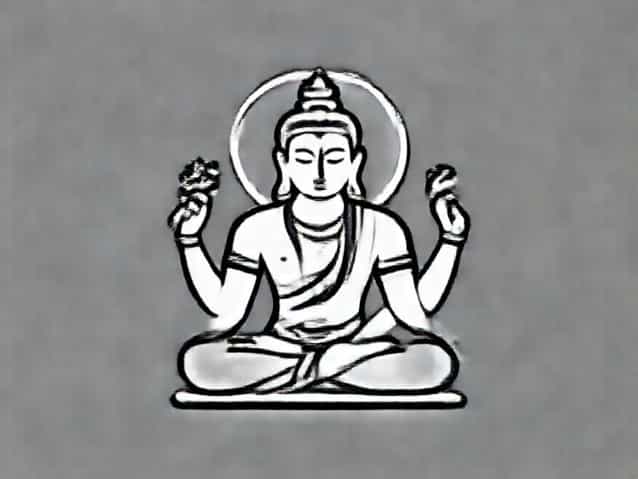
Many people who are learning about world religions often wonder whether Brahma, the creator god in Hindu tradition, is the founder of Hinduism. This question usually comes from trying to understand how Hinduism began and who initiated its teachings. The truth is that Hinduism is one of the oldest religions in the world, and its origins are not tied to one specific person or moment in history. To answer whether Brahma is the founder of Hinduism, it helps to explore Hindu beliefs, the role of Brahma, and how the religion developed over thousands of years.
Understanding Who Brahma Is
In Hindu tradition, Brahma is known as one part of the Trimurti, which includes Brahma the creator, Vishnu the preserver, and Shiva the destroyer. This trio represents three essential aspects of the universe. Brahma’s role is specifically connected with creation-he is said to have brought the universe, time, beings, and even sacred knowledge into existence in various mythological accounts.
Characteristics of Brahma
- Brahma symbolizes creation and new beginnings.
- He is often described as having four heads, each reciting one of the four Vedas.
- His role is cosmological rather than historical.
- He is revered, but he is not the central deity in most forms of worship today.
What Hinduism Actually Is
To understand whether Brahma could be considered the founder of Hinduism, it is essential to understand what Hinduism represents. Hinduism is not a single unified religion with one founder, one holy book, or one fixed doctrine. Instead, it is a collection of cultural practices, spiritual ideas, philosophies, rituals, and traditions that evolved over thousands of years across the Indian subcontinent.
Key Features of Hinduism
- Hinduism is decentralized and diverse.
- It includes traditions like Shaivism, Vaishnavism, and Shaktism.
- It embraces many scriptures, such as the Vedas, Upanishads, epics, and Puranas.
- Its teachings emphasize dharma, karma, reincarnation, and liberation (moksha).
Why Hinduism Has No Single Founder
Unlike some religions that trace their origins to a single prophet or teacher, Hinduism developed gradually. It emerged from ancient cultural, spiritual, and philosophical currents that blended over time. This means that no individual-whether divine or human-can be accurately described as the founder of Hinduism.
Reasons Hinduism Has No Founder
- Its roots go back to the Indus Valley Civilization and earlier traditions.
- Teachings evolved through oral transmission long before written scripture existed.
- Many communities contributed to its formation across different regions.
- Its flexibility allowed for countless interpretations and practices.
The Role of the Vedas in Understanding Hindu Origins
The oldest Hindu scriptures, known as the Vedas, were composed thousands of years ago. These texts contain hymns, rituals, and philosophical insights. They were not written by a single person but by many sages or rishis who received and passed on their knowledge through generations.
The Vedic Contribution
- The Vedas form the foundation of many Hindu beliefs.
- They are considered apauruṣeya, meaning not created by any individual.
- This concept further supports the idea that Hinduism has no founder.
Is Brahma the Founder of Hinduism?
Based on Hindu philosophy, Brahma is not the founder of Hinduism. Instead, he is a deity within the religion who plays a mythological role as the creator of the universe. Hinduism existed long before the stories about Brahma were written down in the Puranic texts. The concept of Brahma emerged as Hindu thought developed, not as a starting point of the religion.
Reasons Brahma Is Not the Founder
- Brahma is part of Hindu cosmology, not a historical founder.
- The religion predates the earliest stories mentioning Brahma.
- Hinduism evolved gradually and collectively, not through one deity or teacher.
- Scriptures describe Brahma as the creator of the universe, not the founder of a belief system.
Common Confusions About Brahma and Hindu Origins
Because Brahma is associated with creation, some assume he must also be the originator of Hindu teachings. However, creation mythology and the historical development of a religion are very different concepts. Understanding this distinction helps clarify why Brahma is not considered the founder of Hinduism.
Examples of Misunderstandings
- Confusing mythological creation with religious founding.
- Assuming every religion has a single identifiable founder.
- Linking one deity with the entire tradition instead of viewing Hinduism’s diversity.
The Cultural Evolution of Hinduism
The growth of Hinduism was influenced by countless cultural changes, philosophical debates, rituals, and everyday practices. Over time, it became a vast and rich tradition that welcomes many perspectives. This organic growth is one of the reasons Hinduism remains one of the most flexible and diverse religions in the world.
Influences That Shaped Hinduism
- Indus Valley culture
- Vedic practices and hymns
- Upanishadic philosophy
- Local deities, rituals, and folk traditions
- Later texts like the Mahabharata, Ramayana, and Puranas
Hinduism as a Living Tradition
Today, Hinduism continues to evolve. It adapts to modern life while maintaining ancient principles. Its openness to interpretation allows millions of people to follow it in their own ways, guided by personal devotion, cultural heritage, and philosophical understanding.
Modern Expressions of Hinduism
- Yoga, meditation, and spiritual practices
- Festivals and community rituals
- Temple worship and pilgrimage
- Philosophical study and self-inquiry
In summary, Brahma is not the founder of Hinduism. He is an important deity in Hindu mythology who symbolizes the creation of the universe. Hinduism itself has no founder because it is an ancient, evolving tradition shaped by many communities, sages, and cultural influences over thousands of years. Understanding this distinction helps clarify the nature of Hinduism as a diverse, living tradition rather than a religion rooted in a single historical figure. By exploring Brahma’s role and the broader development of Hindu beliefs, it becomes clear why Hinduism cannot be traced back to any single source-and why that diversity is one of its greatest strengths.