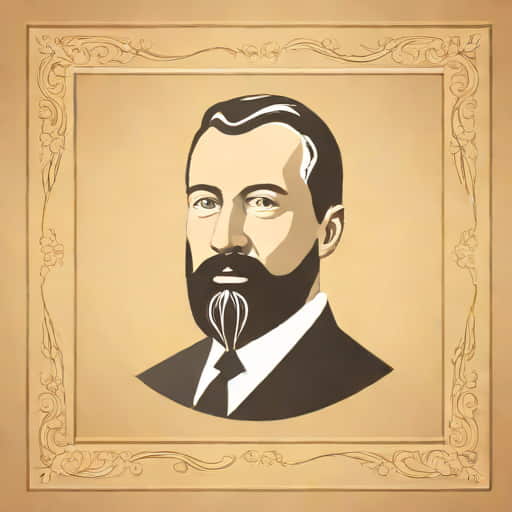
Karl Robert von Nesselrode was one of the most influential diplomats and statesmen of the 19th century, playing a major role in shaping Russian foreign policy during a transformative era in European history. Born in Lisbon in 1780 into a noble family of German origin, Nesselrode would go on to serve as Russia’s foreign minister for four decades, guiding the empire through the aftermath of the Napoleonic Wars, the complex politics of the Holy Alliance, and mounting tensions that eventually led to the Crimean War. His career combined diplomatic skill, political conservatism, and a deep involvement in international affairs. Although now less widely known outside history circles, his impact on Russia’s position in Europe and the broader geopolitical landscape was significant and lasting.
Early Life and Background
Karl Robert von Nesselrode was born on December 14, 1780, in Lisbon, Portugal, where his father served as the Russian ambassador. He was baptized in the British embassy chapel in deference to his mother’s Protestant faith, which reflected his family’s complex cultural heritage. Despite spending most of his life serving the Russian Empire, Nesselrode maintained close ties to his German roots and even spoke Russian only imperfectly, relying heavily on diplomatic skill rather than linguistic fluency. His education in a Berlin gymnasium helped shape his early worldview and prepared him for the international roles he would later assume. At age sixteen he entered the Imperial Russian Navy, a stepping stone to subsequent appointments in the army and diplomatic service.
Early Diplomatic Career
Nesselrode’s formal diplomatic career began in 1801, with postings in Berlin and The Hague. He demonstrated an ability to understand complex political environments and navigate the shifting alliances of early 19thcentury Europe. During the Napoleonic Wars, he was involved in critical negotiations, including the Peace of Tilsit in 1807, where he worked alongside key figures to reach agreements between France and Russia. His work during this period earned him recognition and helped solidify his reputation as a skilled negotiator. Later, he would serve as a key intermediary between Tsar Alexander I and European leaders, helping to foster communication during tense periods of alliance and conflict.
Rise to Foreign Minister
Following Napoleon’s defeat, Nesselrode attended the Congress of Vienna in 1814-15, where he represented Russian interests in the extensive negotiations that reshaped Europe after years of war. The congress aimed to restore order and stability following the upheaval of wars across the continent. Nesselrode’s influence grew as he worked to support the conservative order favored by the Russian emperor and his allies, laying the groundwork for what became known as the Congress System-a series of regular meetings among major powers to resolve disputes peacefully.
Foreign Minister and State Secretary
In 1816 Nesselrode became Russia’s foreign minister, initially sharing responsibilities with Count Ioannis Kapodistrias until 1822. From that point on, he effectively guided Russian foreign policy, holding the top diplomatic post until 1856. Under Tsars Alexander I and Nicholas I, Nesselrode became a leading conservative figure within the Holy Alliance-a coalition of Russia, Austria, and Prussia committed to maintaining traditional social and political orders. His leadership helped maintain Russia’s influence at key diplomatic gatherings and in bilateral negotiations throughout Europe.
Diplomacy and International Affairs
During his long tenure, Nesselrode navigated some of the most complex foreign policy challenges of the 19th century. His diplomatic strategies often revolved around balancing Russia’s interests with those of other major powers, particularly in relation to the Ottoman Empire, the British Empire, and France. His policies reflected the conservative, balanceofpower approach that dominated European politics in the decades following Napoleon’s defeat.
Holy Alliance and European Stability
Nesselrode was a staunch supporter of the Holy Alliance, which aimed to uphold conservative order and prevent revolutionary upheavals across the continent. Under his guidance, Russia regularly engaged in congresses and negotiations that sought to resolve disputes without largescale conflict. These efforts helped stabilize Europe for a time, though they also reinforced existing power structures and slowed political reforms in several regions.
Relations with the Ottoman Empire and Other Powers
Nesselrode’s foreign policy included efforts to increase Russian influence in southeastern Europe and the Balkans, often at the expense of the weakening Ottoman Empire. At times this strategy brought Russia into conflict with other major powers, particularly Britain and France, who sought to counterbalance Russian expansion. One example of diplomatic complexity was the Treaty of Unkiar Skelessi in 1833, which briefly aligned Russia and the Ottoman Empire but was later abandoned due to British objections. Subsequent agreements, such as the Straits Convention of 1841, recognized the Ottoman sultan’s right to control access to the Black Sea straits, reflecting careful negotiation between Russia and Britain.
Conflict and Controversy
Although Nesselrode often sought diplomatic solutions, his policies sometimes contributed to wider conflict. His attempts to expand Russian influence in the Mediterranean and Balkans drew opposition and ultimately played a part in the complex causes of the Crimean War (1853-1856). This conflict saw Russia pitted against an alliance of the Ottoman Empire, Britain, France, and Sardinia. The war ended unfavorably for Russia and marked a significant setback for Nesselrode’s longheld vision of Russian dominance in southeastern Europe.
Crimean War and Diplomacy
The Crimean War highlighted the limitations of diplomatic efforts in an era of rising national interests and changing power dynamics. Nesselrode attempted to avoid fullscale conflict through extended negotiations but could not bridge the gulf between competing ambitions. When the war concluded with the Treaty of Paris in 1856, Russia’s influence in the region was diminished. The conflict underscored the challenges of maintaining stability through diplomacy alone and marked a turning point in European politics.
Later Years and Legacy
After the Crimean War, Nesselrode retired from active diplomatic duties, though he retained the honorary title of chancellor until his death. His autobiography was published posthumously in 1866, providing insight into his long career and personal reflections on the era’s diplomatic challenges. Nesselrode died on March 23, 1862, in Saint Petersburg, Russia, leaving behind a legacy shaped by decades of negotiation, statecraft, and efforts to maintain a conservative European order.
Impact on Russian and European History
Karl Robert von Nesselrode’s impact on Russian diplomacy and European politics was significant. As foreign minister, he shaped policy during pivotal moments in history, from the Napoleonic aftermath to the advent of modern geopolitical tensions. His work with the Holy Alliance and his role in key treaties and congresses helped establish frameworks for international diplomacy in the 19th century. While his legacy is complex-marked by both diplomatic achievements and contentious conflicts-his long tenure highlights his importance as a figure in European statecraft.
Karl Robert von Nesselrode was a towering figure in 19thcentury diplomacy whose career spanned some of the most transformative events in European history. From his early days in the Russian navy and army to his leadership as foreign minister and chancellor, he played a central role in shaping Russia’s engagement with Europe and the wider world. His advocacy for conservative stability, involvement in the Concert of Europe, and participation in major international negotiations illustrate the breadth of his influence. Although his policies did not always prevent conflict, his work laid the groundwork for modern diplomatic practices and reflected the complex challenges of governing a major empire during a period of rapid political change. Karl Robert von Nesselrode remains a fascinating and significant figure whose contributions continue to be studied by historians interested in diplomacy, international relations, and European history.