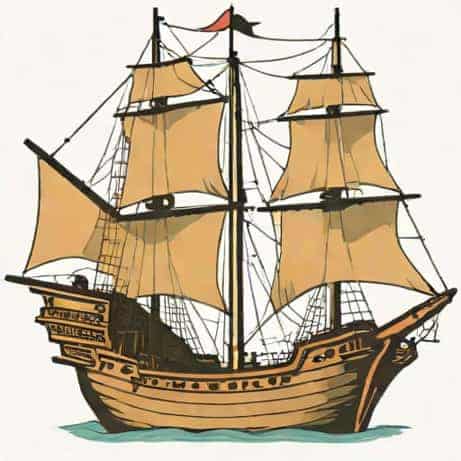
The early caravel ship is a symbol of the Age of Exploration, representing innovation in naval design that allowed explorers to traverse oceans and discover new lands. These ships, developed by the Portuguese in the 15th century, were known for their speed, maneuverability, and ability to sail windward. Understanding the parts of an early caravel ship provides insight into how sailors navigated, managed sails, and maintained the vessel during long voyages. Each component of the ship, from the hull to the masts and rudder, played a crucial role in ensuring that the caravel could withstand rough seas while carrying cargo, crew, and supplies. Labeling these parts not only aids historical knowledge but also helps students, enthusiasts, and maritime historians appreciate the ingenuity of early shipbuilders.
Hull and Deck
The hull is the main body of the caravel, designed to provide stability, buoyancy, and space for cargo and crew quarters. Early caravels often had a rounded hull, which allowed them to handle waves effectively and maintain balance during long ocean journeys. The hull’s shape also contributed to the ship’s speed and maneuverability, which were essential for exploration.
Parts of the Hull
- BowThe front of the ship, often pointed to cut through water efficiently.
- SternThe rear end of the ship, sometimes elevated to house the captain’s quarters or navigation area.
- KeelA long, central timber running along the bottom of the hull to provide structural stability and assist in straight-line navigation.
- GunwaleThe upper edge of the hull, providing reinforcement and attachment points for rigging and safety railings.
- DeckThe flat surface on top of the hull where crew members worked, managed sails, and navigated the ship.
Masts and Sails
One of the defining features of the caravel was its rigging system. Early caravels typically had two or three masts with a combination of lateen (triangular) and square sails. This allowed the ship to sail efficiently both with the wind and against it, a major advantage over older ship designs. Understanding the masts and sails helps explain how sailors controlled speed and direction during voyages.
Types of Masts
- MainmastThe tallest mast located near the center of the ship, supporting the largest sails for maximum propulsion.
- ForemastThe mast closest to the bow, often supporting square sails to catch wind from behind.
- MizzenmastThe mast near the stern, helping with balance and steering when combined with the rudder.
Types of Sails
- Lateen SailsTriangular sails that allowed the caravel to tack against the wind, giving it exceptional maneuverability.
- Square SailsRectangular sails that captured wind from behind, providing speed on long, straight passages.
- JibA smaller triangular sail placed in front of the foremast to improve direction and stability.
Rigging and Lines
The rigging of an early caravel included a network of ropes and lines used to control sails, masts, and yards. Rigging was essential for navigation, allowing sailors to adjust sails based on wind conditions and maintain balance in the water. Proper understanding of rigging was critical for safe and effective voyages.
Components of Rigging
- HalyardsRopes used to raise and lower sails.
- SheetsLines attached to the bottom corners of sails, used to control their angle and direction.
- ShroudsRopes or cables providing lateral support to the masts.
- RatlinesHorizontal ropes connected to shrouds forming a ladder for sailors to climb the masts.
- YardsHorizontal spars supporting square sails.
Rudder and Steering
Steering an early caravel relied on the rudder, which was mounted at the stern. The rudder was controlled by a tiller or wheel, allowing sailors to direct the ship’s course. Proper use of the rudder in combination with the sails enabled the caravel to navigate through varying wind and sea conditions effectively. Some caravels also featured a sterncastle or poop deck, which elevated the rudder mechanism and provided a lookout area for the captain.
Key Steering Components
- RudderVertical blade at the stern used for steering.
- TillerA horizontal lever attached to the rudder for manual control.
- WheelLater versions included a wheel connected to the rudder via ropes or chains for easier steering.
- SterncastleElevated platform at the stern, providing visibility and housing for the steering system.
Other Notable Parts of an Early Caravel
In addition to the hull, masts, sails, rigging, and rudder, several other parts were crucial for the functioning of the caravel.
Deck Features
- ForecastleElevated area at the bow where sailors could keep watch and perform work like anchor management.
- Poop DeckElevated deck at the stern often used for navigation and command.
- CabinEnclosed space for the captain or officers, providing protection and storage.
Anchoring and Mooring
- AnchorHeavy device lowered into the water to hold the ship in place.
- Anchor Chain or RopeSecures the anchor to the hull.
- BollardsPosts on deck for tying mooring lines when docked.
Importance of Labeling Caravel Parts
Labeling the parts of an early caravel ship is important for educational purposes, historical understanding, and maritime studies. It helps students and enthusiasts visualize how the ship functioned as a complete system. Each part of the caravel, from the masts to the rudder and hull, worked together to ensure speed, safety, and maneuverability. By labeling these components, learners can better appreciate the ingenuity of shipbuilders during the Age of Exploration and understand why caravels were pivotal in connecting different parts of the world. Labeling also helps in creating accurate models, illustrations, and simulations for teaching or research purposes.
Early caravel ships were marvels of naval engineering, with carefully designed parts that enabled them to sail long distances, navigate windward, and carry cargo and crew safely. The hull, deck, masts, sails, rigging, rudder, and additional components all contributed to the ship’s effectiveness and versatility. Labeling these parts is essential for understanding their function and historical significance. By studying each element of the caravel, we gain insight into the technological advances of the 15th century, the strategic importance of these ships for exploration, and the legacy they left in maritime history. Whether for educational purposes, historical research, or model building, understanding the labeled parts of an early caravel enriches our knowledge of naval history and the Age of Exploration.