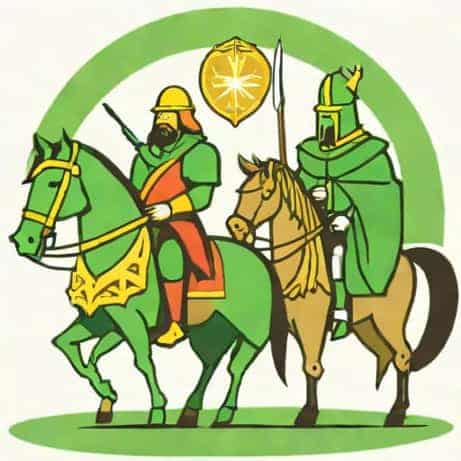
Sir Gawain and the Green Knight is one of the most famous works of Middle English literature, known for its intricate storytelling, rich symbolism, and exploration of chivalric values. Believed to have been written in the late 14th century by an anonymous poet often referred to as the Pearl Poet or Gawain Poet, the poem combines elements of romance, folklore, and moral allegory. The narrative follows Sir Gawain, a knight of King Arthur’s Round Table, as he faces a mysterious challenge from the enigmatic Green Knight. The poem is celebrated for its poetic structure, vivid imagery, and themes of honor, courage, and human imperfection. Understanding the story, its structure, and its historical context provides insight into medieval literature and the ideals of knighthood.
Historical and Literary Context
Sir Gawain and the Green Knight was composed during the late 14th century, a period when the ideals of chivalry, courtly love, and moral virtue were central to English literature. Written in alliterative verse, a poetic style common in Middle English, the poem showcases the linguistic richness and oral storytelling traditions of the time. The text survives in a single manuscript, the Cotton Nero A.x, alongside other religious and moral poems, suggesting that the poet had both literary skill and spiritual insight. The poem reflects the tension between pagan folklore motifs and Christian ethical values, blending magic, nature, and moral instruction in a way that appealed to medieval audiences.
Structure and Style
The poem is composed in approximately 2,500 lines, divided into four main sections or fitts, each corresponding to a key episode in Sir Gawain’s journey. The poet employs alliteration and a bob-and-wheel rhyme scheme, where a short line (the bob) is followed by a four-line rhyming quatrain (the wheel). This structure creates a musical rhythm and emphasizes important moments in the narrative. The vivid descriptions of the Green Knight, Arthur’s court, and the natural landscapes demonstrate the poet’s ability to blend narrative, symbolism, and visual imagery, making the story both entertaining and morally instructive.
Plot Overview
The story begins at a New Year’s Eve feast at King Arthur’s court, where the knights of the Round Table are celebrating with lavish food and merriment. Suddenly, a mysterious Green Knight appears, riding a green horse and carrying a large axe. He challenges any knight present to strike him with his axe, under the condition that the Green Knight may return the blow in one year and one day. Sir Gawain, a young and honorable knight, accepts the challenge and beheads the Green Knight. To everyone’s shock, the Green Knight picks up his severed head and reminds Gawain to meet him at the Green Chapel in one year to receive a return blow.
The Journey to the Green Chapel
True to his word, Sir Gawain sets out to fulfill the challenge. His journey is perilous, taking him through harsh winter landscapes, dark forests, and desolate terrains. Along the way, Gawain demonstrates courage, patience, and resilience, embodying the ideals of a knight on a quest. The journey itself serves as a moral and spiritual test, highlighting both human limitations and the aspiration toward virtue. Gawain’s perseverance and adherence to his promise are central to the narrative, underscoring the theme of honor that permeates the poem.
Encounters at the Castle
During his journey, Gawain comes across a castle where he is welcomed by Lord Bertilak and his lady. The castle provides warmth and hospitality, contrasting with the harshness of the external journey. Here, a complex series of exchanges begins, involving a game of gifts and temptations. The lord departs daily to hunt, while Lady Bertilak attempts to seduce Gawain. In accordance with the game, Gawain agrees to exchange whatever he gains during the day with the lord, creating a moral dilemma when he receives a magical green girdle from the lady that is said to protect the wearer from harm. Gawain keeps the girdle secret, breaking the rules of the exchange and highlighting his human fallibility.
Tests of Virtue
This section of the poem emphasizes testing Gawain’s character. While he strives to maintain honesty, courtesy, and loyalty, the secrecy surrounding the green girdle introduces a moral tension. The poet uses these challenges to explore the conflict between survival instincts and chivalric ideals. Gawain’s internal struggle reflects the broader theme of human imperfection, showing that even the noblest of knights is subject to fear, temptation, and self-preservation. These tests add depth to Gawain’s character and create a more nuanced understanding of medieval heroism.
The Meeting with the Green Knight
Eventually, Sir Gawain reaches the Green Chapel, a mysterious and foreboding location, where he confronts the Green Knight. The Green Knight makes two feigned strikes before delivering a mild cut on Gawain’s neck, revealing that the minor wound is a consequence of Gawain’s concealment of the girdle. The Green Knight explains that the challenge was a test arranged by Lord Bertilak, who is revealed to be the same supernatural figure who orchestrated the trials. The revelation teaches Gawain a lesson in humility, honor, and the limitations of human perfection. The story concludes with Gawain returning to Arthur’s court, acknowledging his shortcomings, and earning respect for his honesty and courage despite his minor failings.
Themes and Symbolism
- Chivalry and HonorGawain’s actions throughout the poem illustrate the medieval code of conduct, including bravery, loyalty, and honesty.
- Temptation and Human FallibilityThe green girdle symbolizes human weakness, fear, and the tension between survival instincts and ethical ideals.
- Nature and SupernaturalThe Green Knight and the natural settings highlight the interplay of magical and natural forces in the moral and spiritual tests.
- Moral InstructionThe poem serves as a guide for ethical behavior, showing that courage and honesty are admirable even when human imperfection is inevitable.
Historical Significance
Sir Gawain and the Green Knight is considered one of the masterpieces of Middle English literature because of its rich language, poetic structure, and complex themes. It reflects the cultural values and ideals of the late medieval period while exploring universal human experiences such as fear, temptation, and the pursuit of honor. The poem influenced later English literature and remains a subject of scholarly study for its innovative use of alliterative verse, moral complexity, and blend of folklore with courtly romance. Its enduring appeal lies in its ability to combine action, adventure, and ethical reflection in a compelling narrative.
Legacy and Modern Interpretations
Over the centuries, Sir Gawain and the Green Knight has inspired translations, adaptations, and reinterpretations in various media. Modern readers appreciate the poem for both its adventure and its exploration of character and morality. Themes of testing, courage, and human imperfection resonate across time, making it relevant even today. Scholars analyze its linguistic features, symbolism, and narrative techniques, while artists and filmmakers have adapted the story into contemporary forms. The Green Knight’s enigmatic presence and the poem’s intricate challenges continue to captivate audiences, ensuring its place in the literary canon.
Sir Gawain and the Green Knight is a rich and complex narrative that combines adventure, romance, and moral inquiry. It tells the story of Sir Gawain’s bravery, his encounter with the mysterious Green Knight, and his tests of virtue and character. The poem explores themes of chivalry, human imperfection, and ethical conduct within the framework of a supernatural and symbolic journey. Its historical significance, poetic style, and moral lessons have made it a cornerstone of Middle English literature, celebrated for centuries and studied for its linguistic and thematic depth. By examining the story and its context, readers gain insight into medieval ideals, the challenges of human virtue, and the enduring appeal of one of the most remarkable narratives in English literary history.