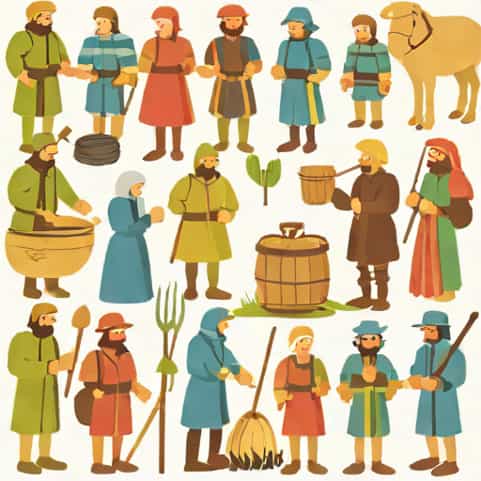
Life in medieval Europe was shaped heavily by social class, land ownership, and economic roles. Both peasants and townsmen formed the backbone of society, yet their daily experiences, responsibilities, and opportunities differed greatly. Understanding how these groups lived helps reveal the broader economic and cultural landscape of the Middle Ages. Despite their contrasting environments rural fields for peasants and urban centers for townsmen each group played a crucial role in sustaining medieval European life. Their struggles, traditions, and contributions together created the foundation of the medieval world.
The Social Structure of Medieval Europe
Medieval society was organized into a rigid hierarchy known as the feudal system. Nobles, clergy, knights, townsmen, and peasants each had clearly defined roles. Most people fell into the lower two groups, making peasants and townsmen central to the economic stability of kingdoms and principalities across Europe.
The Feudal System and Daily Responsibilities
Peasants were typically bound to the land owned by a lord. They farmed, harvested crops, tended animals, and paid taxes or rents for the land they worked. Townsmen, on the other hand, lived in more urbanized areas where trade, craftsmanship, and commerce shaped daily life. Their duties often involved producing goods, maintaining shops, or participating in local guilds. This difference between agrarian labor and skilled work helped define each group’s identity.
Peasants in Medieval Europe
Peasants represented the majority of the population. Their lives centered on survival, family, and community. Although their roles varied depending on region and time period, many shared similar challenges and routines.
Types of Peasants
Not all peasants were the same. Medieval Europe recognized distinct categories that determined one’s freedom and obligations.
- SerfsBound to a lord’s land, unable to leave without permission.
- VilleinsSimilar to serfs but with slightly more rights.
- Free peasantsOwned small plots of land and had more mobility.
- CottarsPeasants with very little land, often working as laborers.
These distinctions influenced their daily routines, economic stability, and overall quality of life.
Daily Life and Work
Peasant life revolved around agricultural seasons. Spring brought planting, summer required constant fieldwork, autumn centered on harvest, and winter involved repairs and preparation. This seasonal rhythm shaped their work, diet, and social interactions.
Most peasants lived in small wooden or wattle-and-daub houses. Families shared tight spaces with livestock during cold months. Meals were simple, usually bread, porridge, vegetables, and sometimes fish or meat on special occasions. Despite hardships, communities were close-knit, and festivals provided relief from routine labor.
Rights, Duties, and Limitations
Peasants owed service to their lords. This often included agricultural labor, taxes in crops, and payments for using mills or ovens. They also faced strict laws that governed marriage, travel, and property. However, peasants were not powerless; communities sometimes negotiated terms, especially during crises or labor shortages.
Townsmen in Medieval Europe
While peasants sustained rural economies, townsmen contributed to the growth of commerce, crafts, and trade. As medieval towns expanded, the role of townsmen became increasingly significant for regional economies.
The Growth of Medieval Towns
Towns grew around trade routes, fortifications, or religious centers. Markets attracted merchants, artisans, and farmers. Over time, urban populations developed distinct lifestyles that contrasted sharply with rural living. Townsmen became involved in specialized trades, contributing to economic diversification.
Occupations of Townsmen
Townsmen often belonged to guilds organizations that regulated their craft or trade. These guilds ensured quality, set prices, and protected workers’ rights to some extent.
- Blacksmiths created tools and household items.
- Weavers and cloth makers produced textiles.
- Bakers supplied communities with essential goods.
- Butchers, cobblers, potters, and carpenters handled specialized crafts.
- Merchants traded local and imported goods.
These roles helped establish towns as centers of economic activity and cultural exchange.
Daily Life in Medieval Towns
Urban life offered more freedoms than rural living. Townsmen could own property, join guilds, and sometimes participate in local government. Houses were typically built from wood or stone, often with workshops on the ground floor and living quarters above. Streets were narrow and busy, filled with markets, shops, and social gatherings.
However, town life also came with challenges. Crowded spaces meant a higher risk of fires, disease, and sanitation problems. Despite this, life in towns provided a sense of opportunity unavailable to many peasants.
Comparing Peasants and Townsmen
Although both groups lived within the same medieval framework, their lifestyles differed greatly. These differences were shaped by geography, occupation, and social expectations.
Economic Roles and Contributions
Peasants formed the foundation of the agrarian economy by producing food and raw materials. Without their work, towns and castles could not survive. Townsmen, in contrast, produced finished goods, facilitated trade, and supported the monetary economy. Together, they sustained medieval Europe’s economic and social systems.
Freedom and Mobility
Townsmen generally enjoyed more mobility. They could change trades, travel for business, or seek apprenticeships. Peasants, particularly serfs, had limited freedom and were often tied to their land. This difference created a clear divide in lifestyle and opportunity.
Living Conditions
Peasants lived in rural settings with simpler homes and constant agricultural labor. Townsmen lived in busier environments with access to markets, guilds, and varied occupations. Each setting had advantages and drawbacks rural life offered open space and lower population density, while urban life offered opportunities at the expense of health risks and crowded living.
Social Interactions and Community Life
Both peasants and townsmen participated in communal life shaped by religion, seasonal events, and local traditions. Churches acted as centers of community for both groups, while festivals, fairs, and market days created shared experiences across social lines.
Festivals and Religious Observances
Religion played a major role in medieval life. Peasants and townsmen observed the same major Christian holidays, attended church, and participated in rituals such as baptisms, weddings, and funerals. These events created unity and structured the year around both work and celebration.
Market Days and Trade Fairs
Peasants often traveled to nearby towns during market days to sell produce, buy tools, or trade goods. This interaction between rural and urban communities helped sustain medieval economies. Townsmen, in turn, relied on peasants for raw materials and essential food supplies.
Challenges Faced by Both Groups
While their lifestyles differed, peasants and townsmen shared many hardships. Disease, famine, harsh weather, and political conflict could disrupt daily life for everyone. The medieval period included wars, invasions, epidemics, and economic fluctuations that affected people regardless of class.
Disease and Health Risks
The Black Death, recurring plagues, and poor sanitation devastated both urban and rural communities. Limited medical knowledge meant that illness often spread quickly and unpredictably.
Economic Uncertainty
Crop failures, shortages, and trade disruptions impacted peasants and townsmen alike. Wealth was fragile, and even skilled workers could struggle during economic downturns.
Long-Term Changes for Peasants and Townsmen
Over time, medieval Europe underwent dramatic transformations. Trade expanded, towns grew, and the feudal system weakened. These changes gradually improved conditions for both peasants and townsmen.
Decline of Serfdom
Labor shortages after major plagues increased peasants’ bargaining power. Many gained more rights, demanded better conditions, or left for towns where wages were higher.
Urban Expansion and Opportunity
Growing towns created new job opportunities. Guilds expanded, trade routes flourished, and townsmen gained greater influence in regional politics and economic development.
Peasants and townsmen in medieval Europe lived distinctly different lives, yet both played essential roles in the development of European society. Their contributions shaped the agricultural, economic, and cultural systems of the Middle Ages. By understanding their contrasting environments, responsibilities, and challenges, it becomes clear how these groups helped build the foundation for modern European communities. Their experiences highlight not only the hardships of medieval life but also the resilience and diversity of the people who lived through it.