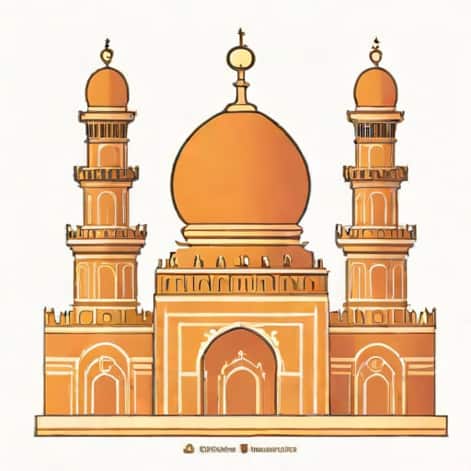
The religion of the Delhi Sultanate played a significant role in shaping the cultural, political, and social fabric of medieval India. Established in the early 13th century, the Delhi Sultanate was a Muslim kingdom that ruled large parts of northern India for over three centuries. While Islam was the state religion and influenced governance, law, and administration, the Sultanate also interacted with a predominantly Hindu population, creating a complex religious landscape. The rulers of the Delhi Sultanate implemented Islamic principles while adapting to the local Indian context, resulting in a unique fusion of cultures, religious practices, and architectural styles. Understanding the religion of the Delhi Sultanate offers insights into the historical development of India’s religious diversity and the dynamics of interfaith relations during this period.
Overview of the Delhi Sultanate
The Delhi Sultanate was established in 1206 CE with the ascension of Qutb-ud-din Aibak, the founder of the Mamluk or Slave dynasty. Over the next three centuries, several dynasties ruled from Delhi, including the Khalji, Tughlaq, Sayyid, and Lodi dynasties. The Sultanate was predominantly Islamic, and its rulers were Muslims from Central Asia, Afghanistan, and Persia. Islam played a central role in governance, judicial systems, and military organization, while the majority of the population remained Hindu, with smaller communities of Buddhists, Jains, and other faiths. The religious policies of the Delhi Sultans influenced the growth of Islamic institutions, the construction of mosques, and the spread of Islamic law and culture throughout northern India.
Islam as the State Religion
Islam was the official religion of the Delhi Sultanate, and the sultans used it to legitimize their rule. The rulers were expected to follow Sharia, the Islamic legal system, in administration and justice. Friday prayers in mosques were a public affirmation of Islamic authority, and the Sultanate promoted the building of religious institutions such as madrassas (Islamic schools) and mosques. The Sultanate also facilitated the spread of Islamic scholars, Sufi saints, and religious teachers, who contributed to the religious and cultural life of the region. Despite being a Muslim state, the Sultanate often had to negotiate its policies with a largely non-Muslim population, leading to varying degrees of religious tolerance and accommodation.
Interaction with Hinduism
Hinduism remained the dominant religion among the population under the Delhi Sultanate. The sultans collected taxes from Hindu communities, including the jizya, a tax levied on non-Muslims. While this was an Islamic practice, it coexisted with Hindu religious life. Temples were often destroyed or converted, particularly during military campaigns, but many Hindu temples continued to function, and local rulers sometimes maintained influence under the Sultanate’s authority. The interaction between Islam and Hinduism led to cultural exchanges, including the blending of art, architecture, and music. This period also witnessed the emergence of new religious movements and syncretic practices that drew on elements from both religions.
Religious Policies of the Sultans
The religious policies of the Delhi Sultans varied depending on the ruler and the political context. Some rulers, like Alauddin Khalji, adopted strict measures to enforce Islamic practices and suppress non-Muslim rituals in public spaces. Others, like Muhammad bin Tughlaq, were more pragmatic, focusing on administrative control and revenue collection rather than imposing religious conformity. Policies toward Hindu temples, religious festivals, and conversion efforts fluctuated, reflecting the challenges of ruling a religiously diverse population. Despite these differences, Islam remained central to the Sultanate’s identity, administration, and diplomatic relations with other Muslim states.
Sufism and Popular Religion
Sufism, the mystical branch of Islam, played a significant role in shaping the religious landscape of the Delhi Sultanate. Sufi saints, known for their piety, teachings, and spiritual practices, gained large followings among both Muslims and Hindus. They promoted values such as devotion, charity, and love for God, which resonated with the local population. Sufi khanqahs (spiritual centers) became important centers of learning and social services, and their influence helped integrate Islamic culture into Indian society. Many Sufi saints contributed to the spread of Persian literature, poetry, and music, leaving a lasting impact on Indian culture that extended beyond the political authority of the Sultans.
Syncretism and Cultural Exchange
The interaction between Islamic and Hindu religious traditions under the Delhi Sultanate resulted in syncretic practices and cultural exchange. Persian and Central Asian architectural styles were combined with Indian motifs in mosque and palace construction. Sufi practices often incorporated local customs and traditions, creating a form of Islam that was accessible to the broader population. This cultural blending extended to language, music, and art, contributing to the development of Indo-Islamic civilization. Syncretism allowed the Sultanate to maintain social cohesion while respecting elements of local culture and religious sentiment.
Impact on Indian Society
The religion of the Delhi Sultanate had a lasting impact on Indian society. The establishment of Islamic institutions, law, and education influenced governance and social structures in northern India. Interactions between Hinduism and Islam fostered cultural exchange, leading to the development of new art forms, architectural styles, and literary traditions. Religious diversity under the Sultanate required negotiation, tolerance, and adaptation, shaping the social and political dynamics of the region. The Sultanate also laid the groundwork for later Islamic empires in India, such as the Mughal Empire, which built on the religious and cultural foundations established by the Delhi Sultans.
Religious Tolerance and Conflict
While the Delhi Sultanate was an Islamic state, the relationship between Muslims and non-Muslims was complex. Periods of religious tolerance allowed Hindu communities to continue their practices and maintain social influence, while other periods saw conflict, temple destruction, and forced conversions. These dynamics reflect the challenges of ruling a diverse population and balancing religious authority with political control. Understanding these complexities is essential for appreciating the nuanced role of religion in the governance and cultural development of medieval India.
The religion of the Delhi Sultanate played a central role in shaping the political, social, and cultural landscape of northern India between the 13th and 16th centuries. Islam served as the state religion, guiding administration, law, and governance, while interactions with a predominantly Hindu population led to complex religious and cultural dynamics. Sufism, syncretism, and the exchange of artistic and literary traditions contributed to a rich cultural heritage that has left a lasting impact on Indian history. The Delhi Sultanate’s religious policies, practices, and interactions highlight the challenges and opportunities of governing a diverse society, offering valuable insights into the interplay between faith, power, and culture in medieval India.