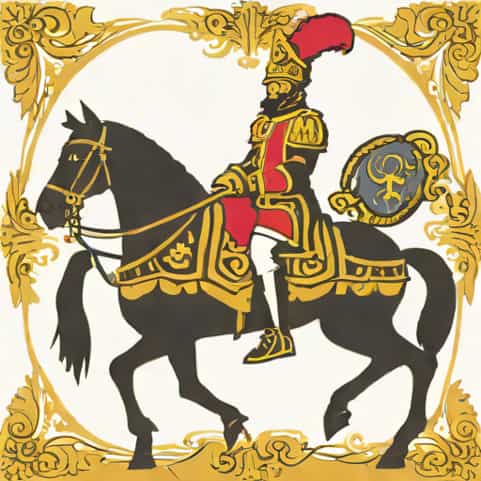
The Battle of Crécy in 1346 was one of the defining moments of the Hundred Years’ War, and at the heart of the conflict stood the young Edward of Woodstock, later known as the Black Prince. This event marked the beginning of his military reputation, shaping him into one of the most celebrated figures of medieval Europe. The Black Prince at Crécy became a symbol of English military strength, leadership, and the effectiveness of new tactics that would change the face of warfare. Understanding his role at Crécy is key to appreciating both the legacy of the prince himself and the broader context of the Hundred Years’ War.
Background to the Battle of Crécy
The Battle of Crécy took place on August 26, 1346, during the early stages of the Hundred Years’ War between England and France. King Edward III of England led an invasion of northern France with the aim of asserting his claim to the French crown. The English forces, though smaller in number compared to the French army led by King Philip VI, relied heavily on discipline, strategy, and new military technology. It was in this context that Edward, the Black Prince, then only sixteen years old, was given his first real command on the battlefield.
The Rise of the Black Prince
Edward of Woodstock, the eldest son of King Edward III, was already being prepared for leadership at a young age. His position as heir to the throne made his presence on the battlefield both symbolic and practical. At Crécy, the Black Prince commanded one of the divisions of the English army, and his performance would set the foundation for his future reputation as a warrior prince. Though young, he showed remarkable courage and composure under pressure, earning the respect of both his soldiers and his father.
The English Position at Crécy
The English army took up a strong defensive position on a slope near the town of Crécy. Edward III’s forces were organized into three divisions, with the Black Prince leading one of them. The English made use of natural terrain advantages and prepared for the French assault. Central to their strategy was the deployment of longbowmen, whose rapid volleys of arrows would play a decisive role in the battle. This tactical arrangement allowed the smaller English army to withstand the massive French cavalry charges that were soon to come.
Role of the Longbow
The longbow was the weapon that defined Crécy. English and Welsh archers, stationed in large numbers, unleashed a storm of arrows that devastated the advancing French knights and crossbowmen. The effectiveness of the longbow highlighted the shift in medieval warfare away from the dominance of heavily armored knights toward a more flexible and strategic use of infantry. The Black Prince’s division was central to this defense, and his ability to hold firm in the face of repeated French attacks became a defining moment of the battle.
The Black Prince in Action
During the height of the battle, the French launched wave after wave of cavalry charges against the English lines. The young Black Prince and his men bore the brunt of these assaults. Despite his age and inexperience, Edward stood his ground, demonstrating both bravery and leadership. At one point, his division came under particularly heavy pressure, and messengers were sent to King Edward III requesting reinforcements. According to chroniclers, the king famously refused to send aid, declaring that his son must be allowed to earn his spurs, meaning he should be tested in the realities of combat.
The Turning Point
The decision by Edward III not to intervene forced the Black Prince to rally his men and withstand the French assault on his own. This moment became legendary, as the young prince’s courage inspired his troops and solidified his reputation. By holding the line, the prince proved his worth as a commander and ensured the continued strength of the English position. His endurance and leadership were instrumental in repelling the French forces and turning the tide of the battle in England’s favor.
The Outcome of Crécy
The Battle of Crécy ended in a decisive English victory. The French army suffered massive losses, with thousands of knights and soldiers killed, including many high-ranking nobles. The English, by contrast, experienced relatively few casualties. This battle marked a turning point in the Hundred Years’ War, proving that disciplined infantry and new tactics could defeat the traditional dominance of heavy cavalry. For the Black Prince, Crécy was the beginning of a career that would see him become one of the most famous military leaders of his era.
Impact on the Black Prince’s Legacy
The Black Prince’s role at Crécy elevated him to legendary status. Though only a teenager, he had shown the qualities of leadership, resilience, and bravery expected of a future king. His reputation as a warrior prince grew from this battle, and it remained a central part of his legacy throughout his life and after his death. Crécy was not just a military victory; it was also a personal triumph for the young prince, marking the start of his enduring fame in European history.
The Symbolism of the Black Prince at Crécy
Beyond the immediate military outcome, the presence of the Black Prince at Crécy carried symbolic weight. His youth and bravery embodied the rising strength of the English monarchy, while his performance reassured allies and subjects that the future heir was capable of defending the realm. The story of Edward earning his spurs became a piece of medieval legend, retold for generations as an example of courage, duty, and the making of a leader.
The Chivalric Image
The Black Prince also came to symbolize the ideals of chivalry. He was admired not only for his military ability but also for his conduct on and off the battlefield. At Crécy, he displayed the knightly virtues of honor, loyalty, and courage. This chivalric image helped solidify his standing among contemporaries and contributed to the myth surrounding his life.
Lessons from Crécy
The Battle of Crécy, and the Black Prince’s role in it, highlights several important lessons about medieval warfare and leadership
- Innovation in WarfareThe success of the English longbowmen demonstrated the power of technology and tactics over traditional cavalry charges.
- Leadership Under PressureThe Black Prince’s ability to remain calm and inspire his men showed the importance of strong leadership in times of crisis.
- Symbolism of YouthAllowing the prince to stand on his own created a powerful image of resilience and independence that would define his career.
- Shifting Balance of PowerCrécy signaled the decline of knightly dominance and the rise of more disciplined, organized armies.
The Black Prince at Crécy remains one of the most iconic episodes in the history of the Hundred Years’ War. His role in the battle showcased his courage and leadership, while the victory itself marked a turning point in medieval military history. For Edward of Woodstock, Crécy was the foundation of a reputation that would make him one of the most celebrated princes of his time. More than just a story of one young commander, the battle reflects the changing nature of warfare and the enduring power of leadership in shaping history.