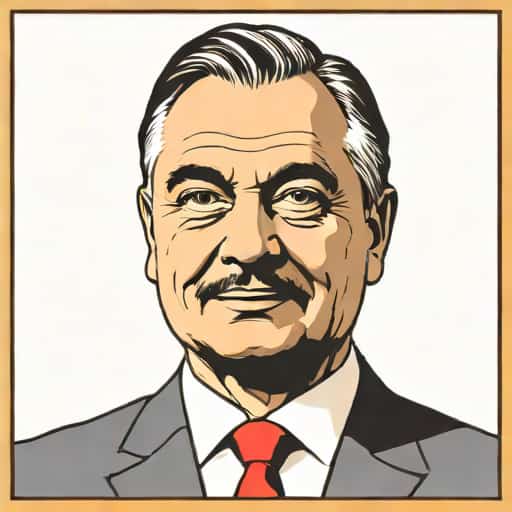
In Hungarian political discourse, sometimes the names Viktor Orbán and Miklós Horthy are mentioned together – a pairing that stirs deep debate and evokes contrasting interpretations of Hungary’s past and present. Horthy, the interwar regent of Hungary, remains one of the most contentious historical figures in the country’s 20thcentury history. Meanwhile, Orbán, who has been prime minister for much of the early 21st century, has occasionally invoked or shown respect for Horthy’s legacy, prompting questions What parallels are drawn between them? What does this mean for Hungarian national identity, memory, and politics today? This topic explores the complex relationship between Viktor Orbán and Miklós Horthy – their historical contexts, the symbolic resonance of Horthy in contemporary Hungary, and why the Orbán-Horthy narrative remains so significant.
Who Was Miklós Horthy?
Miklós Horthy was born in 1868 and rose to prominence as an admiral in the AustroHungarian Navy. After World War I and a brief communist takeover in Hungary, Horthy emerged as a leader of conservative and white forces that opposed the communist regime. In March 1920, the restored Hungarian parliament – declining to reinstate the monarchy under a king – elected Horthy regent, making him de facto head of state for the Kingdom of Hungary, even though no king ruled during his tenure.
During his regency lasting until 1944, Horthy navigated turbulent times the aftermath of the postwar collapse, economic hardship, the rise of authoritarian politics, and ultimately Hungary’s alliance with Nazi Germany in World War II. Under Horthy’s administration, Hungary regained some territories lost after the First World War (via German support), but also enacted antiJewish laws, and later, during German occupation in 1944, oversaw deportations and collaboration in atrocities against the Jewish population.
Horthy’s legacy is deeply controversial for some, he represents a lost era of Hungarian sovereignty, national pride, and attempts at stability after chaos; for others, his rule brought repression, bigotry, and complicity in genocide. After the war, he died in exile in Portugal; he was reburied in Hungary in 1993 under a modest ceremony, reflecting the uneasy legacy he left behind.
Viktor Orbán Modern Leader of Hungary
Viktor Orbán rose to power in the post-communist era, leading a conservativenationalist party and becoming prime minister multiple times. His politics emphasize sovereignty, national identity, skepticism toward liberal European integration, and a strong role for the state. Over time, critics have argued that Orbán’s policies – on media, judicial independence, migration, and minority rights – reflect an increasingly authoritarian approach. Supporters argue he defends Hungary’s interests amid global pressures.
In recent years, Orbán and his political environment have invoked Horthy’s memory – selectively and symbolically – as part of a broader effort to reshape national identity and historical narrative in Hungary.
Why Horthy Matters to Orbán and Contemporary Hungary
The appeal of Horthy’s legacy for some segments of Hungarian politics and society rests on several factors
- National sovereignty and revisionist ambitionsUnder Horthy, and with German backing, Hungary regained territories lost after World War I (Treaty of Trianon). For those nostalgic about pre-World War II borders and national pride, this is a powerful symbol.
- Traditional values and conservative identityHorthy’s Hungary is often idealized as a time of conservative order, national identity, and culturalhistorical continuity – contrasting with the political upheavals that followed in the mid20th century. Supporters of a conservative, Christianrooted Hungary sometimes see Orbán’s policies as a modern renewal of those values.
- Political symbolism and legitimacyFor Orbán and his allied elites, referencing Horthy evokes a sense of historical depth and continuity – a claim to represent real Hungary, beyond transient postwar ideologies or external pressures.
In public statements and political discourse, some have described Horthy as an extraordinary statesman who, in their view, rebuilt the nation. Such rhetorical moves signal not just a celebration of Horthy’s rule, but a desire to align present-day governance with a certain vision of Hungary’s history and identity.
Controversies and Criticisms of the Orbán-Horthy Narrative
Invoking Horthy’s legacy is far from uncontroversial. Many historians, human rights organizations, and Jewish groups condemn attempts to rehabilitate or glorify Horthy – citing his regime’s responsibility for antiJewish legislation, complicity in the Holocaust, and suppression of democratic rights.
Critics argue that romanticizing Horthy serves to whitewash historical atrocities, distort Hungary’s past, and legitimize illiberal policies in the present. They caution that adopting Horthy as a symbol can foster nationalism, exclusion, and forgetfulness about victims of past injustices.
Moreover, the contrast between Horthy’s authoritarianmonarchicalstyle regency and modern democratic expectations raises ethical and political questions. Is referencing a regent from an unelected regime consistent with democratic values? Does emphasizing past nationalistrevisionist aspirations risk undermining contemporary commitments to pluralism and minority rights? These are among the central controversies surrounding the OrbánHorthy association.
Public Debate and Historical Memory
Within Hungary and abroad, the debate over Horthy’s commemoration remains heated. For some Hungarians – especially among older generations or nationalistconservative communities – Horthy represents national dignity and precommunist heritage. For others – including survivors’ descendants, historians, and liberaldemocratic advocates – he embodies a painful legacy of exclusion, complicity in genocide, and authoritarian rule.
The tension reflects broader questions about national memory, historical responsibility, and how societies choose to remember or reinterpret their past. The way Horthy is treated – in textbooks, public monuments, political rhetoric – shapes how new generations understand Hungary’s history, identity, and the moral responsibilities of statehood. When modern leaders reference him, they engage in a form of symbolic politics that communicates their values, worldview, and vision for the nation’s future.
Why the Comparison Between Orbán and Horthy Endures
The association between Viktor Orbán and Miklós Horthy remains present because it resonates with multiple audiences for different reasons. For supporters of Orbán, drawing on Horthy’s legacy reinforces themes of national sovereignty, conservative identity, and historical continuity. For critics, it signals a worrying turn toward authoritarian nostalgia, potential revisionism, and diminished respect for human rights. This duality keeps the Orbán-Horthy debate alive as a central fault line in Hungarian cultural and political life.
In a Europe and world increasingly attentive to history, identity, and human rights, how Hungary manages this legacy – whether through commemoration, denial, or critical examination – will shape not only national discourse but international perceptions. It raises questions about how nations reconcile pride in history with moral responsibility and how political leaders use the past to legitimize present power.
The relationship between Viktor Orbán and the memory of Miklós Horthy is complex and symbolic, rooted in history but deeply relevant today. Horthy’s rule was marked by national restoration, authoritarianism, and tragic complicity in wartime atrocities. Orbán’s modern leadership and occasional invocation of Horthy’s name or symbolism reflect a contested attempt to reinterpret that legacy – appealing to national identity and continuity for some, while stirring fears of historical revisionism and illiberalism for others. Understanding this dynamic is essential to grasp the ongoing debates in Hungary about national memory, identity, governance, and morality. In the end, how this legacy is handled says as much about Hungary’s present and future as it does about its past.