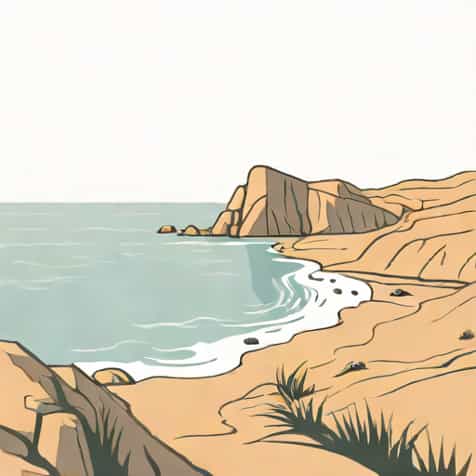
The word promontory carries with it a sense of height, power, and perspective. It is often used in geography, literature, and even anatomy, making it a versatile term with multiple layers of meaning. Understanding what promontory means requires exploring its natural context, its symbolic use in culture, and its technical applications. Whether describing a striking cliff that towers above the sea, a metaphor for strength in literature, or a part of the human body, the term reveals the fascinating ways language captures both the physical world and abstract ideas.
The General Definition of Promontory
In its most common sense, a promontory is a high point of land or rock that juts out into a body of water, such as a sea, ocean, or lake. It usually rises steeply above the surrounding landscape and provides a commanding view of the horizon. Because of its elevated position, a promontory often becomes a natural landmark, guiding travelers or sailors along their journeys.
The word comes from the Latin promontorium, which combines pro (forward) and mons (mountain). This origin reflects its defining feature land that projects boldly forward into the water, much like a mountain reaching out to the sea.
Geographical Significance of Promontories
In geography, promontories are not just scenic features; they often play an important role in navigation and settlement. For centuries, sailors have relied on promontories to orient themselves, since these high landforms are visible from long distances. Many coastal towns developed near them because they offered protection and visibility.
Examples of Famous Promontories
- Cape of Good Hope, South AfricaA world-renowned promontory that became central to early global trade routes.
- GibraltarThis limestone promontory at the southern tip of Spain has immense historical and military significance.
- Cape Point, South AfricaKnown for its breathtaking views, this promontory is a popular tourist attraction.
- North Cape, NorwayOne of the northernmost promontories in Europe, offering dramatic cliffs that rise above the Arctic Ocean.
These examples show that promontories are not only natural wonders but also landmarks of history, commerce, and culture.
Promontories in Literature and Symbolism
Beyond their physical presence, promontories are powerful symbols in literature and art. Writers often use them to represent strength, isolation, or perspective. Standing on a promontory can symbolize looking forward into the unknown, contemplating the future, or finding clarity above the chaos of life. In poetry, cliffs and promontories evoke feelings of awe and the sublime, reminding readers of the smallness of human beings compared to nature’s grandeur.
Metaphorical Uses
- A promontory may symbolize a turning point or bold step forward in one’s life.
- It can represent resilience, as promontories withstand waves and weather yet remain standing.
- It is sometimes used to evoke solitude or detachment, as someone standing alone on a cliff apart from society.
This metaphorical richness explains why promontory appears frequently in classic literature, speeches, and even philosophical works.
Promontory in Anatomy
Interestingly, the term is also used in anatomy to describe projecting parts of bones. For example, the sacral promontory is the point where the spine’s lumbar vertebrae meet the sacrum, forming a prominent ridge. In medical contexts, promontory refers to any noticeable projection within the body that serves as a landmark for surgeons and doctors.
This usage shows how language borrows from nature just as a promontory in geography is a bold projection of land, a promontory in anatomy is a projection of bone or tissue that stands out in the human body.
Historical and Cultural Importance
Promontories have often played key roles in human history. Ancient civilizations built temples, lighthouses, and fortresses on them, taking advantage of their high ground and visibility. From a military standpoint, promontories were ideal defensive positions because they provided wide views of approaching enemies and natural protection against attack.
Promontories as Sacred Places
In many cultures, promontories carried spiritual meaning. Their height and proximity to the vast sea gave them an otherworldly quality, making them sites for rituals and sacred structures. For instance, ancient Greeks and Romans often built temples on promontories, dedicating them to gods of the sea or sky.
Differences Between Promontories, Capes, and Headlands
While the terms promontory, cape, and headland are often used interchangeably, there are subtle differences worth noting
- PromontoryRefers to any prominent high point of land projecting into water.
- CapeA type of promontory that specifically marks a notable change in coastline, often used in navigation.
- HeadlandA broader term for land that extends into the sea, which may or may not be steep.
In essence, all capes are promontories, but not all promontories are capes. This distinction is useful when discussing geography with precision.
Promontories in Everyday Language
Outside of geography and anatomy, the word promontory can be used metaphorically in everyday speech. Someone might describe an important decision as standing on a promontory, ready to leap into the future. It may also be used to describe a position of advantage, whether physical, emotional, or intellectual.
Examples of Figurative Speech
- Standing on the promontory of his career, he could see all the opportunities ahead.
- Her ideas stood like a promontory against the tide of doubt.
These figurative uses make the word useful in both creative writing and rhetorical expression.
Why Promontories Capture the Imagination
Promontories hold a special place in human imagination because they represent the meeting of land, sea, and sky. Their dramatic landscapes inspire creativity, while their practical roles in history remind us of their importance in survival and navigation. From a literary symbol to a geological marvel, the concept of a promontory captures both the tangible and the abstract, making it a word rich with meaning.
At its core, a promontory is a high, projecting point of land reaching into water, but its significance extends far beyond geography. It has shaped navigation, inspired literature, defined sacred spaces, and even provided terms for human anatomy. Whether seen as a natural wonder, a cultural landmark, or a metaphor for perspective and strength, the meaning of promontory continues to resonate. Understanding this word opens a window into how people connect language with the world around them, balancing physical reality with symbolic depth.