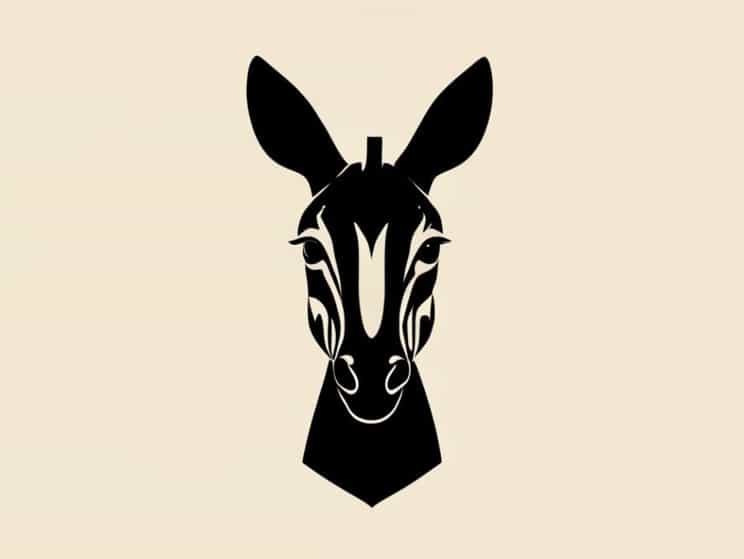
Many people who first see an okapi are surprised by its unusual appearance and immediately ask the question what is an okapi a cross between? With its zebra-like striped legs, horse-sized body, and giraffe-shaped head, the okapi looks like a mixture of several familiar animals. This visual confusion has led to many myths and misunderstandings. In reality, the okapi is not a hybrid at all, but a unique species with its own evolutionary history. Understanding what an okapi truly is helps clear up these misconceptions and reveals a fascinating story about nature and adaptation.
What Is an Okapi?
An okapi is a rare mammal native to the dense rainforests of central Africa, specifically the Democratic Republic of the Congo. Scientifically known asOkapia johnstoni, the okapi belongs to the family Giraffidae, making it the closest living relative of the giraffe.
Although many people think an okapi is a cross between different animals, it is a distinct species that evolved naturally over millions of years.
Why People Think the Okapi Is a Cross Between Animals
The idea that an okapi is a cross between different species comes from its physical traits. It appears to combine features from several animals that people already recognize.
Visual Features That Cause Confusion
- Striped legs similar to a zebra
- A body shape resembling a horse or antelope
- A long neck and head shape like a giraffe
- Large ears similar to those of a deer
Because of these characteristics, people often assume the okapi must be a cross between a zebra and a giraffe, or between a horse and a giraffe. This assumption, however, is incorrect.
Is the Okapi a Cross Between a Giraffe and a Zebra?
No, the okapi is not a cross between a giraffe and a zebra. While the striped legs resemble those of a zebra, this feature evolved for camouflage rather than because of shared ancestry with zebras.
Zebras belong to the horse family, while okapis belong to the giraffe family. These animals are not closely related and cannot naturally interbreed.
The Okapi’s True Evolutionary Relationship
The okapi’s closest and only living relative is the giraffe. Both species evolved from a common ancestor millions of years ago. Over time, they adapted to different environments, leading to their very different appearances.
Shared Traits with Giraffes
- Long, flexible tongues used for feeding
- Ossicones, small horn-like structures on the head
- Similar skull and dental structure
- Digestive systems adapted for browsing leaves
These similarities confirm that the okapi is a giraffid, not a hybrid animal.
Why the Okapi Has Zebra-Like Stripes
The striped legs of the okapi are one of its most striking features. These stripes are not inherited from zebras but evolved as a survival adaptation.
In the dim light of dense rainforests, the stripes help break up the okapi’s outline, making it harder for predators to spot. The pattern also helps calves recognize and follow their mothers through thick vegetation.
Misconceptions About Hybrid Animals
Many people believe animals with mixed appearances must be hybrids. In reality, true hybrids are rare and usually occur only between closely related species, such as horses and donkeys.
The okapi is not a hybrid because
- It is a stable, naturally reproducing species
- It has a consistent genetic structure
- It has existed for thousands of years
Hybrids typically do not form long-term, self-sustaining populations in the wild.
Discovery of the Okapi by Science
For a long time, the okapi was unknown to the outside world. Indigenous people in central Africa were familiar with the animal, but Western scientists did not formally identify it until the early 20th century.
When early explorers heard reports of an animal with striped legs and a giraffe-like body, some believed it was a myth or an unusual hybrid. Only later did scientists confirm it as a distinct species.
Physical Characteristics of the Okapi
Understanding the okapi’s anatomy helps explain why it looks like a mix of animals while actually being unique.
Key Physical Traits
- Height of about five feet at the shoulder
- Dark brown or purplish coat
- White horizontal stripes on legs and hindquarters
- Long prehensile tongue
These traits reflect adaptation to forest life rather than hybrid ancestry.
Behavior and Habitat
The okapi is a shy and solitary animal that prefers dense rainforest environments. It spends most of its time browsing leaves, fruits, and buds.
Unlike giraffes that live in open savannas, okapis are adapted to low-light conditions and thick vegetation, which explains their darker coloring.
Genetic Evidence Against the Hybrid Theory
Modern genetic research confirms that the okapi is not a cross between species. DNA analysis clearly places it within the giraffe family.
Genetically, okapis and giraffes share a common lineage, while zebras and horses are much more distantly related.
Cultural and Symbolic Importance
In local Congolese cultures, the okapi is respected as a forest spirit or a symbol of mystery. Its elusive nature has contributed to myths and legends.
Internationally, the okapi has become a symbol of wildlife conservation and the importance of protecting endangered species.
Why the Question What Is an Okapi a Cross Between? Persists
The question continues to appear because humans naturally categorize unfamiliar things using familiar references. When people see an animal that looks like several others, they assume it must be a mix.
The okapi challenges this way of thinking by showing how evolution can produce unexpected combinations of traits within a single species.
How Evolution Creates Unique Animals
Evolution works through gradual changes over long periods. Traits that improve survival are passed down, even if they resemble features found in unrelated animals.
The okapi’s stripes, body shape, and feeding adaptations are all examples of convergent evolution and environmental adaptation.
So, what is an okapi a cross between? The simple and accurate answer is that it is not a cross between anything. The okapi is a unique species and the only living relative of the giraffe.
Its zebra-like stripes and unusual appearance are the result of evolution, not hybridization. By understanding the okapi’s true origins, we gain a deeper appreciation for the diversity of life and the creative power of nature.