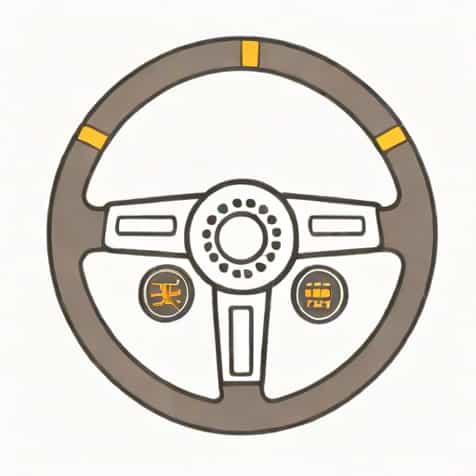
Many modern cars come with advanced driving features that offer both convenience and control, and one of the most noticeable additions is steering wheel gearshift paddles. These paddles allow drivers to shift gears without moving their hands away from the steering wheel. Although paddle shifters were once found mainly in high-performance and racing vehicles, they now appear in daily-use cars, SUVs, and even some hybrids. Understanding what steering wheel gearshift paddles are and how they work helps drivers make better use of modern driving technology.
Understanding Steering Wheel Gearshift Paddles
Steering wheel gearshift paddles, often called paddle shifters, are small levers located behind the steering wheel. They allow the driver to manually control the car’s transmission. Instead of using a traditional gearstick, the driver simply taps the paddles to shift up or down. Each paddle has a specific function one increases the gear, and the other reduces it.
This system is designed to make shifting gears faster and more convenient. Because the paddles are placed on the steering wheel, the driver does not have to take their hands off the wheel to shift. This provides better control, especially when navigating curves or accelerating quickly.
Main Functions of Paddle Shifters
- The right paddle typically shifts up to a higher gear.
- The left paddle usually shifts down to a lower gear.
- They allow manual shifting in automatic or semi-automatic vehicles.
- They help drivers control speed and engine performance.
How Steering Wheel Gearshift Paddles Work
Paddle shifters are connected to the car’s transmission system through electronic controls. When the driver taps a paddle, the car’s computer receives a signal to change gears. This process is designed to be quick and smooth. The driver experiences almost immediate response, which mimics the feel of manual shifting without requiring a clutch pedal.
Modern cars usually offer different driving modes. Paddle shifters work best in sport mode or manual mode, where the car allows more driver control. In normal automatic mode, some vehicles may temporarily let the driver shift using paddles, then return to automatic shifting after a few seconds.
What Happens When a Paddle Is Pressed
- The driver presses the upshift or downshift paddle.
- A signal is sent to the transmission control unit.
- The transmission selects the next appropriate gear.
- The engine adjusts speed and power output accordingly.
Why Cars Use Steering Wheel Gearshift Paddles
The use of gearshift paddles provides multiple benefits for drivers. They combine the simplicity of an automatic transmission with the engaging feel of manual control. Many people enjoy being more involved in the driving process, especially when navigating winding roads or changing speed frequently.
Paddle shifters also improve safety by keeping both hands on the steering wheel. When drivers do not have to reach for a gear lever, they maintain better balance and reaction time. This feature is particularly useful during performance driving or in conditions that require quick response.
Advantages of Paddle Shifters
- Faster gear changes compared to manual gearsticks
- Enhanced driver control and engagement
- Improved safety by keeping hands on the wheel
- Smoother transitions during acceleration
- Useful for downhill driving and engine braking
Where Paddle Shifters Originated
Steering wheel gearshift paddles have roots in motorsport, particularly Formula 1. Race cars needed a fast and efficient way for drivers to shift gears without losing control. The paddles proved to be ideal for this purpose. They provided rapid gear changes and allowed drivers to keep both hands on the wheel during high-speed maneuvers.
As technology advanced, car manufacturers brought paddle shifters into luxury and sports cars. Later, they became common in everyday vehicles as well. Today, many mainstream models offer paddle shifters as a standard or optional feature.
Timeline of Paddle Shifter Adoption
- Originally used in high-level motorsports
- Adopted by sports car manufacturers
- Introduced into premium sedans and performance SUVs
- Now offered in mid-range and compact cars
Types of Transmissions That Use Paddle Shifters
Paddle shifters work with several types of transmission systems. The most common is the automatic transmission with manual mode. Some cars also use dual-clutch transmissions or semi-automatic systems, which provide even faster response times.
The type of transmission influences how the paddles feel and how quickly the car shifts. However, the basic operation remains the same for all systems.
Transmission Types Compatible with Paddle Shifters
- Traditional automatic transmissions with manual mode
- Dual-clutch transmissions (DCT)
- Continuously variable transmissions (CVT) with simulated gears
- Semi-automatic transmissions used in high-performance models
When Drivers Should Use Paddle Shifters
Steering wheel gearshift paddles can be helpful in many driving situations. They provide more control over speed and engine behavior, which can improve performance and comfort. Drivers can use them during acceleration, on hills, in slippery conditions, or simply for a more engaging driving experience.
While the car’s automatic mode works well for everyday driving, using paddles gives drivers more flexibility. Shifting manually can also help optimize fuel use by selecting the most efficient gear.
Ideal Moments to Use Paddle Shifters
- When overtaking another vehicle
- While driving downhill to use engine braking
- During sporty or spirited driving
- On winding roads that require quick gear changes
- In slippery conditions where gear control improves traction
How Paddle Shifters Improve Driving Control
Using steering wheel gearshift paddles allows drivers to choose the gear that feels right for the moment. This is especially helpful when downhill driving requires slowing the car without heavy braking. Engine braking can reduce brake wear and improve control on steep slopes.
Paddle shifters also let the driver maintain higher engine speed when needed, such as during acceleration or merging onto a highway. This flexibility creates a smoother and more responsive driving experience.
Driving Benefits
- Better control over engine power
- Enhanced stability in different road conditions
- Smoother gear transitions
- Reduced brake usage on slopes
Learning to Use Paddle Shifters
Most drivers find paddle shifters easy to learn. The paddles are clearly marked, often with symbols like + for upshifting and for downshifting. Beginners should start slowly, practicing in open areas or on quiet roads. Over time, shifting becomes natural and intuitive.
Cars equipped with paddle shifters often prevent damaging shifts. For example, the system may block downshifts that would over-rev the engine. This makes them safe for drivers of all experience levels.
Tips for Beginners
- Start practicing at low speeds
- Listen to engine sound to understand shift timing
- Use paddles gently and avoid rapid tapping
- Switch back to automatic mode when needed
Steering wheel gearshift paddles offer a convenient blend of manual control and automatic ease. They make driving more engaging, allow faster gear changes, and help maintain safety by keeping hands on the wheel. Originally designed for race cars, paddle shifters are now a familiar feature in a wide range of modern vehicles. Whether used for performance driving, better control on hills, or simply for fun, paddle shifters provide a practical and enjoyable driving experience. Understanding how they work helps drivers make the most of this innovative feature and enjoy smoother, more responsive driving every day.