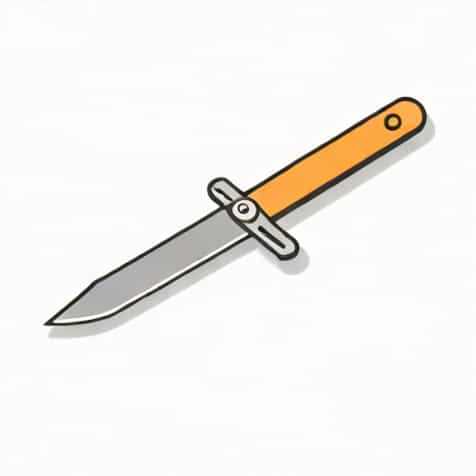
The term switchblade often appears in movies, news stories, and everyday conversations, yet many people are not fully sure what it actually means. Some associate it with danger or illegality, while others think of it simply as a type of pocket knife. Understanding what is the definition of a switchblade requires looking at its design, how it operates, and how it differs from other knives. By examining the term carefully and objectively, the meaning becomes clearer and more practical than its dramatic reputation might suggest.
The Basic Definition of a Switchblade
A switchblade is a type of knife with a blade that opens automatically when a button, switch, or lever on the handle is pressed. The defining feature of a switchblade is this automatic opening mechanism, which is powered by a spring inside the handle.
Unlike traditional folding knives that require manual effort to open the blade, a switchblade deploys quickly with a single action. This automatic motion is what sets it apart and gives the knife its name.
Key Characteristics of a Switchblade Knife
To understand the definition of a switchblade more clearly, it helps to look at its main characteristics. These features distinguish switchblades from other types of knives.
- An internal spring mechanism that assists blade opening
- A button, switch, or lever used to release the blade
- A blade that folds into the handle when closed
- A locking system that holds the blade in place when open
These elements work together to create a knife that opens quickly and locks securely during use.
How a Switchblade Works
The operation of a switchblade is relatively simple from a mechanical perspective. When the knife is closed, the blade is held in place by a locking mechanism. Pressing the button or switch releases this lock, allowing the internal spring to push the blade outward.
Once fully extended, the blade locks into an open position. This locking feature is important for safety, as it prevents the blade from folding back unintentionally.
Automatic Opening Explained
The automatic opening of a switchblade is what makes it unique. The spring does most of the work, reducing the physical effort needed to open the knife. This feature has been both praised for convenience and criticized due to concerns about misuse.
It is important to note that the automatic action refers only to opening the blade, not closing it. Most switchblades must be closed manually.
Types of Switchblades
There is more than one style of switchblade, and the definition can include several variations. These differences usually relate to how the blade opens and the overall design.
Side-Opening Switchblade
The most common type is the side-opening switchblade. In this design, the blade swings out from the side of the handle, similar to a standard folding knife. The difference is that the opening is assisted by a spring rather than manual force.
This style is what most people picture when they hear the word switchblade.
Out-the-Front (OTF) Switchblade
Another type is the out-the-front switchblade, often abbreviated as OTF. In this design, the blade slides straight out from the front of the handle rather than pivoting from the side.
OTF switchblades can be single-action or double-action. Single-action knives require manual retraction, while double-action knives allow the blade to both extend and retract automatically.
Difference Between a Switchblade and Other Knives
Understanding what is the definition of a switchblade also involves comparing it to other knife types. Many knives may look similar but function differently.
Switchblade vs. Manual Folding Knife
A manual folding knife requires the user to apply direct pressure to open the blade, often using a nail notch or thumb stud. There is no spring-assisted opening in a traditional manual knife.
In contrast, a switchblade relies on an internal spring and a release mechanism to open automatically.
Switchblade vs. Assisted-Opening Knife
Assisted-opening knives occupy a middle ground. They use a spring to help open the blade, but the user must first start the opening motion manually. Because the blade does not open solely by pressing a button, assisted-opening knives are usually not classified as switchblades.
This distinction is important in both technical definitions and legal contexts.
Historical Background of the Switchblade
The switchblade has existed for centuries in various forms. Early versions appeared in Europe, where spring-assisted knives were valued for their convenience. Over time, the design evolved and spread to other regions.
In the mid-20th century, switchblades became associated with youth culture and crime in popular media. This portrayal influenced public perception and led to stricter regulations in some places.
Legal and Cultural Considerations
While the definition of a switchblade is based on its mechanism, legal definitions can vary. Different countries and regions classify switchblades differently, sometimes grouping them with other automatic knives.
Culturally, the switchblade has often been portrayed as dangerous or rebellious. However, many people view it simply as a tool with a specific opening method.
Why Switchblades Are Often Misunderstood
Much of the confusion surrounding switchblades comes from movies and television, where they are frequently shown as weapons rather than tools. This portrayal can overshadow their mechanical definition.
In reality, the defining factor is not intent or appearance, but how the blade opens.
Common Uses of the Term Switchblade
The word switchblade is used in both technical and informal contexts. In technical language, it refers specifically to the automatic opening mechanism. In casual speech, it may be used more loosely to describe any knife that opens quickly.
This difference in usage can sometimes lead to misunderstandings, especially when discussing definitions.
Why the Definition of a Switchblade Matters
Understanding what is the definition of a switchblade is important for clear communication. It helps people distinguish between different knife types and avoid confusion based on assumptions or stereotypes.
A clear definition also supports accurate discussion in areas such as manufacturing, collecting, and legal interpretation.
Clarifying Common Myths
One common myth is that all switchblades are designed for harm. In reality, the definition does not include purpose, only mechanism. Another myth is that switchblades open uncontrollably, when in fact they include safety locks and controlled movement.
By focusing on factual definitions, these misconceptions can be reduced.
The definition of a switchblade centers on its automatic opening mechanism, powered by an internal spring and activated by a button or switch. It is a folding knife designed for quick, one-handed deployment, not inherently a symbol of danger or misuse.
By understanding how a switchblade works, how it differs from other knives, and why the term is often misunderstood, readers can approach the topic with clarity rather than assumption. A switchblade is best defined by its mechanics, not its reputation, making its meaning straightforward when examined carefully.