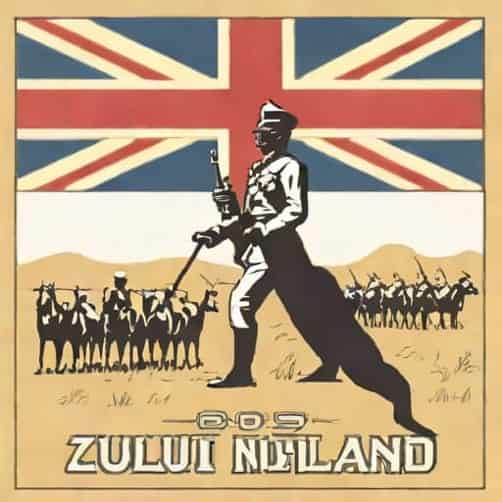
The British invasion of Zululand in 1879 was a significant military campaign that reflected both imperial ambitions and local political tensions in southern Africa. The decision to invade was influenced by a combination of strategic, political, and economic motives, as well as a desire to assert British dominance in the region. At the heart of the conflict was the independent Zulu kingdom, which had successfully resisted colonial encroachment and maintained a strong centralized system under King Cetshwayo. The invasion was triggered by disputes over British authority, demands for political reforms, and the broader context of imperial expansion in southern Africa, ultimately leading to one of the most famous confrontations in colonial military history, including the Battle of Isandlwana and the defense of Rorke’s Drift.
The Rise of the Zulu Kingdom
Before discussing the British invasion, it is essential to understand the context of the Zulu kingdom. Under the leadership of Shaka Zulu and his successors, the Zulu state had grown into a formidable military and political power in southern Africa. The kingdom was organized with a strong army, disciplined regiments known as impis, and a centralized administration that allowed the Zulu king to mobilize large numbers of warriors effectively. By the mid-19th century, the Zulu kingdom had become a dominant regional power, exerting influence over neighboring chiefdoms and resisting European incursions. This position made the Zulus both a potential ally and a threat to British colonial interests in southern Africa.
Political Tensions and British Interests
The British colonial authorities in the Cape Colony and Natal had long been concerned about the independent Zulu kingdom. The colony of Natal, which had been annexed by the British in 1843, bordered Zululand, creating a frontier that required careful management. British officials feared that the Zulu military might challenge colonial authority and disrupt trade routes. Additionally, internal divisions among the Zulu nobility were viewed by the British as an opportunity to influence political developments in Zululand. The British aimed to impose a system of indirect control, demanding recognition of their authority and the acceptance of reforms that would weaken the traditional Zulu governance system.
Economic and Strategic Motives
The invasion of Zululand was also motivated by economic and strategic concerns. Zululand occupied a region rich in resources and provided access to trade routes critical to the British colony of Natal. By controlling Zululand, the British could secure these trade networks and prevent any independent African state from threatening the economic interests of the colony. Furthermore, the British sought to expand their influence across southern Africa as part of a broader imperial strategy, linking their territories and ensuring dominance over indigenous populations. The Zulu military power was perceived as a significant obstacle to this expansion, prompting the colonial administration to take decisive action.
Triggering Events and Diplomatic Failures
The immediate cause of the invasion was a series of diplomatic incidents and demands that the British made to King Cetshwayo. In late 1878, British officials presented the Zulu king with an ultimatum demanding disbandment of the Zulu army, surrender of weapons, and acceptance of British authority. These demands were intended to undermine the power of the Zulu monarchy and facilitate easier British control over the region. Cetshwayo, recognizing the threat to his sovereignty and the well-being of his people, refused to comply fully. His partial acceptance of some points was deemed insufficient by the British, who interpreted it as a deliberate act of defiance, leading directly to the decision to invade in early 1879.
Military Preparations and the British Perspective
From the British perspective, the invasion was justified as a preemptive measure to secure peace and stability in Natal. The colonial authorities argued that the Zulu military posed a potential threat to settlers and trade, and that decisive action was necessary to prevent conflict. To this end, the British assembled a substantial force consisting of colonial troops, locally recruited auxiliaries, and professional soldiers from the British Army. These forces were well-armed with modern rifles, artillery, and logistical support, reflecting the British belief that military superiority would ensure a swift victory over the Zulu forces.
The Role of the British Government and Colonial Officials
The British government and colonial administrators played a central role in planning the invasion. Sir Henry Bartle Frere, the British High Commissioner for southern Africa, was a key architect of the campaign. Frere believed that the existence of a strong and independent Zulu state was incompatible with British colonial interests and saw military intervention as a means to consolidate control. He ignored advice from officials who warned against provoking a war with the Zulus, emphasizing instead the strategic and symbolic importance of subduing the kingdom. This decision ultimately set the stage for one of the most notable colonial wars of the 19th century.
Targets and Objectives of the Invasion
The invasion of Zululand had both immediate and long-term objectives. The immediate goal was to defeat the Zulu army in the field and demonstrate British military dominance. The British aimed to capture key Zulu strongholds, disrupt the organizational structure of the kingdom, and coerce King Cetshwayo into submission. Long-term objectives included the annexation of Zululand into the British sphere of influence, imposition of political reforms favorable to colonial administration, and establishment of a framework that would allow the British to control indigenous populations more effectively. The campaign was thus designed to achieve both military and political goals simultaneously.
Key Battles and Early Successes
- Battle of IsandlwanaOne of the first major engagements of the campaign, where Zulu forces achieved a dramatic victory against the British, demonstrating the effectiveness of the Zulu military system.
- Defense of Rorke’s DriftA notable defense by a smaller British garrison that captured public imagination and reinforced the perception of British courage and resilience.
- Subsequent CampaignsFollowing initial setbacks, the British reorganized and eventually achieved decisive victories, culminating in the capture of key Zulu strongholds and the exile of King Cetshwayo.
Political and Cultural Justifications
The British framed the invasion as a moral and civilizing mission. Colonial officials argued that the Zulu system was backward and that British intervention would bring order and progress to the region. These justifications masked the underlying motives of territorial expansion and control over resources, but they were persuasive in securing support from the government and public opinion in Britain. The portrayal of the invasion as a righteous campaign against a dangerous and uncivilized kingdom helped legitimize the military actions despite the devastating consequences for the Zulu population.
Impact on the Zulu Kingdom
The invasion had profound consequences for the Zulu kingdom. Military defeats, the death of thousands of warriors, and the eventual exile of King Cetshwayo weakened the kingdom’s political structure. British control imposed new administrative arrangements and forced the Zulu people into a subordinate relationship with the colonial authorities. While the Zulu military system continued to influence resistance efforts, the invasion fundamentally altered the balance of power in the region and paved the way for further British expansion in southern Africa.
the British invasion of Zululand in 1879 was driven by a combination of strategic, political, economic, and ideological motives. The immediate trigger was King Cetshwayo’s refusal to comply fully with British demands, but the broader context included fears of Zulu military power, the desire to consolidate colonial control, and ambitions to expand British influence in southern Africa. The campaign targeted the Zulu kingdom, its military forces, and its political leadership, with the ultimate goal of subjugating the region under British authority. The invasion had lasting consequences for both the Zulu people and the British Empire, shaping the course of colonial history in southern Africa and leaving a legacy that continues to be studied and remembered today.