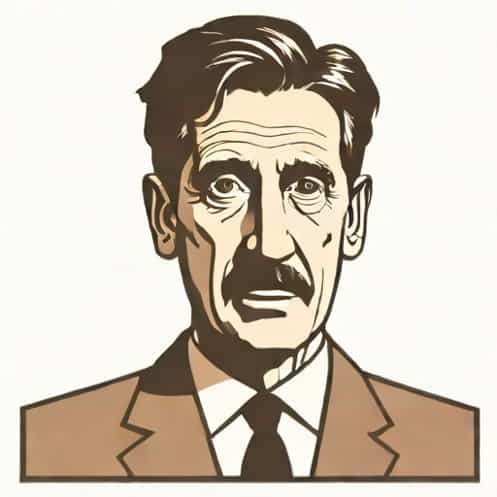
George Orwell remains one of the most influential writers of the twentieth century, known for his sharp political insights, clear writing style, and stories that continue to spark debate. Many readers recognize his name through famous works such as 1984 and Animal Farm, yet there are many lesser-known facts about George Orwell that reveal how his personal experiences shaped his views on society, power, and human behavior. Understanding these aspects helps explain why his ideas remain relevant today, especially in conversations about freedom, truth, and authority.
Early Life and Background
George Orwell was born as Eric Arthur Blair in 1903 in British India. His family belonged to what was sometimes called the lower-upper-middle class, meaning they had status but limited wealth. This social position influenced his later writing, especially his interest in class inequality and the struggles of ordinary people.
Family and Childhood
Orwell’s father worked in the Indian Civil Service, which was part of the British colonial administration. Although born in India, Orwell moved to England when he was still very young and spent much of his childhood there. His mother encouraged his interest in reading and writing, helping shape his early curiosity about literature and storytelling.
- Born in 1903 in Motihari, British India
- Given name Eric Arthur Blair
- Moved to England as a child
- Family lived modestly despite social status
Education
Orwell attended several schools, eventually earning a scholarship to Eton College, one of the most prestigious schools in England. Although he did not excel in every subject, he developed strong independent thinking and a desire to observe society critically. These early experiences helped form his belief that individuals should question authority rather than simply accept it.
Early Career and Life Abroad
Before becoming a full-time writer, Orwell worked in several different roles, each of which contributed to his understanding of power structures, injustice, and social inequality.
Service in Burma
One of the most important facts about George Orwell is that he served as a police officer in Burma during the British colonial period. His time there exposed him to the harsh realities of imperialism and deeply affected his worldview. He later explored these experiences in essays such as Shooting an Elephant, which highlighted the moral conflicts he faced.
Living Among the Poor
After leaving Burma, Orwell lived in poverty in both Paris and London to better understand the lives of the working class. He worked in restaurants, stayed in cheap lodging houses, and took on low-paying jobs. These experiences formed the basis of his book Down and Out in Paris and London, which explored themes of dignity, survival, and inequality.
- Worked in Paris restaurants as a dishwasher
- Observed real-life struggles of laborers and the homeless
- Used firsthand experiences for literary inspiration
Political Views and Ideals
George Orwell is often associated with political commentary because of his criticism of authoritarianism, propaganda, and social injustice. However, his political beliefs were shaped gradually over time, influenced by direct experience rather than academic study.
Involvement in the Spanish Civil War
Orwell traveled to Spain in the 1930s to fight against fascism. He joined a militia group and was wounded in battle. His experiences in the war changed him deeply and led to his book Homage to Catalonia. He became extremely critical of totalitarian systems, whether left-wing or right-wing, and this shaped much of his later writing.
Beliefs About Freedom and Truth
Orwell valued honesty, clarity, and intellectual independence. He believed that political systems often manipulate language and information to maintain power. This idea became central in 1984, where the government controls every aspect of truth. His concerns remain relevant today, especially in discussions about misinformation and surveillance.
Major Works and Literary Contributions
Several key works define Orwell’s legacy. Although he wrote novels, essays, and journalism, he is most widely known for two influential books that continue to be studied around the world.
Animal Farm
This novella, published in 1945, is an allegory about political power, using animals on a farm to represent human leaders and movements. It highlights how revolutions can be corrupted by those in authority and how ordinary individuals can be manipulated through fear and propaganda.
- Fable-like narrative with political meaning
- Explores corruption of ideals
- Continues to be used as a teaching tool
1984
Published in 1949, 1984 presents a frightening picture of a world controlled by constant surveillance and strict government control. Concepts from the novel, such as Big Brother, doublethink, and thoughtcrime, have become part of everyday language. The book remains a powerful warning about the dangers of unchecked authority.
Writing Style and Influence
Another important set of facts about George Orwell concerns his clear and approachable writing style. He believed that good writing should be direct and free of unnecessary complexity. His essay Politics and the English Language argued for precise language as a tool against political manipulation.
Clarity and Simplicity
Orwell chose straightforward language to make his ideas accessible to all readers. He avoided overly academic vocabulary, focusing instead on clarity. This approach made his political commentary more powerful because it was easy for ordinary people to understand.
Influence on Modern Thought
Orwell’s ideas continue to influence debates about censorship, surveillance, and political honesty. Many discussions about modern privacy, digital monitoring, and authoritarian behavior draw inspiration from his warnings. His work remains part of school curricula and is frequently referenced in journalism, public policy, and cultural discussions.
Personal Life and Health
Behind his well-known public ideas, Orwell also had a complex personal life marked by health struggles and periods of isolation.
Health Problems
Orwell suffered from chronic health issues, including tuberculosis. Despite his illness, he continued writing even during times of severe weakness. Some of his final works were completed while he lived in remote, harsh environments that he chose for their quiet and natural surroundings.
Family and Relationships
Orwell married twice and had one adopted son. His personal relationships were often shaped by the intensity of his work and his commitment to writing. Those who knew him described him as honest, serious, and deeply compassionate, especially toward ordinary working people.
Legacy and Continuing Relevance
George Orwell died in 1950, but his influence has only grown stronger over the decades. His insights remain valuable in a world where issues of privacy, power, and public truth are constantly evolving. Schools, universities, and researchers continue to explore his work for its depth and relevance.
Cultural Impact
Terms from Orwell’s novels appear in political speeches, news discussions, and daily conversations. His ideas inspire filmmakers, authors, and activists who study the ways societies control or protect their citizens. Few writers have left such a lasting impact on global thought.
Why Orwell Still Matters
Reading Orwell today remains important because his warnings encourage people to think critically. His stories remind readers to question information, value truth, and defend individual freedom. These universal themes help explain why the facts about George Orwell continue to fascinate readers around the world.
Exploring the facts about George Orwell gives a deeper understanding of the man behind some of the most influential works in modern literature. His experiences, beliefs, and observations shaped stories that continue to guide discussions about society and power. Orwell’s legacy endures because he wrote with honesty, insight, and a strong commitment to truthqualities that remain essential in any era.