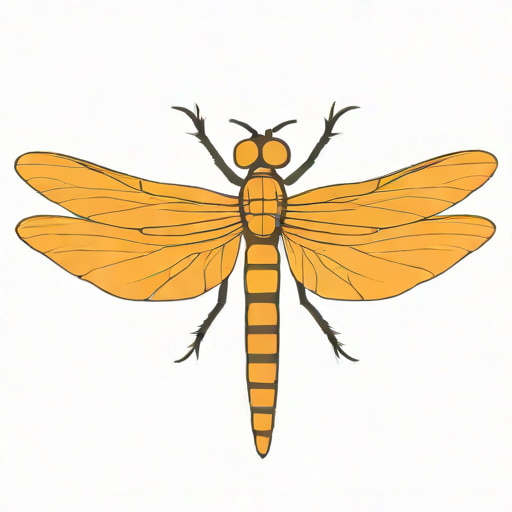
The prehistoric giant dragonfly is one of the most fascinating and awe-inspiring insects from Earth’s distant past. Unlike the dragonflies we see today, these ancient insects were enormous, with wingspans that could reach up to two and a half feet. They lived during the Carboniferous period, approximately 300 million years ago, at a time when the Earth’s atmosphere had higher oxygen levels and vast swampy forests dominated the landscape. These enormous dragonflies not only capture the imagination of paleontologists but also provide important insights into the evolution of insects, the ecological dynamics of prehistoric environments, and the potential limits of insect size. Understanding the giant dragonfly’s life and its place in prehistory sheds light on the extraordinary diversity and adaptation of ancient species.
Discovery and Fossil Evidence
Fossils of prehistoric giant dragonflies have been discovered in various parts of the world, including Europe and North America. One of the most well-known species isMeganeura, a genus of dragonfly-like insects that lived during the late Carboniferous period. Fossil specimens show remarkably well-preserved wings and bodies, revealing the intricate vein patterns and structural details that closely resemble modern dragonflies. Paleontologists use these fossils to estimate size, wing shape, and flight capabilities, which help reconstruct the ecological roles these giant insects played millions of years ago. Fossil evidence provides critical data that allows scientists to explore how these insects thrived in prehistoric environments.
Key Fossil Locations
- France SeveralMeganeurafossils have been excavated in coal-bearing regions, providing well-preserved specimens.
- United Kingdom Fossils from Carboniferous deposits have contributed to understanding the size and anatomy of giant dragonflies.
- North America Fossilized remains of similar large insect species have been found in the Appalachian coal measures.
Physical Characteristics
Prehistoric giant dragonflies had impressive physical characteristics that set them apart from modern insects. Their wingspans could reach up to 70 centimeters, or about two and a half feet, making them the largest known flying insects in Earth’s history. Their bodies were elongated and sturdy, with large eyes that provided nearly 360-degree vision, crucial for hunting in dense forests and swampy landscapes. The strong thorax allowed for powerful wing movements, enabling flight and hunting agility. Unlike modern dragonflies, these prehistoric giants thrived in high-oxygen atmospheres, which supported their unusually large size and active predatory lifestyle.
Wings and Flight
The wings of giant prehistoric dragonflies were broad and intricately veined, similar to contemporary dragonflies but much larger. Fossil analysis indicates that these wings were adapted for gliding and hovering, allowing the insects to patrol large areas for prey. The combination of long, strong wings and a lightweight exoskeleton enabled sustained flight over the prehistoric wetlands, making them formidable aerial predators. Scientists believe that their flight abilities were critical to survival, enabling them to escape predators and hunt other insects efficiently in the lush Carboniferous forests.
Ecology and Behavior
Giant dragonflies occupied a top predatory niche in their ecosystems. They primarily hunted smaller insects, including early mayflies and other flying arthropods, capturing prey with their legs during flight. Their large size and powerful flight made them apex insect predators of their time. Prehistoric wetlands provided an ideal habitat, with abundant plant life, water sources, and dense vegetation offering both food and shelter. The Carboniferous period’s high oxygen levels, around 35% compared to today’s 21%, played a key role in enabling these insects to grow to enormous sizes and sustain high metabolic activity necessary for flight and hunting.
Predatory Advantages
- Large wingspan allowed efficient hunting over wide areas.
- Excellent vision enabled detection of prey and predators.
- Strong mandibles helped capture and consume smaller insects.
- Agility in flight reduced the risk of predation by larger animals.
Significance of High Oxygen Levels
The prehistoric giant dragonfly’s enormous size is closely linked to the Earth’s atmosphere during the Carboniferous period. Oxygen concentrations were significantly higher than today, allowing insect respiratory systems, which rely on diffusion rather than lungs, to deliver sufficient oxygen to large body tissues. This atmospheric condition made it possible for insects likeMeganeurato achieve sizes that would be unsustainable under modern oxygen levels. Studying these insects provides insights into the relationship between environmental factors and evolutionary adaptation, demonstrating how global atmospheric changes can influence the maximum size and diversity of living organisms.
Evolutionary Context
Giant dragonflies likeMeganeurarepresent a crucial stage in insect evolution. They illustrate how early insects experimented with size, flight, and predatory strategies. Over time, oxygen levels decreased and other environmental pressures changed, leading to a reduction in insect sizes. The study of prehistoric dragonflies helps scientists understand evolutionary constraints, competition, and survival strategies. Moreover, comparing ancient species with modern dragonflies highlights the remarkable stability of some anatomical features, such as wing venation and body structure, despite hundreds of millions of years of evolutionary change.
Extinction and Legacy
The decline of giant dragonflies coincided with the end of the Carboniferous period and the transition into the Permian. Lower oxygen levels, climate changes, and the rise of new predators and competitors contributed to their extinction. While these massive insects disappeared, their legacy remains in the modern order Odonata, which includes dragonflies and damselflies. Today’s dragonflies, although much smaller, retain the predatory efficiency, flight agility, and intricate wing structures of their prehistoric ancestors, serving as living reminders of the ancient giants that once ruled the skies.
Fossil Interpretation and Scientific Study
Fossilized remains of giant dragonflies have provided paleontologists with a wealth of information about Carboniferous ecosystems. Detailed examination of wing structures, body segmentation, and fossilized exoskeletons helps reconstruct their behavior, flight patterns, and ecological roles. These studies also contribute to understanding how insects respond to atmospheric changes, informing broader research on climate and environmental adaptation. Museum exhibits and scientific publications often feature these fossils to educate the public about prehistoric life and the diversity of ancient ecosystems.
Key Research Findings
- Confirmed maximum wingspan of up to 70 centimeters.
- Analysis of venation patterns reveals advanced flight capabilities.
- Study of fossil locations indicates wide geographic distribution during the Carboniferous.
- Evidence suggests apex predatory behavior in swampy forest habitats.
- Fossil oxygen isotope studies link insect size to high atmospheric oxygen levels.
The prehistoric giant dragonfly represents one of the most remarkable and visually striking insects in Earth’s history. Its enormous size, advanced flight abilities, and predatory skills reflect the unique conditions of the Carboniferous period and provide valuable insights into evolution, ecology, and atmospheric science. While these ancient giants no longer roam the skies, their legacy lives on in modern dragonflies and in the fossil record, inspiring awe and curiosity among scientists and the public alike. Studying the giant dragonfly allows us to appreciate the incredible diversity of life in prehistoric times and understand how environmental factors shape the evolution of species over millions of years.