Jennifer L. Holm’s The Fourteenth Goldfish is a creative and heartwarming novel that combines science, humor, and emotional growth in a way that appeals to readers of all ages. The story explores the themes of curiosity, family, and the wonders of scientific discovery through the eyes of an eleven-year-old girl named Ellie. What makes this book particularly fascinating is how it bridges the gap between childhood innocence and the complex moral questions of scientific advancement. Holm manages to take a topic as complicated as aging and immortality and make it both engaging and relatable, showing young readers that science is not just about facts and formulas it’s also about imagination and asking the right questions.
Overview of The Fourteenth Goldfish
The Fourteenth Goldfish is a middle-grade novel that tells the story of Ellie, a girl who lives an ordinary life until something extraordinary happens her grandfather, a scientist, discovers a way to reverse aging. Suddenly, he transforms from an elderly man into a teenager and has to live with Ellie and her mother while trying to find a way to prove his discovery. This leads to a series of funny, touching, and thought-provoking moments as Ellie begins to see the world and science in a whole new light.
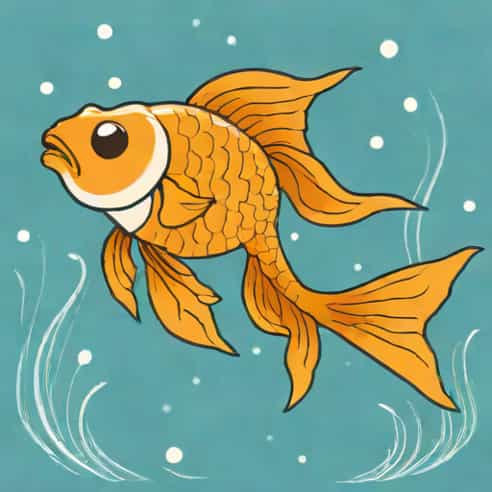
The book’s title refers to Ellie’s many pet goldfish that never seem to live long, each replaced by her mother with a new one. Ellie’s mother insists that the goldfish is the same one, but Ellie knows better. The fourteenth goldfish becomes a metaphor for change, growth, and the cycle of life, reminding readers that even when things seem to stay the same, they are always changing.
Main Characters and Their Development
Ellie Cruz
Ellie is the protagonist of the story, an intelligent and curious eleven-year-old girl who struggles with change. She feels disconnected from her old friends and uncertain about who she is becoming. Throughout the novel, she learns to appreciate science and begins to understand that growing up doesn’t mean leaving behind her imagination or curiosity. Her relationship with her grandfather helps her develop confidence and a deeper understanding of the world.
Melvin (Grandpa Melvin Sagarsky)
Ellie’s grandfather, Melvin, is a brilliant scientist who believes he has discovered the secret to reversing aging through a compound derived from a jellyfish called *Turritopsis melvinus* (a fictional twist on a real jellyfish known for its regenerative properties). After testing it on himself, he becomes a teenager again but with the same cranky personality, scientific obsession, and wisdom of an old man. Melvin represents the balance between scientific progress and moral responsibility. His character is humorous yet reflective, making readers question the limits of science and the ethics of eternal youth.
Ellie’s Mother
Ellie’s mother is a drama teacher who loves art and creativity, and she often clashes with her father’s scientific worldview. She represents the idea that art and science, though different, both explore the mysteries of life. Her relationship with her father, Melvin, adds emotional depth to the story, as they must learn to reconnect despite their differences.
Major Themes in The Fourteenth Goldfish
The Intersection of Science and Morality
One of the strongest themes in The Fourteenth Goldfish is the relationship between science and ethics. Melvin’s discovery raises deep questions Should humans have the power to stop aging? What happens if we remove the natural limits of life? The novel encourages young readers to think critically about the consequences of scientific progress, showing that just because something is possible doesn’t mean it’s right.
Curiosity and Discovery
Jennifer Holm emphasizes the importance of curiosity and lifelong learning. Through Ellie’s journey, readers see that science is not just a school subject but a way of understanding the world. Ellie’s newfound passion for experimentation and discovery is inspiring, reminding children that asking why and how can lead to incredible possibilities.
Family Relationships and Generational Gaps
Another key theme is the relationship between generations. The interactions between Ellie, her mother, and her grandfather highlight how different perspectives can clash yet complement each other. While Ellie’s mother values creativity, her grandfather values logic and evidence. Ellie learns to appreciate both, realizing that growth often comes from understanding others’ viewpoints.
Change and the Cycle of Life
The symbolism of the fourteenth goldfish captures the inevitability of change. Ellie starts the story fearing change, but as the narrative progresses, she learns that transformation is part of life. The book gently introduces the idea that death and aging, while sometimes sad, give meaning to existence.
Science in the Story
Jennifer Holm incorporates real scientific concepts into the story in a way that’s easy for young readers to grasp. Melvin’s discovery is inspired by the real-life jellyfish *Turritopsis dohrnii*, known as the immortal jellyfish because of its ability to revert to a younger state. The novel uses this fascinating idea as a springboard for a larger conversation about human curiosity and the drive to solve nature’s mysteries.
Throughout the book, Ellie learns about famous scientists like Galileo, Marie Curie, and Jonas Salk. These references are woven naturally into the story, showing how science has always been about challenging assumptions and exploring the unknown. Holm’s approach makes science accessible, showing that discovery isn’t limited to laboratories it can begin with simple curiosity.
Writing Style and Tone
Jennifer Holm’s writing style in The Fourteenth Goldfish is clear, witty, and filled with warmth. The tone is both humorous and thoughtful, balancing scientific discussion with emotional depth. Holm uses simple language that captures complex ideas without overwhelming younger readers. The story’s first-person narration allows readers to connect closely with Ellie’s thoughts, making her journey feel personal and relatable.
One of the strengths of Holm’s storytelling is her ability to blend realism with fantasy. The concept of reverse aging could easily feel far-fetched, but Holm grounds it in family relationships and everyday struggles, making the story believable and touching.
Lessons from The Fourteenth Goldfish
The novel delivers several valuable lessons for readers of all ages
- Curiosity fuels learningEllie learns that science is not about memorizing facts but about asking questions and seeking answers.
- Change is part of lifeThe idea of the fourteenth goldfish reminds readers that growth and transformation are natural and necessary.
- Science and ethics must go hand in handMelvin’s experiment shows that discoveries should always be guided by moral consideration.
- Intergenerational understanding mattersEllie learns from both her mother and grandfather, realizing that art and science can coexist beautifully.
Critical Reception and Impact
Since its release in 2014, The Fourteenth Goldfish has received widespread praise from teachers, parents, and critics for its engaging storytelling and educational value. It has been included in many school reading programs and recommended lists for middle-grade students. Critics have highlighted how Holm introduces young readers to complex ideas like bioethics, mortality, and scientific innovation without losing the lighthearted tone that makes the story enjoyable.
The novel also encourages girls to pursue science, technology, engineering, and mathematics (STEM) fields. Ellie’s transformation from a disinterested student to an enthusiastic science lover is a powerful message for young readers, especially in a world that needs more diversity in science and technology.
Jennifer L. Holm’s The Fourteenth Goldfish is more than just a children’s story it’s a thought-provoking exploration of science, family, and the human experience. Through Ellie’s journey, readers learn about the value of curiosity, the inevitability of change, and the importance of balancing knowledge with compassion. Holm’s storytelling invites both children and adults to reflect on what it means to grow up, to let go, and to continue asking questions about the world around us. Whether you are a young reader discovering the joys of science for the first time or an adult rediscovering your sense of wonder, this novel reminds us that the greatest discoveries often begin with a single question and sometimes, a goldfish.