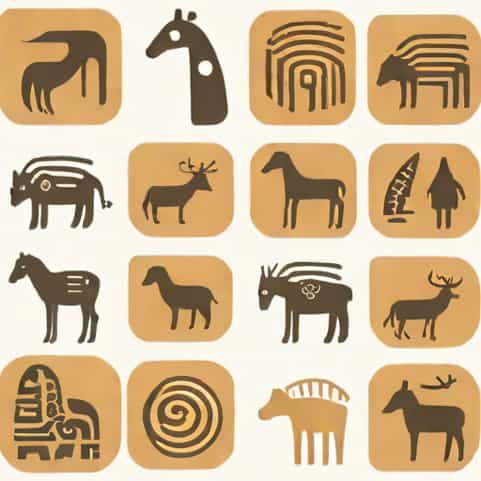
Humanity has long sought ways to communicate, record history, and express cultural beliefs, and two fascinating forms of ancient expression are petroglyphs and hieroglyphs. While both are visual representations used to convey information, they differ significantly in purpose, style, and context. Understanding the differences between petroglyphs and hieroglyphs provides insight into the ways early civilizations documented life, shared knowledge, and communicated complex ideas without the modern convenience of writing systems. By exploring their origins, methods, and cultural significance, we can appreciate how these ancient forms of communication shaped human history.
What Are Petroglyphs?
Petroglyphs are images or symbols carved, etched, or incised into rock surfaces. The word petroglyph comes from the Greek words petra, meaning rock, and glyphein, meaning to carve. These carvings can be found on cliff faces, boulders, and cave walls across the world, from North America to Africa, Europe, and Asia. Petroglyphs often depict animals, human figures, geometric shapes, and abstract symbols. They were typically created by prehistoric people for purposes such as communication, spiritual rituals, storytelling, and recording important events.
Techniques and Materials
Creating petroglyphs required tools made of harder stones or bones to carve into the rock surface. Techniques included pecking, incising, abrading, and chiseling. The durability of rock ensured that these carvings could survive thousands of years, making them valuable sources of information for archaeologists studying ancient cultures. The choice of location for petroglyphs was often significant, sometimes situated along trade routes, near water sources, or within sacred landscapes.
What Are Hieroglyphs?
Hieroglyphs, by contrast, are part of a formal writing system used primarily by ancient civilizations such as the Egyptians and the Mayans. The term hieroglyph comes from the Greek words hieros, meaning sacred, and glyphein, meaning to carve. Unlike petroglyphs, hieroglyphs function as a structured form of communication, combining logographic and alphabetic elements. They were used to record religious texts, royal decrees, historical events, and administrative records, often on temple walls, tombs, papyrus scrolls, and monuments.
Structure and Function
Hieroglyphs consist of a set of symbols that represent sounds, words, or concepts. Ancient Egyptian hieroglyphs, for example, included over 700 symbols, some depicting everyday objects like birds or tools, while others represented abstract ideas or sounds. Hieroglyphs were not only functional but also artistic, often arranged in horizontal or vertical lines to create visually harmonious inscriptions. This writing system allowed for precise communication and was central to religious, cultural, and political life in ancient Egypt.
Key Differences Between Petroglyphs and Hieroglyphs
While petroglyphs and hieroglyphs may appear similar at first glance because both involve symbols and rock carvings, several key differences distinguish them
- PurposePetroglyphs primarily served as symbolic or communicative images, often for ritualistic, storytelling, or marking purposes. Hieroglyphs functioned as a formal writing system with linguistic rules for recording language.
- ComplexityHieroglyphs are highly structured and standardized, capable of representing complex ideas, grammar, and phonetics. Petroglyphs are generally simpler and more abstract, not tied to a formal language system.
- MediumBoth can appear on rock surfaces, but hieroglyphs were also written on papyrus, wood, and other materials, while petroglyphs are exclusively rock carvings.
- Cultural ContextPetroglyphs are often linked to prehistoric or indigenous cultures worldwide, whereas hieroglyphs are associated with advanced civilizations such as ancient Egypt and the Mayans.
- Artistic ExpressionPetroglyphs often emphasize symbolic or spiritual meanings and can be more abstract. Hieroglyphs combine functionality with aesthetics but prioritize conveying precise information.
Examples Around the World
Petroglyphs can be seen in sites such as the petroglyphs of the American Southwest, including the Petrified Forest and Petroglyph National Monument. In Europe, examples include Val Camonica in Italy, one of the largest collections of prehistoric rock carvings. African sites like the Tassili n’Ajjer in Algeria feature elaborate depictions of animals and human figures.
Hieroglyphs are famously found in Egypt, adorning temples, pyramids, and tombs. The Rosetta Stone, discovered in 1799, was instrumental in deciphering Egyptian hieroglyphs due to its inscriptions in Greek, Demotic, and hieroglyphic script. The Maya civilization also developed hieroglyphic writing, seen in inscriptions on stelae, codices, and monuments in Mesoamerica, documenting history, astronomy, and ritual practices.
Interpreting Petroglyphs and Hieroglyphs
Interpreting petroglyphs can be challenging because they are often symbolic and their meanings may have shifted over time. Researchers rely on contextual clues, ethnographic analogies, and archaeological evidence to hypothesize the purpose of specific carvings. In some cases, petroglyphs are linked to astronomical observations, hunting practices, or spiritual rituals.
Hieroglyphs, being a formal writing system, can often be directly translated once the symbols and language are understood. Deciphering Egyptian hieroglyphs required understanding the phonetic values, determinatives, and grammar. Similarly, the Mayan hieroglyphic script combines logograms and syllabic symbols that allow for precise reconstruction of historical and cultural narratives.
Modern Significance
Both petroglyphs and hieroglyphs remain culturally and academically significant today. Petroglyphs offer insight into prehistoric human thought, cultural practices, and interactions with the environment. They are studied in archaeology, anthropology, and art history. Hieroglyphs continue to inform our understanding of ancient civilizations, their governance, religion, and daily life, contributing to linguistics, history, and cultural studies.
In summary, while petroglyphs and hieroglyphs may seem similar at first due to their symbolic carvings and use in ancient times, they serve distinct purposes and reflect different levels of cultural complexity. Petroglyphs are symbolic rock carvings primarily associated with prehistoric and indigenous cultures, emphasizing art, ritual, and communication. Hieroglyphs are structured writing systems used by advanced civilizations like the Egyptians and the Maya, combining language, art, and documentation. Understanding the differences between petroglyphs and hieroglyphs allows us to appreciate the diversity of human expression and the ingenuity of ancient peoples in recording their experiences and beliefs. Both forms continue to inspire modern researchers, artists, and historians, offering a window into humanity’s earliest attempts at communication.