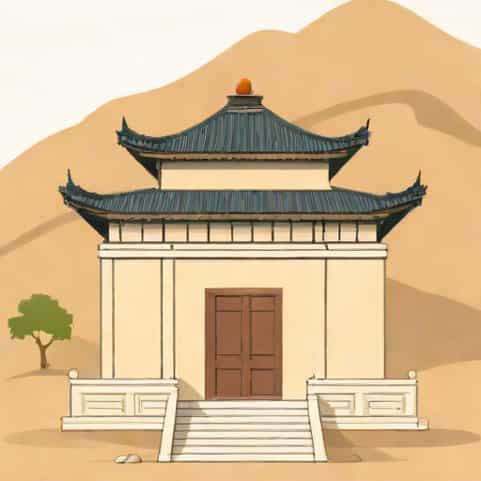
The mystery surrounding the tomb of Qin Shi Huang, the first emperor of China, has fascinated historians, archaeologists, and the general public for centuries. Ever since the discovery of the Terracotta Army in 1974 near Xi’an, people have wondered what secrets lie inside the unopened burial chamber of the emperor himself. The question of whether the Qin Shi Huang tomb should be opened is one that sparks debates about cultural heritage, technological limits, and the preservation of history. This topic remains one of the most intriguing subjects in archaeology, often raising curiosity about what could be revealed if the tomb were ever fully explored.
The legacy of Qin Shi Huang
Qin Shi Huang, who ruled from 221 BCE to 210 BCE, is known for unifying China, standardizing its currency, language, and legal system, and beginning construction of the Great Wall. His ambition extended into death, where he planned an elaborate underground palace to ensure his dominance in the afterlife. The discovery of the Terracotta Warriors gave the world a glimpse of his vision, but the emperor’s actual tomb remains sealed beneath a massive mound. The prospect of opening the Qin Shi Huang tomb has long stirred curiosity, as it could provide unparalleled insights into ancient Chinese culture.
The tomb complex
The burial site covers an estimated 56 square kilometers, making it one of the largest mausoleums in the world. Archaeological surveys show that the central chamber is still untouched, lying beneath a hill in Lintong District. Ancient texts describe the tomb as a palace filled with treasures, rivers of mercury, and intricate designs meant to replicate the universe. If the Qin Shi Huang tomb were opened, it could potentially confirm these accounts, but it also poses serious risks of damage to fragile artifacts.
Why the tomb remains unopened
Despite modern interest, Chinese authorities have decided not to open the Qin Shi Huang tomb. There are several important reasons for this caution
- Preservation issues– Once exposed to air, delicate items could decay or disintegrate quickly.
- Technological limitations– Current archaeological methods are not advanced enough to ensure safe excavation.
- Mercury contamination– High levels of mercury have been detected in soil samples, supporting ancient accounts of toxic rivers inside the tomb.
- Cultural respect– The tomb is considered a sacred resting place, and disturbing it raises ethical concerns.
The role of the Terracotta Army
Although the tomb itself has never been opened, the surrounding pits containing the Terracotta Warriors have provided invaluable information. Over 8,000 life-sized statues of soldiers, horses, and chariots were unearthed, each with unique features. These discoveries hint at the grandeur of the main chamber, fueling curiosity about what lies within. If the Qin Shi Huang tomb were opened, it could surpass even the astonishing revelations of the Terracotta Army.
Scientific studies and theories
Modern technology has allowed researchers to study the tomb without physically opening it. Ground-penetrating radar and other non-invasive methods suggest that the underground palace may contain complex structures, valuable artifacts, and possibly the emperor’s remains. Soil analysis has revealed unusually high levels of mercury, lending credibility to historical records from Sima Qian, who described flowing rivers of liquid mercury inside the tomb. This scientific evidence strengthens the belief that opening the Qin Shi Huang tomb could confirm ancient writings while also revealing advanced engineering techniques of the Qin dynasty.
Risks of opening the tomb
While curiosity drives interest, experts stress that opening the tomb prematurely could destroy irreplaceable artifacts. The excavation of the Terracotta Warriors already showed how exposure to oxygen can cause pigments to fade within minutes. If the central chamber contains delicate paintings, textiles, or wooden objects, they could be lost forever once exposed. This is why many archaeologists argue that the Qin Shi Huang tomb should remain unopened until technology can guarantee proper preservation.
Debates among historians and archaeologists
The question of opening the Qin Shi Huang tomb divides experts. Some argue that waiting is the best choice, as future generations may have the tools to study the site safely. Others believe that knowledge gained from opening the tomb now could greatly enrich our understanding of Chinese history. The debate reflects a balance between scientific curiosity and responsibility toward cultural heritage.
Potential discoveries
If the tomb were eventually opened, researchers expect to uncover
- Priceless artifacts, including jade, bronze, and gold objects.
- Possible written records that could rewrite parts of Chinese history.
- Evidence of advanced ancient technologies, such as mercury preservation methods.
- Details about Qin Shi Huang’s reign, beliefs, and burial practices.
Such discoveries could dramatically enhance our understanding of the Qin dynasty and its influence on later Chinese civilization.
Cultural significance of keeping the tomb sealed
For many Chinese people, leaving the tomb unopened is not just about preservation but also about respecting tradition. Disturbing an emperor’s resting place is considered taboo in Chinese culture. The decision to wait before opening the Qin Shi Huang tomb also reflects a broader philosophy of patience-valuing long-term knowledge over short-term curiosity. This cultural perspective is as important as the scientific concerns in shaping the future of the site.
Global fascination with the tomb
The idea of opening the Qin Shi Huang tomb continues to captivate global audiences. Documentaries, books, and academic discussions keep the mystery alive. Some compare it to the fascination with Egyptian pyramids or the tomb of Tutankhamun, though in many ways, Qin Shi Huang’s mausoleum is even more enigmatic. Until it is opened, speculation will continue, adding to the allure of the site as one of the greatest archaeological mysteries in the world.
Future possibilities
Technological innovation may one day make it possible to open the Qin Shi Huang tomb safely. Advances in robotics, imaging, and preservation methods could allow researchers to study its contents without exposing them to damaging conditions. Some scientists suggest that minimally invasive techniques, such as inserting tiny cameras, could provide glimpses inside without major excavation. Until then, the tomb remains a time capsule, waiting for the right moment in history to be revealed.
Balancing curiosity and caution
The story of the Qin Shi Huang tomb is not just about archaeology-it is also about how humanity approaches history. The decision to wait reflects a growing awareness that once something is destroyed, it cannot be recovered. Opening the tomb too soon could lead to irreversible loss, while waiting may allow future generations to experience its treasures fully intact. This balance between curiosity and caution defines the ongoing discussion about the site.
The unopened tomb of Qin Shi Huang remains one of the most extraordinary archaeological enigmas. While the Terracotta Army has already stunned the world, the central burial chamber promises even greater discoveries-if it is ever revealed. For now, the tomb stands as a silent monument to the ambition of China’s first emperor, guarding its secrets beneath layers of earth. The fascination with whether the Qin Shi Huang tomb will ever be opened continues to inspire wonder, speculation, and respect for the fragile treasures of the past.