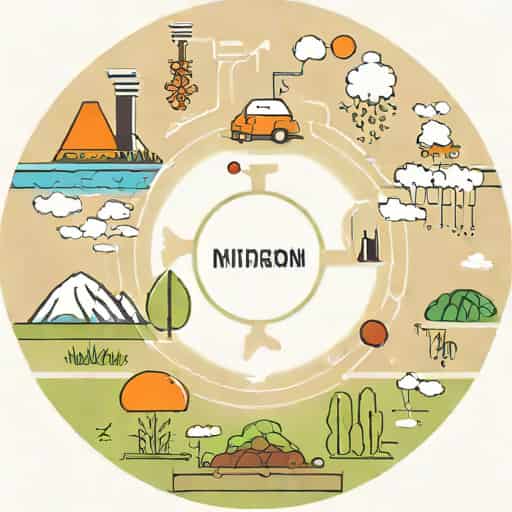
The nitrogen cycle is a fundamental ecological process that maintains the balance of nitrogen in the environment, ensuring that plants, animals, and microorganisms have access to this essential nutrient. Nitrogen is a critical component of amino acids, proteins, and nucleic acids, making it vital for life. Understanding how to schematically represent the nitrogen cycle allows students, researchers, and environmentalists to visualize the movement of nitrogen through different reservoirs, including the atmosphere, soil, water, and living organisms. A schematic representation simplifies complex biochemical transformations, illustrating processes such as nitrogen fixation, nitrification, assimilation, ammonification, and denitrification, which collectively sustain ecosystem productivity and ecological balance. By representing the cycle schematically, it becomes easier to comprehend the dynamic interactions and transformations that nitrogen undergoes in terrestrial and aquatic systems.
Overview of the Nitrogen Cycle
The nitrogen cycle consists of multiple interconnected processes that move nitrogen through the environment in various chemical forms. Nitrogen exists primarily as nitrogen gas (N2) in the atmosphere, but it must be converted into reactive forms like ammonium (NH4+), nitrites (NO2–), and nitrates (NO3–) to be usable by living organisms. Schematic diagrams of the nitrogen cycle visually represent these transformations, making it easier to understand the sequence of events and the role of different organisms in the cycle.
Key Components of the Nitrogen Cycle
To schematically represent the nitrogen cycle accurately, it is important to understand its key components and pathways
- AtmosphereThe largest reservoir of nitrogen, mostly in the form of N2gas, which is inert and unavailable to most organisms without conversion.
- SoilNitrogen exists in various forms, including ammonium, nitrites, nitrates, and organic nitrogen compounds derived from decaying matter.
- PlantsAbsorb nitrogen primarily as nitrates and ammonium from the soil for growth and protein synthesis.
- AnimalsObtain nitrogen by consuming plants or other animals and release it back into the environment through excretion and decomposition.
- MicroorganismsPlay a crucial role in nitrogen transformations, including nitrogen fixation, nitrification, ammonification, and denitrification.
Schematic Representation of Nitrogen Cycle
Creating a schematic diagram of the nitrogen cycle involves illustrating nitrogen flow and transformations between the atmosphere, soil, plants, animals, and microorganisms. Arrows are used to indicate the direction of nitrogen movement, while different chemical forms are labeled at each stage.
Nitrogen Fixation
Nitrogen fixation is the process of converting atmospheric nitrogen (N2) into forms usable by plants, such as ammonium (NH4+). This process occurs through biological and abiotic mechanisms
- Biological FixationCarried out by nitrogen-fixing bacteria, such as Rhizobium in legume root nodules and free-living bacteria like Azotobacter. These bacteria possess the enzyme nitrogenase, which enables the conversion of N2to NH4+.
- Abiotic FixationOccurs through lightning or industrial processes like the Haber-Bosch method, producing nitrates that enter the soil.
In a schematic, arrows from the atmosphere to soil or plant-associated bacteria illustrate nitrogen fixation.
Nitrification
Nitrification is a two-step microbial process in which ammonium is oxidized to nitrites and then to nitrates, which are easily absorbed by plants
- Step 1 Ammonium (NH4+) is oxidized to nitrite (NO2–) by bacteria such as Nitrosomonas.
- Step 2 Nitrite (NO2–) is further oxidized to nitrate (NO3–) by Nitrobacter.
In diagrams, nitrification is represented by arrows connecting ammonium in the soil to nitrites and then to nitrates, highlighting the microbial role in these transformations.
Assimilation
Assimilation refers to the uptake of nitrates and ammonium by plants to synthesize proteins and nucleic acids. Animals then obtain nitrogen by consuming these plants. In schematic representations, arrows indicate nitrogen flow from soil to plants and then from plants to herbivores or carnivores.
Ammonification
Ammonification, also called mineralization, is the process where decomposers, such as bacteria and fungi, convert organic nitrogen from dead organisms and waste products back into ammonium. This step replenishes the soil nitrogen pool, making it available for nitrification and plant uptake.
Denitrification
Denitrification is the microbial process that converts nitrates back into atmospheric nitrogen (N2) or nitrous oxide (N2O), completing the nitrogen cycle. Denitrifying bacteria, such as Pseudomonas and Clostridium, perform this function under anaerobic conditions in soil or water. In schematics, arrows from nitrates in the soil point back to the atmosphere, illustrating the return of nitrogen to its gaseous form.
Importance of Schematic Representation
Using a schematic representation for the nitrogen cycle has several benefits
- Simplifies complex biochemical processes for easier understanding.
- Highlights the role of different organisms and environmental compartments in nitrogen transformations.
- Helps students, researchers, and environmentalists visualize nitrogen flow and identify key stages.
- Assists in studying human impacts on the cycle, such as fertilizer use, pollution, and nitrogen deposition.
- Facilitates educational and scientific communication about nitrogen dynamics and ecosystem health.
Applications and Human Impacts
Understanding the nitrogen cycle through schematic representation is crucial for managing ecosystems and agriculture. Human activities, including excessive fertilizer use, fossil fuel combustion, and industrial nitrogen fixation, can disrupt the natural nitrogen cycle, leading to issues such as eutrophication, soil acidification, and greenhouse gas emissions. Schematic diagrams help identify points where human intervention can mitigate negative impacts, such as promoting sustainable farming practices, using nitrogen-efficient crops, and protecting nitrogen-fixing habitats.
Schematically representing the nitrogen cycle is an effective way to understand the complex processes that govern the movement of nitrogen through the environment. From atmospheric nitrogen to ammonium, nitrates, and back to the atmosphere, the cycle involves key processes such as nitrogen fixation, nitrification, assimilation, ammonification, and denitrification. By illustrating these processes and the interactions between plants, animals, soil, and microorganisms, schematic diagrams provide clarity and insight into ecosystem functioning. Moreover, they help highlight human impacts on the nitrogen cycle and the importance of sustainable practices. Mastering the schematic representation of the nitrogen cycle allows students, educators, and environmentalists to visualize, teach, and manage one of the most vital biogeochemical cycles on Earth, ensuring the continued balance and availability of nitrogen for all forms of life.