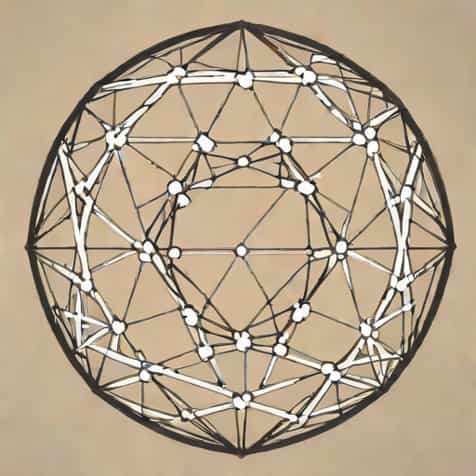
A geodesic sphere is a fascinating architectural and mathematical structure that combines simplicity with remarkable strength. It is essentially a spherical shape composed of interconnected triangles that distribute stress evenly across the structure. Geodesic spheres are admired for their efficiency in enclosing space while using minimal material, making them both an engineering marvel and a visually striking design. This type of sphere has been applied in various fields, from futuristic architecture to scientific research, due to its unique properties of stability, durability, and energy efficiency.
Understanding the Concept of a Geodesic Sphere
The concept of a geodesic sphere was popularized by the architect and inventor Buckminster Fuller in the 20th century. Fuller explored the geometric principle of dividing a sphere into smaller triangles, which reduces the weight of a structure while maintaining strength. Each triangle in a geodesic sphere acts as a support element, distributing tension and compression evenly throughout the structure. This makes geodesic spheres highly resistant to external forces like wind, snow, or seismic activity. The design achieves an optimal balance between structural integrity and material efficiency, which is why geodesic spheres have captured the interest of engineers, architects, and designers around the world.
The Mathematical Foundation
Geodesic spheres are grounded in geometry, specifically in the subdivision of icosahedrons. An icosahedron is a polyhedron with 20 triangular faces. By projecting this icosahedron onto a sphere and further subdividing its triangles into smaller ones, a geodesic sphere is formed. The frequency of subdivision determines the level of smoothness and curvature of the sphere. Higher-frequency geodesic spheres have more triangles, resulting in a shape that closely approximates a perfect sphere. This mathematical approach allows for precise calculations in construction and design, ensuring that each element contributes to the overall stability of the structure.
Applications of Geodesic Spheres
Geodesic spheres have been used in a variety of applications, demonstrating their versatility and appeal. One of the most famous examples is Spaceship Earth at EPCOT in Walt Disney World. This iconic geodesic sphere stands as a symbol of innovation and creativity, showcasing the potential of geodesic designs in architectural landmarks. Beyond theme parks, geodesic spheres are also employed in greenhouses, exhibition halls, sports arenas, and planetariums. Their efficient use of space and materials makes them suitable for large, open environments where structural support is essential.
Environmental and Energy Benefits
One of the advantages of geodesic spheres is their energy efficiency. The triangular design minimizes surface area while maximizing enclosed volume, which helps regulate temperature and reduce energy consumption. This makes geodesic spheres ideal for sustainable architecture, including eco-friendly homes and greenhouses. The natural airflow created within the spherical structure enhances ventilation, while the geometric design allows for even light distribution. These properties make geodesic spheres a practical solution for reducing environmental impact without sacrificing comfort or functionality.
Construction Techniques
Building a geodesic sphere requires careful planning and precise engineering. The primary materials used include steel, aluminum, or lightweight composites, which are chosen for their strength-to-weight ratio. Each triangular component is fabricated individually and assembled on-site using connectors at the vertices. Modular construction techniques allow for scalability, enabling designers to create spheres of various sizes, from small domes to large architectural structures. Additionally, modern software and 3D modeling tools assist engineers in calculating load distribution and structural stability, ensuring that the final construction is both safe and visually appealing.
Challenges in Geodesic Sphere Design
Despite their advantages, geodesic spheres present certain challenges. The complexity of connecting multiple triangles at precise angles can be time-consuming and costly. Additionally, weatherproofing and insulation require careful consideration, as the joints between triangles may be prone to leaks if not properly sealed. However, advancements in materials science and construction technology have mitigated many of these challenges, making geodesic spheres increasingly feasible for both commercial and residential projects.
Scientific and Technological Uses
Beyond architecture, geodesic spheres are utilized in scientific research and technology. For example, geodesic domes serve as radar enclosures, observatories, and even experimental habitats in remote or extreme environments. Their strength and ability to withstand high pressures make them suitable for protective structures, such as weather stations and military installations. Additionally, geodesic principles are applied in aerospace engineering, robotics, and structural simulations, where efficiency and resilience are critical considerations.
Geodesic Spheres in Popular Culture
The unique appearance of geodesic spheres has also captured the imagination of popular culture. They are often depicted in films, video games, and literature as futuristic or scientific structures. Their symmetrical design and futuristic aesthetic convey innovation and technological advancement, contributing to their cultural significance. Moreover, geodesic spheres often serve as symbols of human ingenuity, representing the harmonious integration of mathematics, design, and practical engineering.
In summary, a geodesic sphere is a spherical structure composed of interconnected triangles that offer exceptional strength, stability, and efficiency. Popularized by Buckminster Fuller, the geodesic sphere has applications in architecture, environmental design, scientific research, and popular culture. Its mathematical foundation, based on the subdivision of an icosahedron, allows for precise and scalable construction. Despite some challenges in assembly and maintenance, geodesic spheres remain a powerful example of innovative design that combines aesthetic appeal with functional performance. From iconic landmarks to sustainable housing and advanced scientific structures, the geodesic sphere continues to inspire and influence fields ranging from engineering to art.
“`