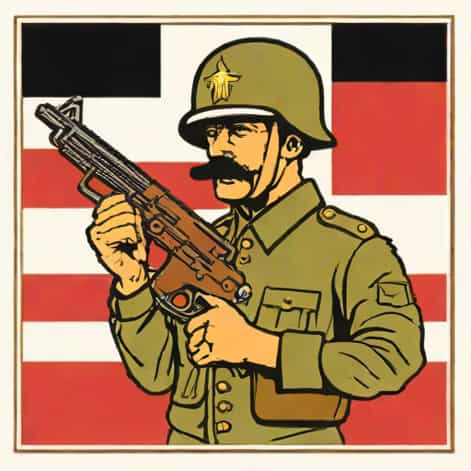
Germany’s militarism leading up to and during World War I was the result of a combination of historical, political, social, and economic factors that shaped the nation’s approach to power and conflict. From the unification of Germany in 1871 under Prussian leadership to the early 20th century, the country developed a strong military tradition that influenced its culture, politics, and foreign policy. Understanding why Germany was so militaristic in World War I requires examining the legacy of Prussian militarism, the role of the army in society, the influence of political leaders, and the pressures of international competition. The militaristic culture was not accidental but rather the product of decades of institutional and ideological development that made the German Empire highly focused on military strength and preparedness.
The Legacy of Prussian Militarism
One of the primary reasons Germany was so militaristic in World War I lies in its historical roots in Prussia. The Kingdom of Prussia, which became the dominant German state in the 19th century, placed enormous emphasis on military organization and discipline. Prussia’s victories in wars against Austria, Denmark, and France showcased the effectiveness of a well-trained and professional army. These successes cemented a national belief in the value of military power as a tool for achieving political and territorial objectives. The Prussian model of military organization became the blueprint for the German Empire after unification in 1871, influencing the structure, training, and culture of the German armed forces.
Military as a Political Tool
The Prussian military was not just a defensive force; it was also a political instrument. Generals and military advisors held significant influence in government decisions, and the army was seen as a protector of national interests. After unification, this influence extended to the entire German Empire. Military leaders had direct input on foreign policy and strategic planning, which contributed to a culture that valued preparedness, hierarchy, and aggressive posturing in international relations.
The Role of the Army in German Society
Another factor contributing to Germany’s militarism was the central role the army played in society. The German Empire implemented universal conscription, ensuring that most young men served in the military and absorbed its values. Military service was not only a duty but also a source of social prestige. Officers were often drawn from the aristocracy, reinforcing class hierarchies and emphasizing loyalty, discipline, and obedience. This widespread integration of the military into everyday life helped normalize militarism as a societal value.
Education and Militaristic Culture
Education in Germany also reinforced military values. Schools emphasized discipline, respect for authority, and patriotic duty, often linking these traits to the glory of serving in the army. Public ceremonies, parades, and military pageantry further reinforced the perception that military strength was central to national identity. This cultural indoctrination ensured that militarism permeated both civilian and military life, creating a society in which the army was celebrated and military solutions were seen as legitimate responses to international problems.
Influence of Political Leaders
Political leadership in Germany played a critical role in encouraging militarism. Kaiser Wilhelm II, who ascended to the throne in 1888, strongly supported a powerful military and pursued an aggressive foreign policy. Wilhelm believed that a strong military was essential for maintaining Germany’s status as a great power and for protecting its expanding colonial interests. His leadership style, characterized by personal ambition and nationalism, further reinforced the army’s prominence in politics and society.
The Army and Government Relations
Germany’s political system also allowed the military to exert significant influence over decision-making. The army maintained autonomy in strategic planning, while the Kaiser and his advisors often deferred to military expertise. This close relationship between political leaders and military commanders contributed to a culture in which war was viewed as an acceptable and even necessary tool for advancing national interests. Political debates often centered on how to strengthen the military rather than whether to pursue military expansion, further embedding militarism into German policy.
International Competition and Arms Race
Germany’s militarism was also shaped by the broader context of European international relations. By the early 20th century, Europe was engaged in an arms race, with major powers competing to build larger, more technologically advanced militaries. Germany, seeking to assert itself as a dominant continental and global power, invested heavily in expanding its army and navy. This arms buildup was motivated by competition with other major powers such as Britain, France, and Russia. The perception that neighboring nations posed constant threats reinforced the idea that military strength was essential for national survival.
Naval Expansion
Kaiser Wilhelm II also prioritized naval expansion to challenge Britain’s dominance at sea. The construction of a modern fleet was a central component of German militarism, reflecting the belief that global influence required both strong land and naval forces. This naval buildup heightened tensions in Europe and contributed to the complex web of alliances and rivalries that ultimately triggered World War I.
Economic and Industrial Factors
Germany’s rapid industrialization provided the material foundation for its militarism. The country’s economic growth enabled it to produce weapons, ammunition, and other military supplies at unprecedented rates. Industrial capacity became closely linked to military power, with private industry and state planning supporting the expansion of the army and navy. Technological advancements in artillery, small arms, and transportation made Germany confident in its ability to wage war effectively, reinforcing the belief that military preparedness was essential for national security and prestige.
Military-Industrial Collaboration
The close collaboration between the German state and industry also encouraged militaristic thinking. Companies producing military equipment had a vested interest in maintaining a strong army and navy, which further entrenched the culture of militarism. This integration of economic power with military objectives made the German Empire uniquely capable of mobilizing for large-scale conflict.
Nationalism and Militarism
Finally, nationalism played a critical role in fostering militarism in Germany. The unification of Germany under Prussian leadership created a sense of national pride and destiny. Military victories and the glorification of soldiers became central symbols of national identity. German nationalism emphasized the need for a strong military to defend and expand the nation’s interests, making militarism not just a practical necessity but a cultural ideal.
Impact on Public Opinion
Public support for militarism was widespread due to propaganda, education, and media that celebrated military achievements. Newspapers, literature, and public ceremonies highlighted the heroism of soldiers and reinforced the idea that Germany’s future depended on its ability to maintain and use military strength effectively.
Germany’s militarism in World War I was the result of a combination of historical, cultural, political, and economic factors. The legacy of Prussian military tradition, the integration of the army into society, the influence of political leaders like Kaiser Wilhelm II, and the pressures of international competition all contributed to a nation deeply committed to military strength. Industrial capacity and nationalism further reinforced the belief that militarism was essential to national survival and prestige. This complex interplay of factors created an environment in which military solutions were often prioritized over diplomacy, helping to explain Germany’s aggressive posture and preparedness at the outbreak of World War I. Understanding these elements provides insight into how militarism shaped German policy, strategy, and ultimately the course of the First World War.